
The spills, chills, and thrills of baking cakes
By Meret Pajkic ‘26

Courtesy of Gracyn Gardner ‘26.
As a second-semester senior, I have come into possession of some much-appreciated free time. What did I decide to do with this free time, you might ask? Bake cakes…many, many cakes.
I chose to bake cakes because they bring people together. From birthday parties to weddings, it is rare not to come into contact with a slice of cake at a celebration. However, I feel the time-consuming nature of these delicacies often goes unnoticed.
To put it plainly, making a cake properly is labor-intensive. These moist towers, connected by frosting, are not as simple as cookies or brownies and require a multitude of tools and an excess of time.
As a recreational baker who often finds herself in the kitchen whipping up basic desserts on any given weekday, I found this to be an intriguing challenge. Can I, Meret Pajkic, successfully bake cakes that others would enjoy eating?
For this challenge, I turned to a trusted cooking ally: New York Times (NYT) Cooking. Rarely do these recipes lead me astray, and I knew I would need clear guidelines if this project were to be successful.
All cakes will be judged on five criteria: difficulty, texture, flavor, appearance, and frosting. Each category will be ranked on a scale from one measly slice of cake to a whopping five pieces of cake. As one can infer, one slice of cake means the criteria were not successfully met, while five slices represent a delightful success.
I decided to bake three classic cakes: chocolate cake, carrot cake, and red velvet cake.
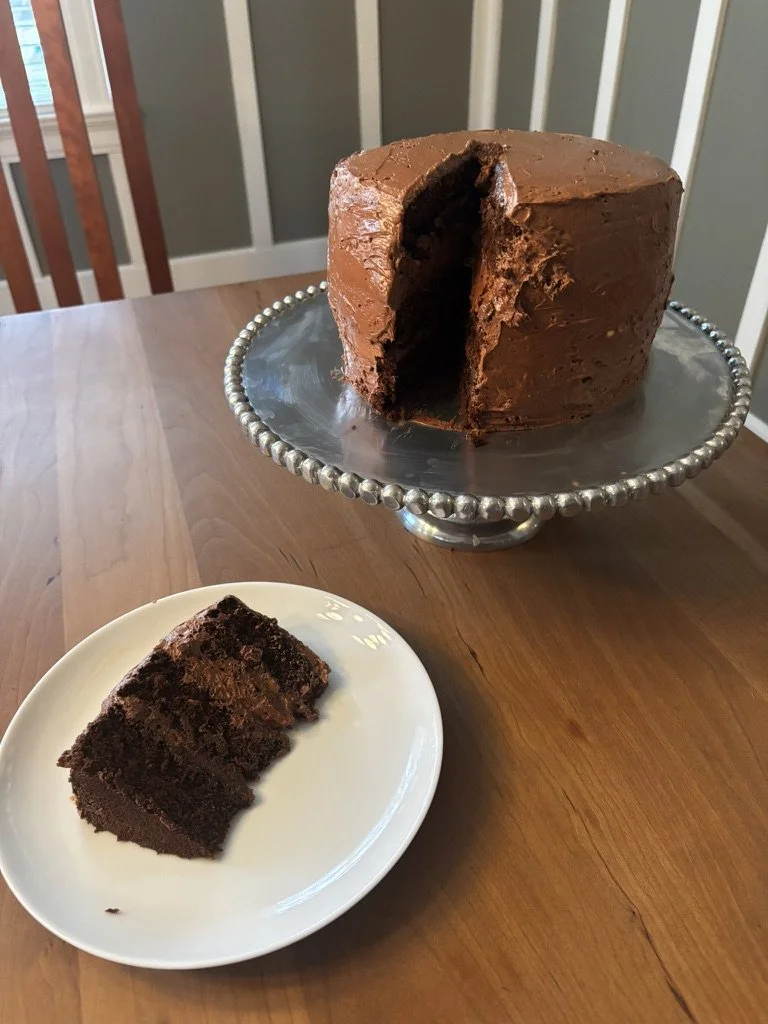
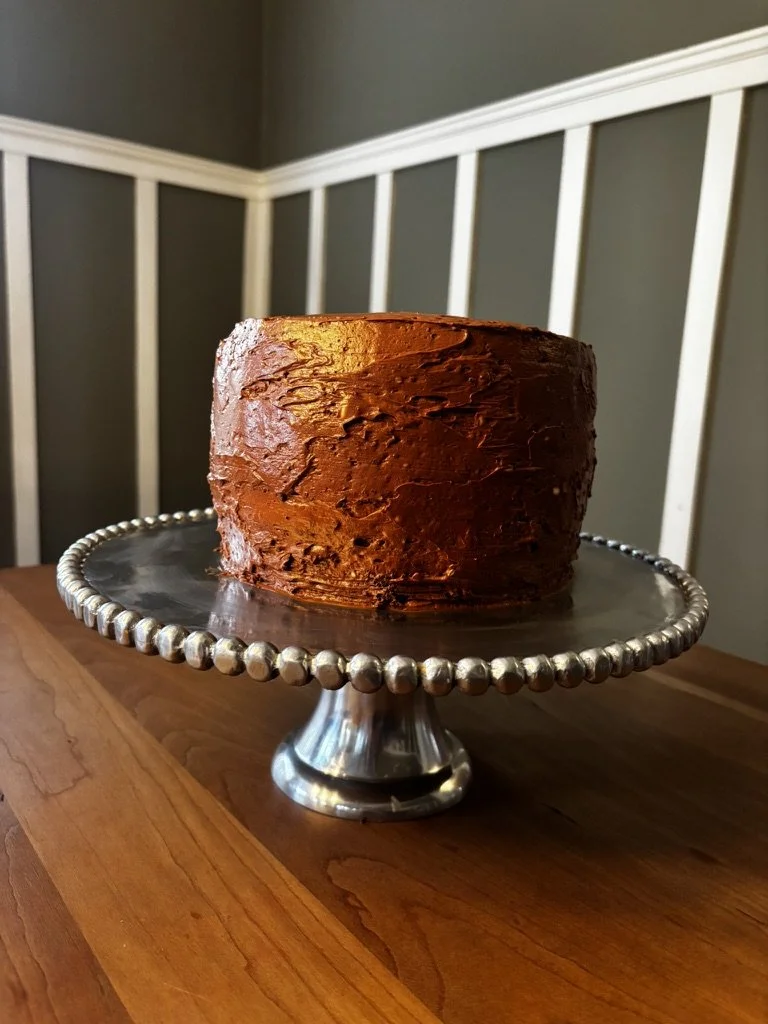
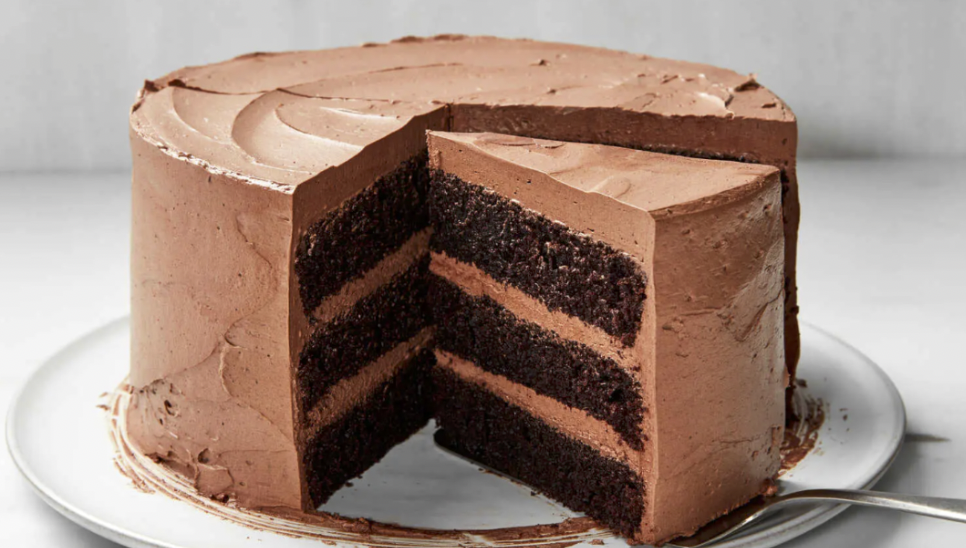
Chocolate cake (bottom). Courtesy of the New York Times. The chocolate cake I made (top). Courtesy of Meret Pajkic ‘26.
The first recipe in the lineup, chocolate cake, is arguably the most iconic cake of all time. It’s a rich dessert, with a velvety texture so delectable that it’s been proven to have mood-boosting properties. The NYT describes their recipe as being “an ideal balance between dense and fudgy, and light and fluffy.”
Although the recipe was written in a clear manner, it involved many different elements. The recipe called for me to concoct a fudge and brew coffee on top of mixing my batter and whipping my buttercream, all of which I had to do with a hand mixer instead of the recommended stand mixer. Needless to say, my arms were lethargic.
The entire process took around 3 hours and 45 minutes, which was longer than the estimated 2-hour and 15-minute cook time shown on the recipe page. However, this added bake time can be written off due to a personal error, as I realized too late that my cake pans were different sizes, an oversight I came to deeply regret during the cake decorating process.
All things considered, the cake receives 3.5 slices out of 5 for difficulty. It does present somewhat of a challenge, most notably the making of the pudding, yet overall, the process was definitely manageable.
The real design snafu with this recipe was the result of my having to DIY the shape of my cake. I only had two similarly sized cake pans and ended up having to cut the two larger ones down so they would match the size of the smaller one.
In all honesty, I was relatively unsuccessful, which is why the cake looks somewhat slanted from certain angles, resulting in what many would consider an “expectation vs. reality” situation.
Due to the somewhat lopsided nature of the cake, I cannot in good faith give it anything above a 3.5 out of 5 slices in appearance. I would like to point out, though, that the cake looked much more aesthetically pleasing when sliced.
Nevertheless, the flavor did not disappoint. As advertised, the cake was airy, paired with a creamy buttercream that created a well-balanced flavor palate.
When prompted about the cake, Prisha Garg ‘26, a senior at Catlin Gabel School (CGS), gave it a positive review. “I think it's very moist; it’s not dry at all,” said Garg. Ellery Rayne ‘26 followed up this assessment, saying, “It's maybe a tiny bit too dense, but I'd say it's like 90% perfect.”
Since these reviews are overwhelmingly enthusiastic, I feel confident in giving the texture, flavor, and frosting 4.5 slices out of 5.
As the first cake I have ever baked, I was impressed by its taste and quality, even considering its lopsided presentation. However, I was sure that once all my cake pans were equal in size, my cakes would be far less likely to model the Leaning Tower of Pisa.
Recap
Texture: 🍰🍰🍰🍰.5 / 5
Flavor: 🍰🍰🍰🍰.5 / 5
Difficulty: 🍰🍰🍰.5 / 5
Frosting: 🍰🍰🍰🍰.5 / 5
Appearance: 🍰🍰🍰.5 / 5
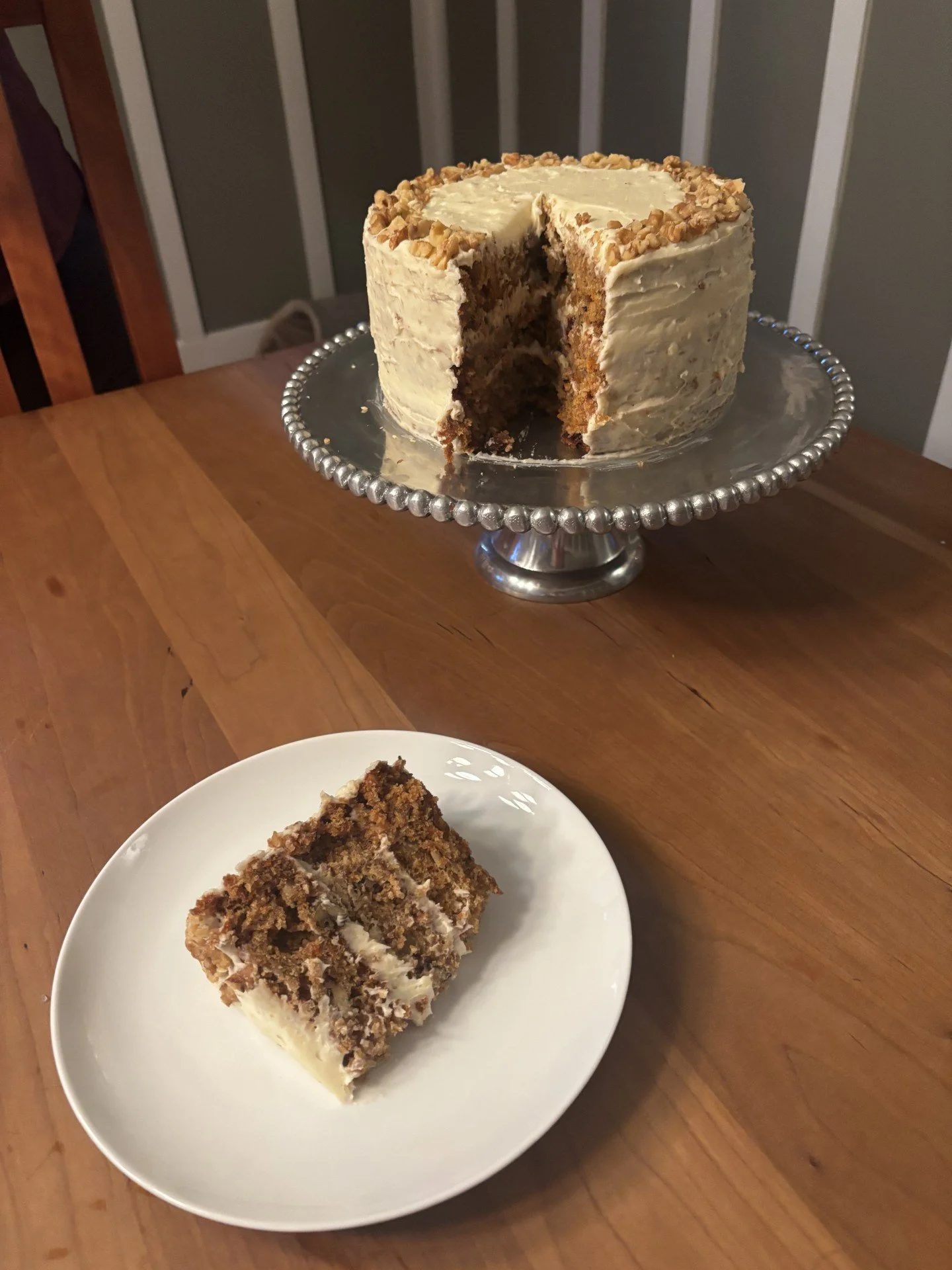
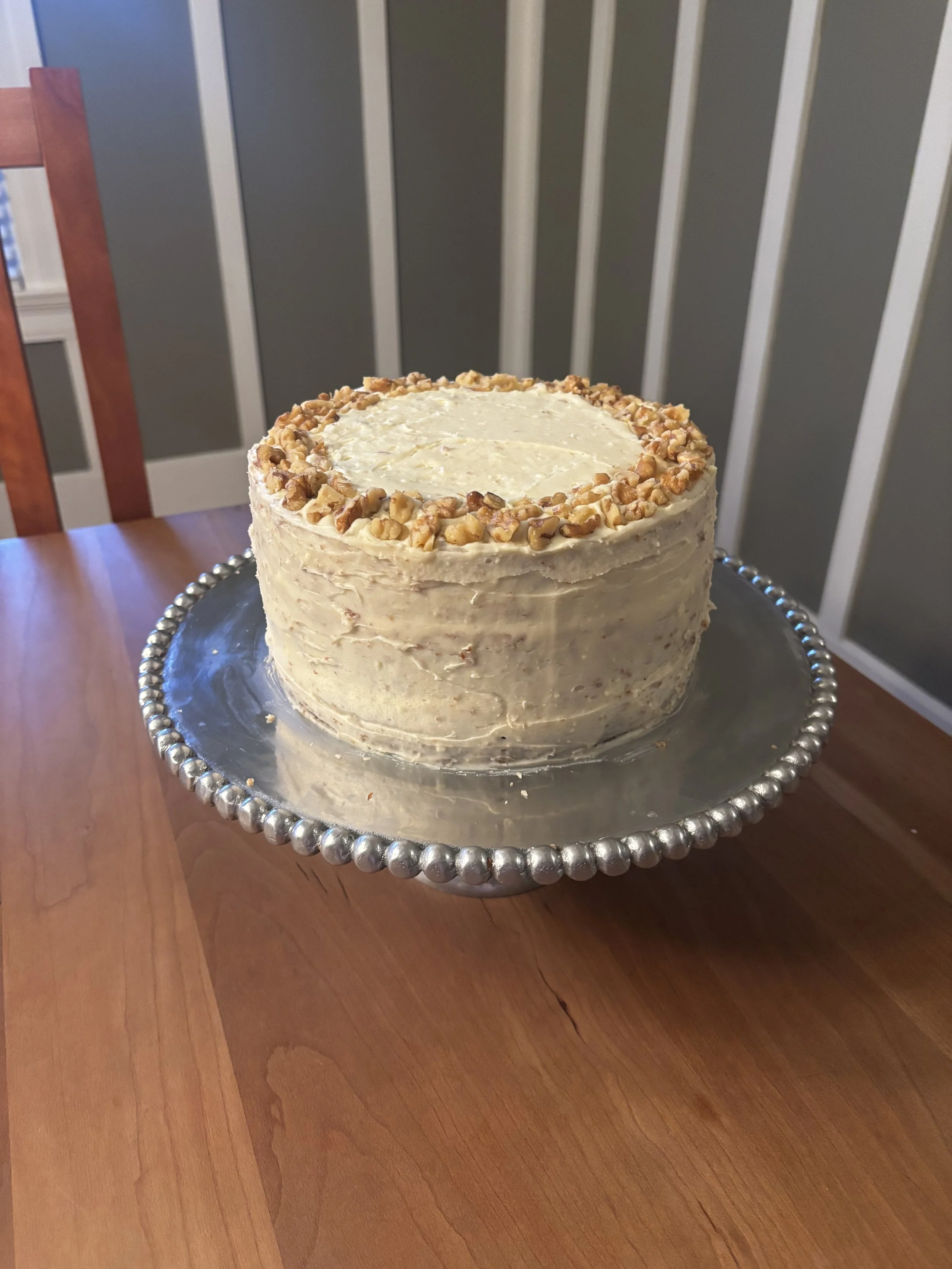
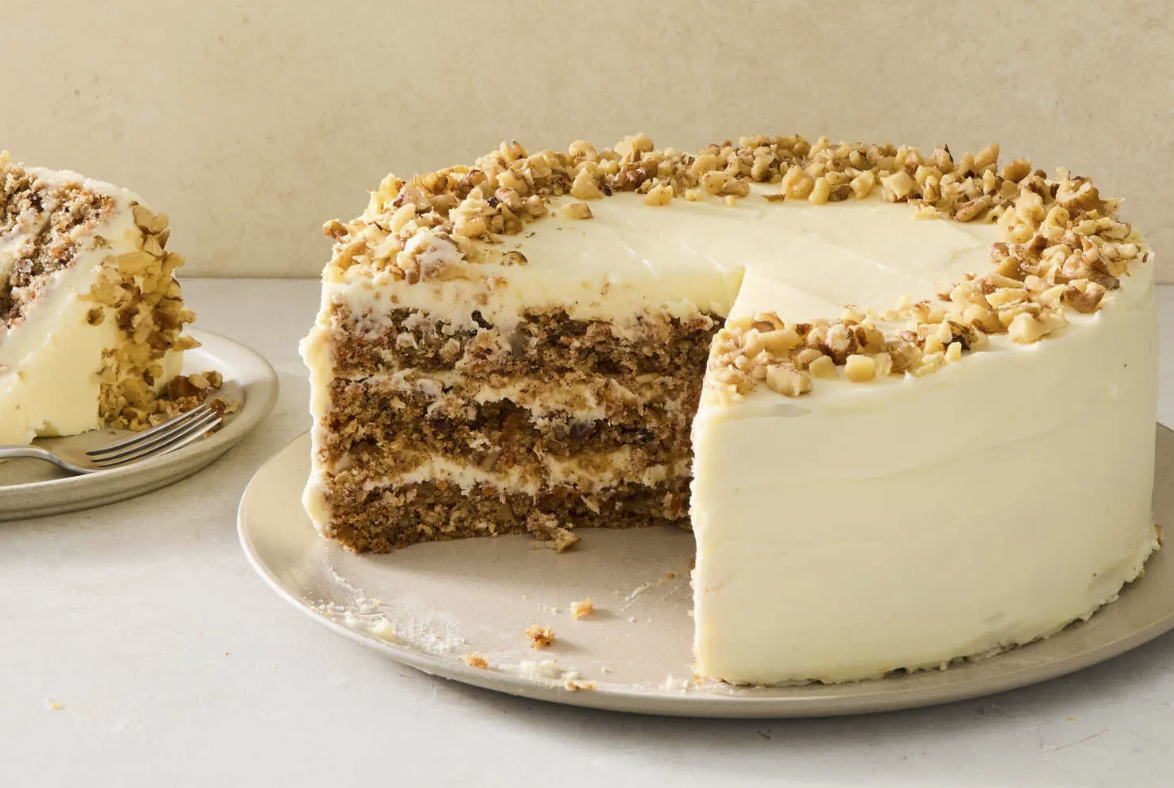
Carrot cake (bottom). Courtesy of the New York Times. The carrot cake I made (top). Courtesy of Meret Pajkic ‘26.
The second recipe was the carrot cake. Many youngsters shy away from this type of cake, but older generations know it is a true gem. In the words of the NYT, this recipe is “not overly spiced, and it has texture from the grated carrots, shredded coconut, chopped nuts, and raisins.”
Again, the instructions for this recipe were clear and easy to follow, and all I had to worry about was creating my batter and cream cheese frosting. Having three equal-sized baking pans was also a true structural game-changer.
This recipe involved a decent amount of chopping of fruits and nuts, as well as the grating of a lot of carrots. These processes took longer than expected, and I again exceeded the hour-and-a-half time recommendation given on the recipe description, instead taking around 2 hours and 15 minutes.
The mascarpone cream cheese frosting, though, was simple as ever. I only had to combine the three aforementioned ingredients alongside confectioners' sugar until smooth.
Overall, I am giving this a 2 out of 5 slices of cake in regard to difficulty.
Visually, this cake far outperformed my first attempt. Each layer was even and consistently coated in frosting. I also felt particularly proud of the walnut ring I created on the top of the cake, which closely resembled the example photo on the NYT website.
Regarding presentation, this cake recipe receives 4.5 slices out of 5.
Just like the chocolate cake, the carrot cake delivered on flavor. My grandmother, Dr. Anne Samson, said, “I love the spices, and the carrots, nuts, and coconut made it delicious.” Garg added on to this opinion with her own and said that “it was so good!”
Concerning the texture of the cake, Lincoln High School student Rachel Langen ‘26 enjoyed “the little crunch.” Her sister, Julia Langen ‘26, also felt that “the cake [was] nice and fluffy.” One critique, however, came from my grandmother's friend, Nellie Madison, who felt it would have been better to include “more cream cheese and less sugar in the frosting.”
Given all of the above, texture receives 4 slices out of 5, flavor 4 slices, and frosting 4 slices.
Recap
Texture: 🍰🍰🍰🍰4 /5
Flavor: 🍰🍰🍰🍰4/5
Difficulty: 🍰🍰2/5
Frosting:🍰🍰🍰🍰 4 / 5
Appearance:🍰🍰🍰🍰 4.5/5
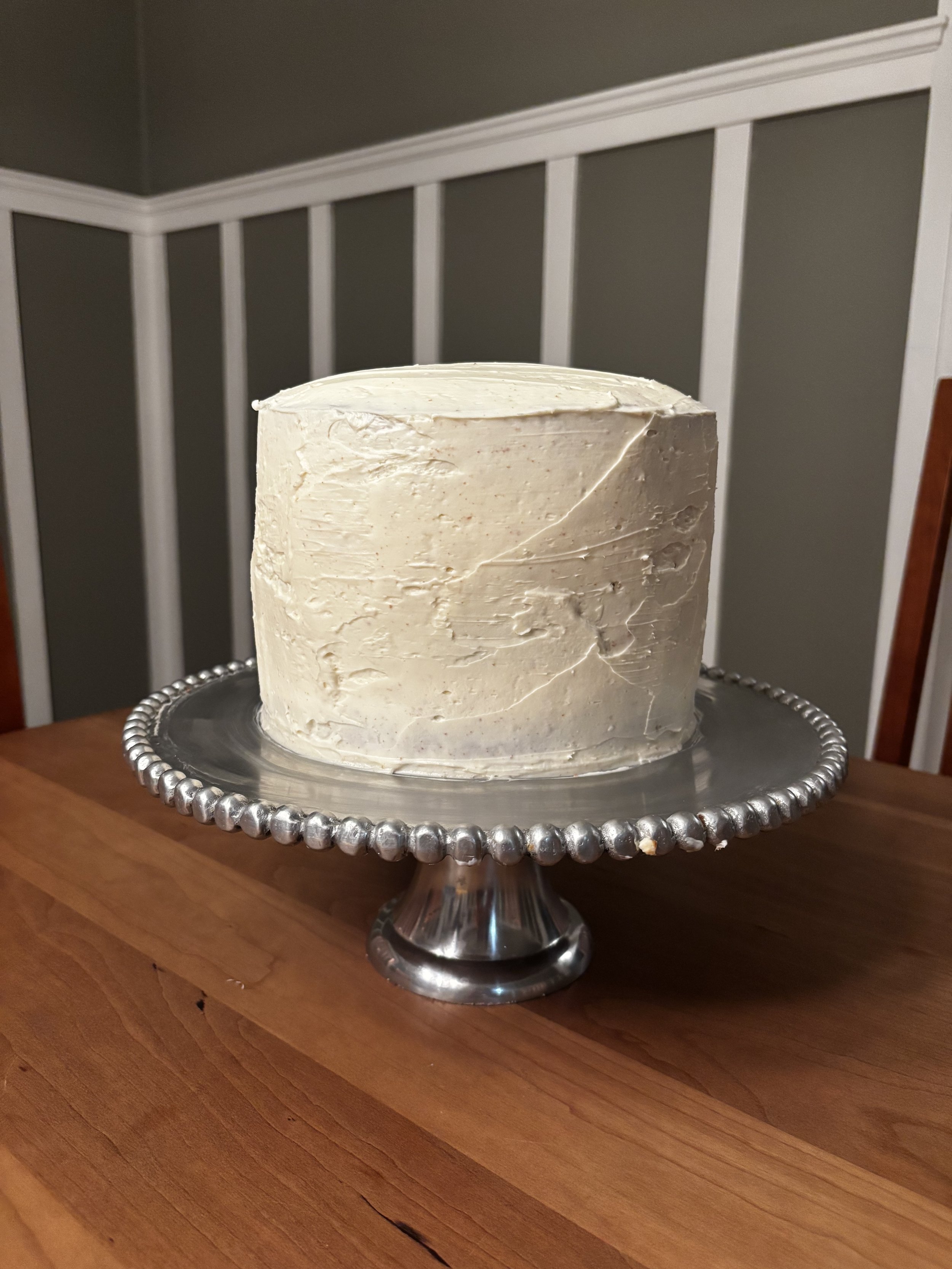
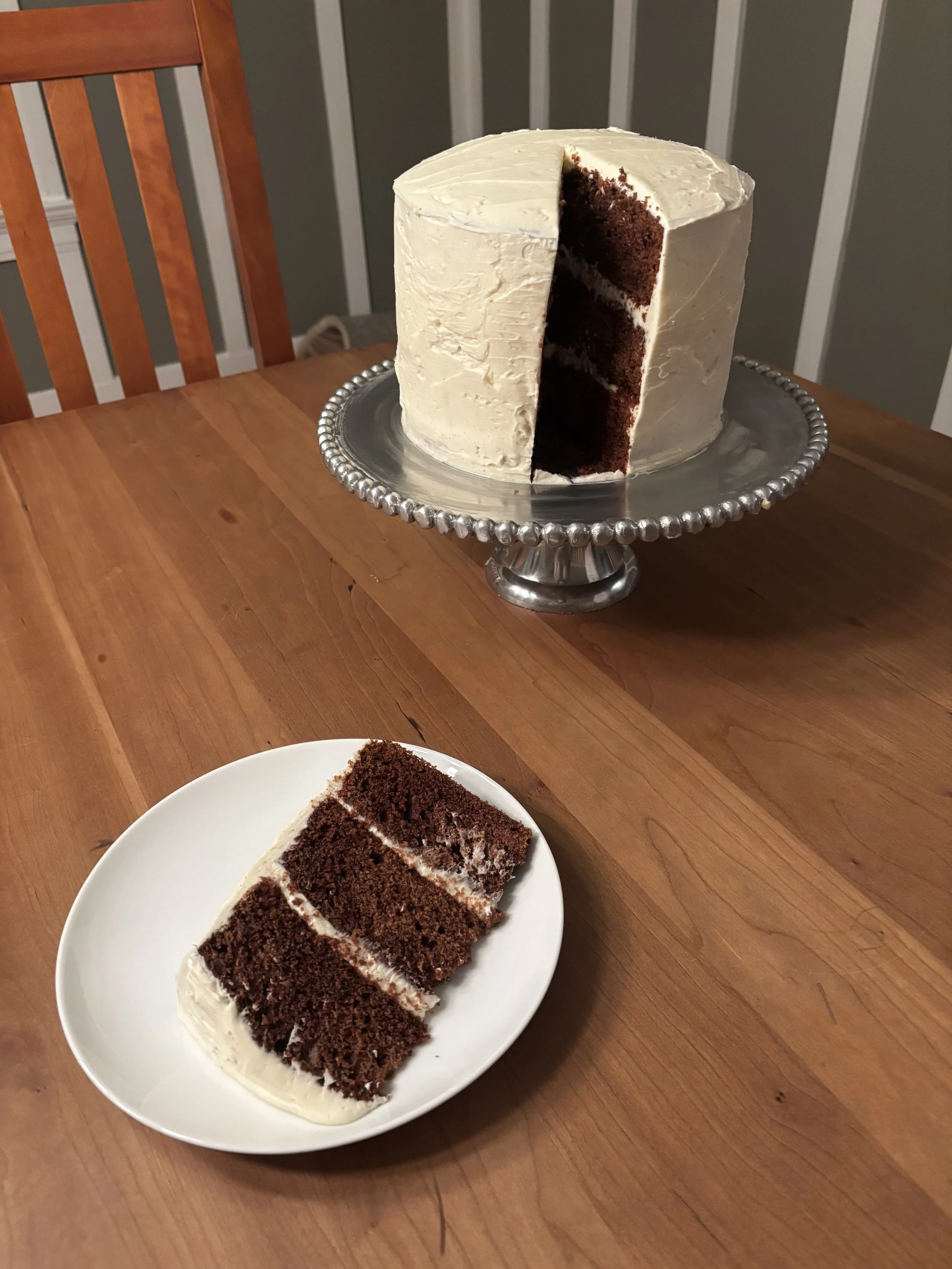
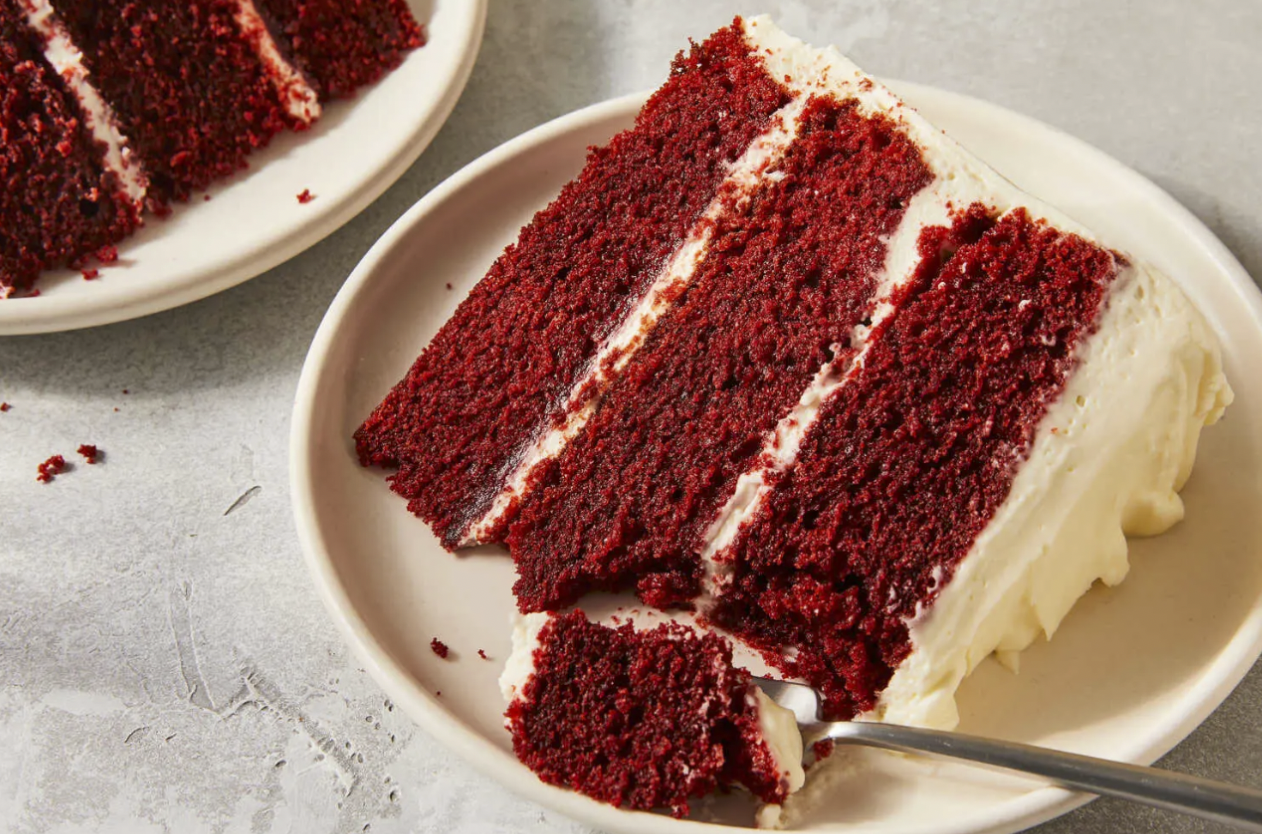
Red velvet cake (bottom). Courtesy of The New York Times. The red velvet cake I made (top). Courtesy of Meret Pajkic ‘26
Lastly, I attempted the infamous red velvet cake, which the New York Times calls “a cake to stop traffic.”
As with all of the other recipes, the instructions were straightforward and well laid out. In a similar fashion to the carrot cake, this recipe consisted of two elements: the cake and the frosting.
For the batter, I mixed the dry ingredients, flour, baking soda, salt, sugar, and cocoa powder, with the wet ones, eggs, buttermilk, butter, and vinegar, and then I evenly divided the mixture into three pans. The icing was arguably even easier, as I elegantly whipped together mascarpone, heavy whipping cream, sugar, and cream cheese to create an addictive substance.
Therefore, I believe that the difficulty is 2 slices of cake out of 5.
However, something during the baking process went tragically wrong. Although structurally the cake was picturesque with clear layers and a sturdy build, it had lost its bright red color.
Alongside this misfortune, the overall appeal of the cake was muddled by a strange smell. My mother, Sarah Samson, compared it to cat food, which, truthfully, was a bit of a blow to my baking ego.
For this reason, the appearance will receive a 2.5 out of 5 slices of cake.
The cake itself tasted decent. There were notes of chocolate, but they were muted; nothing show-stopping by any means. The texture was passable, yet my brother and current Catlin sophomore Luka Pajkic ‘28 did note that it was “a bit on the dry side.”
On a more positive note, though, the frosting was as advertised on the NYT website: creamy and rich perfection. Samson said she could “eat it all day.”
With all that in mind, taste will receive 3 slices of cake out of 5, texture a 4, and frosting a 5.
Moreover, after conducting some research on what could have gone wrong with the cake, I have concluded that it was due to the type of red food coloring I used. It was an all-natural food coloring, which was clearly not effective in changing the color of the cake.
Additionally, I used the entire bottle as per the instructions. Online baking sites have warned against this, saying that food coloring can mess with the taste of recipes, which I believe was the case here.
I will definitely be more careful when using food coloring when it comes to future baking projects, if I use it at all.
Recap
Texture: 🍰🍰🍰🍰4 /5
Flavor: 🍰🍰🍰3 / 5
Difficulty: 🍰🍰2/5
Frosting:🍰🍰🍰🍰🍰5/ 5
Appearance:🍰🍰2. 5 /5
Although I was disappointed by my final cake, my growth as a baker is not linear, and I had a great time testing my abilities in the kitchen. I definitely plan to continue to bake more cakes in the future and feel I have proven to myself that I can indeed successfully bake a tasty cake.
If you are looking to get into baking as well, as online websites go, The New York Times does a great job of walking bakers of all skill levels through high-level recipes.
On top of being rewarding for your taste buds and a great way to spend a free afternoon, baking cakes will also give you brownie points with friends. Some of them might even show up at your house begging for a slice of your most recent decadent creation.
I leave you with a final thought. If you were to host a party, what if instead of buying a cake, you were to bake one from scratch?