
Highs and Lows of the 2026 Winter Olympic Games
By Maddie Snyder ‘26
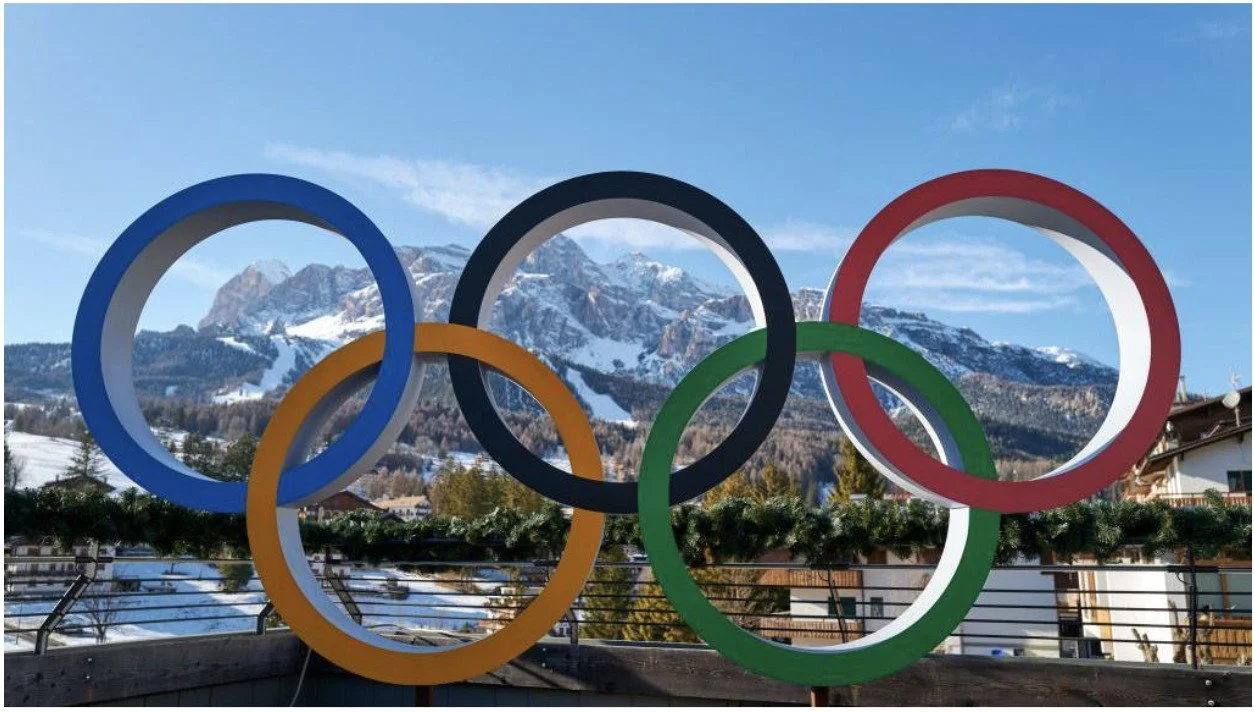
The Olympic rings in the Milano-Cortina village. Image courtesy of the BBC.
This past February was the time every four years, students and teachers watch the sport’s broadcast and say either "absolutely not” or “I could totally do that”: The Winter Olympics.
Milan and Cortina in Italy set the stage for the whirlwind of emotion and competition that theOlympic events provide. Athletes only get one chance every four years to prove they are the best in the world, some thrive and some crumble under that pressure.
This year’s Olympics was full of hopefuls from Team USA, who sent a record high of 232 athletes, including four from right here in Oregon. As is always the case with sports, especially on the international stage, there are stories behind the simple medal results that pop up on google.
So in case you happened to miss, didn’t care to watch or just simply were not following the games obsessively, let me recap the best storylines, social media reactions and results from the 2026 Olympics.
Skiing
Skiing at the Olympics is separated into eight disciplines and 15 different events with medal opportunities. The most popular of which being Alpine and Freestyle skiing, which are race-based skiing and jump based skiing.
In Alpine skiing, USA star Lindsey Vaughn was one of the largest stories early in the 2026 games. Vaugn, the 2010 downhill gold medalist, made a controversial decision to compete in this year's Olympics with an ACL injury. During a practice run Vaugn had a nasty crash and had to be airlifted out of the course, leaving her out of the Olympics and with a near leg amputation.
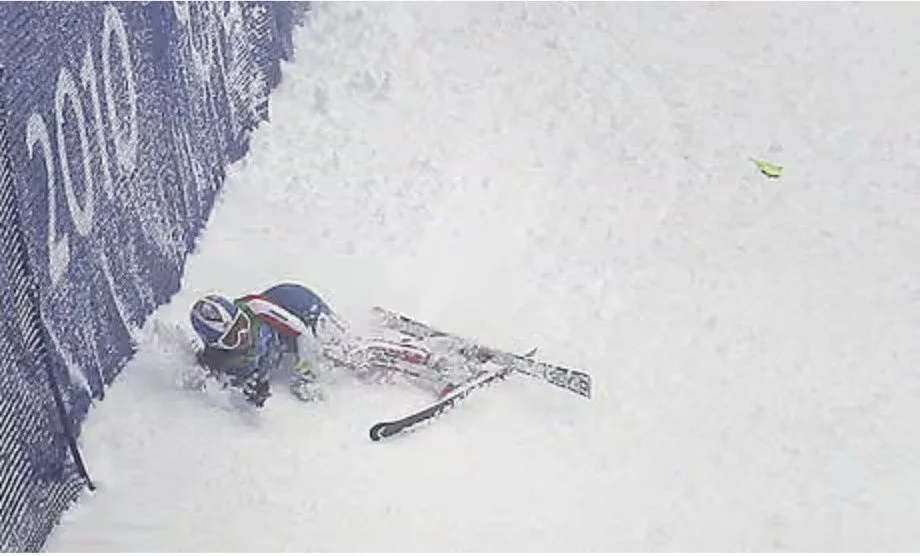
Lindsey Vaugn in the snow following her crash. Image courtesy of The Guardian.
Moving away from the race-based skiing side, in the realm of jump based skiing, the Women’s Slopestyle had the most competitive event in its history.
The score record from last Olympics was broken multiple times throughout the event, with the two medal favourites Mathilde Gremaud of Switzerland and Eileen Gu of China continuing to push and innovate on every run to increase their scores.
In the end Gremaud won gold by only .32 over Gu, but commentators praised the event overall saying the sport was better because of the fierce competition. Following another skiing event where Gu also won silver, a reporter asked her whether “each silver felt like a gold lost”.
Gu snapped back, pointing out the ridiculousness of the inclination that any Olympic medal won was a loss. The response blew up on social media, as Gu has a massive following on both Instagram and TikTok. A few days later when Gu won gold in the Half-Pipe competition, she posted on her TikTok a finale to the saga, saying “Does every Gold feel like a silver lost.”
Snowboarding
Snowboarding, similar to skiing, is separated into five disciplines bearing eleven medaling opportunities, perhaps the most iconic among them being the snowboarding halfpipe.
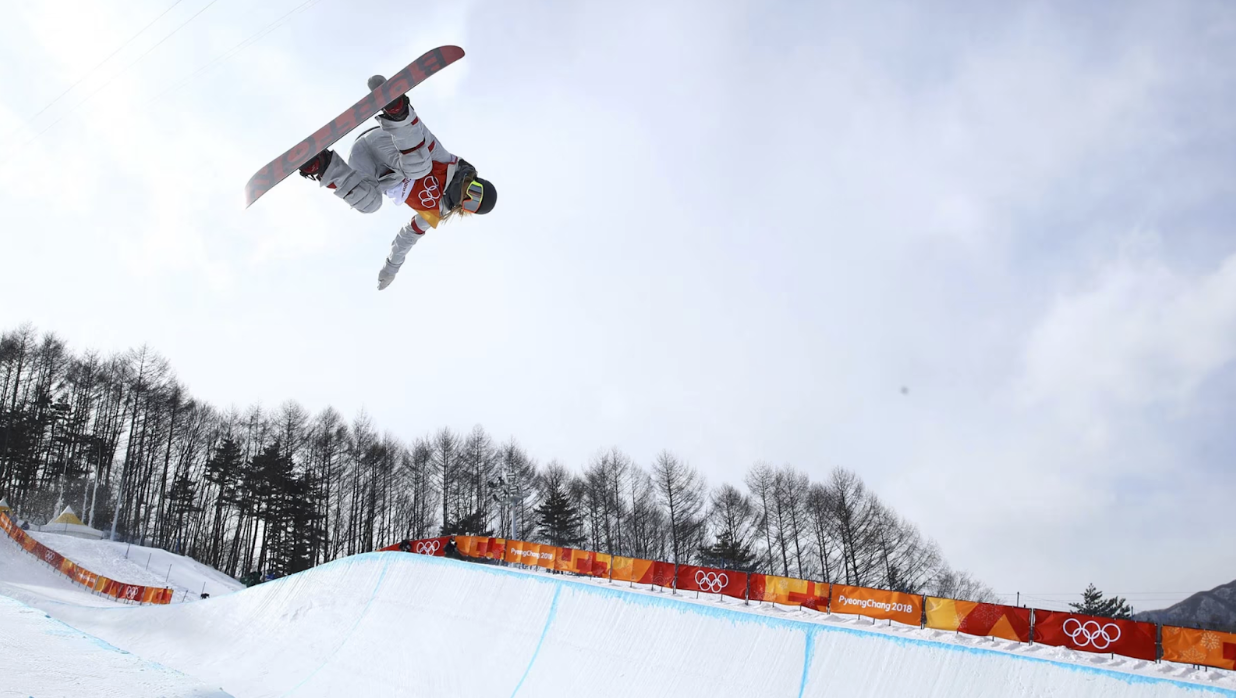
Photo of a female snowboarder completing a half-pipe run during the 2018 Pyeong-Chang Olympics. Image courtesy of the Olympics.
Going into the Olympics USA’s Chloe Kim was the favorite to win, having taken home gold in 2022 and 2018. But Kim, like many athletes at these games, was dealing with a recent injury she sustained in a snowboarding fall earlier in the year, leaving her first competition of the year to be the Olympics.
After qualifiers Kim was left in first place, silencing some doubt in the media. But come finals on February 18th she had some falls trying big tricks. 17-year old Choi Ga-on from Korea jumped at the opportunity, delivering a clean run deserving of the gold medal.
Although one might assume Kim was disappointed at her result, the opposite is actually true. Not only did Kim have to battle through injury to even compete at the Olympics but the athlete that bested her, she sees as a “mirror reflection of herself and her family.”
Kim, a Korean-American, has served as somewhat of a mentor to Choi. Kim and Choi’s fathers have a close relationship and the Kims held a part in bringing Choi over to train in the United States. “I love Gaon so much. I’ve known her since she was a very small child,” Kim told reporters following the event. “Seeing her at this big stage is such a full-circle moment. I definitely feel old, but it’s really cool to see how much she’s progressed. I met her when she literally started halfpipe snowboarding.”
Kim also won her first gold medal at seventeen and was glad to “pass the torch” to Choi. It’s stories like the one between Kim and Choi that leave a potentially disappointing Olympic podium for fans unbelievably heartwarming instead.
Figure Skating
It’s the most talked about sport at the Olympics, that is barely mentioned any other year: Figure Skating. Figure skating is typically at the center of Olympic drama and viewership, consistently being one of the top three most watched sports every four years.
Figure skating is separated into four events: pair skating, ice dance, men’s singles and women’s singles. The best way to distinguish between pair skating and ice dance, as both compete in pairs, is pair skating jumps and throws, while ice dance is purely lifts and skating steps.
Throughout these Olympics, not one broadcast or advertisement was complete without a reference to figure skater Ilia “Quad-God” Malinin. Malinin has been absolutely dominating men's figure skating for the better part of three years now. Equipped with a “quad-axel”, a jump completing 4.5 rotations that only Malinin has ever been able to land in competition, he was the lights out favorite to win the men's side.
After a near-perfect short program, placing him in first going into the long, it seemed that everyone’s predictions would surely come true. But come the free skate Malinin was faced with an Olympic nightmare, falling three times in his free skate, leaving his final position at the Olympics as eighth.
Milan-Cortina was Malinin’s first Olympics, and adding on the heaps of press attention could not have made the experience easy for any of the skaters. Malinin was far from the only one to stumble during the free skate; every skater within the top fifteen fell on at least one of their elements.
The only athlete to skate completely clean was Kazakhstan's Mikhail Shaidorov, leaving the twenty-one year old to watch routine after routine first believing he won bronze, then realizing he had achieved silver and eventually, after Malinin’s skate, was left shocked as he was crowned Olympic champion.
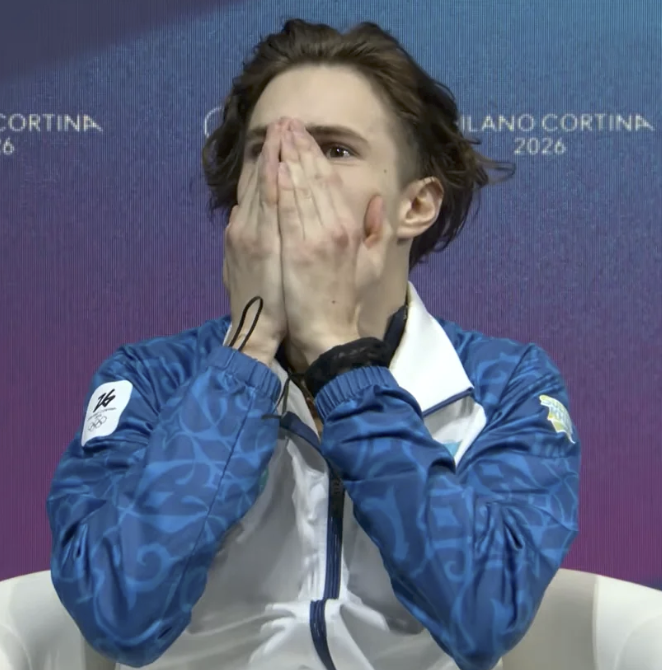
Mikhail Shaidorov realized he was the Olympic champion. Courtesy of the Olympics.
Shaidorov, the first ever Kazakhstanian gold medalist in figure skating, grew up skating at his local mall rink as he couldn’t afford fancy coaches or rink time. After the event some fans blamed the quality of the ice for the chaotic nature of the event. If that was true and the ice had been soft, Shaidorov would have been one of the only ones to have experience on sub-compital ice conditions like that.
Meaning that the thing that was Shaidorov’s disadvantage in his early career might have just been the thing that won him the Olympics.
Leaving the chaos of the Men’s event behind, the Women’s event was an absolute celebration of sportsmanship and girlhood. The competition was tough with skaters like the consistent and experienced Kaori Sakamoto from Japan, triple-axel jumper Amber Glenn and former child prodigy Alyssa Liu both from the USA.
Milano-Cortina was not the 20-year old’s first rodeo at the Olympics. Liu competed at the 2022 games in Beijing at just 16 years old after winning two USA championships at 13 and 14 years old, making her the youngest to ever do so. Liu, who was once hailed as the great American hope in figure skating, retired shortly after Beijing at just 16 years old.
She took time off from the sport to live a normal life she never got to have, traveling, making friends and attending college at University of California Los Angeles. Until in 2024, just two years into her retirement she wanted to see if skating could be fun again so called up her coaches and her dad, declaring that she would come back on her own terms.
Liu would decide her music, her costumes, her schedule, a level of control often unprecedented at this high a level of figure skating. In 2025 when she mounted her comeback, many didn’t know how it would go. She hadn't attempted jumps in two years, during which her body had changed though puberty.
Liu’s strength though was in her attitude. She skated because she loved it, not because of any pressure to excel. It made her performances contain energy that led to her winning gold at the World Championships in March last year.
She got to showcase her skills and love for the sport on Olympic ice this year and while wearing a gold sequined costume skating to "MacArthur Park Suite" by Donna Summer, won the Olympic gold medal. Sakamoto placed second, ending a decorated international career with a silver and the teenage Kai won bronze in her first ever senior international season.
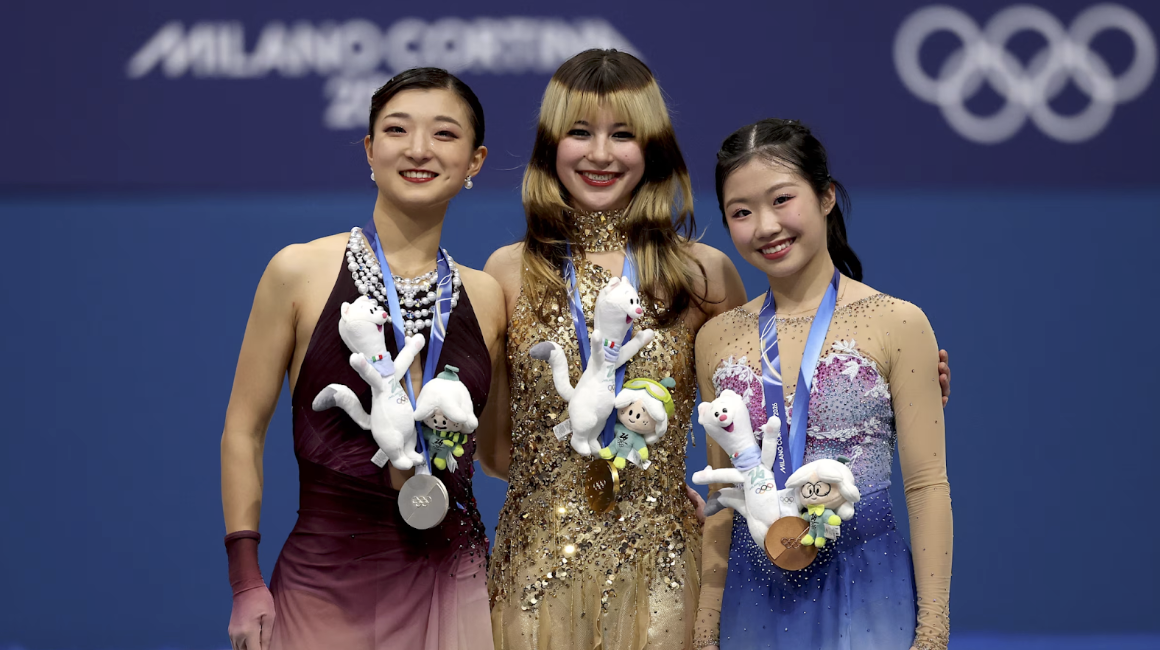
The Olympic medalists posing on the podium. Sakamoto (left), Liu (center) and Kai (right) Image courtesy of the Olympics.
When Kai had realized she won a medal, the first person to run and congratulate her was Liu. Glenn, who had felt the media pressure after making mistakes in her short program, helped shield a crying Sakamoto, who had been hoping for gold after the event from press cameras. Leaving the women’s event was a good lesson in being yourself and prevailing sportsmanship.
Hockey
In women’s sports there is perhaps no rivalry as prolific and intense as the one between the Canadian and United States hockey teams. Since 1987 when the women’s championship was first created, only the two teams have won the Olympic gold. Before the Olympics Canada had won 106 of the past 194 games, and four out of the past six finals.
Both teams battled through the bracket to the final once again, this time around the United States took the gold. The game was massively competitive and hailed as one of the best games, mens or womens, of the whole Olympics. Women’s hockey had just recently got its own professional league in 2023(the PWHL); the Olympics typically being the only place where these talented athletes get to showcase their skill for the world.
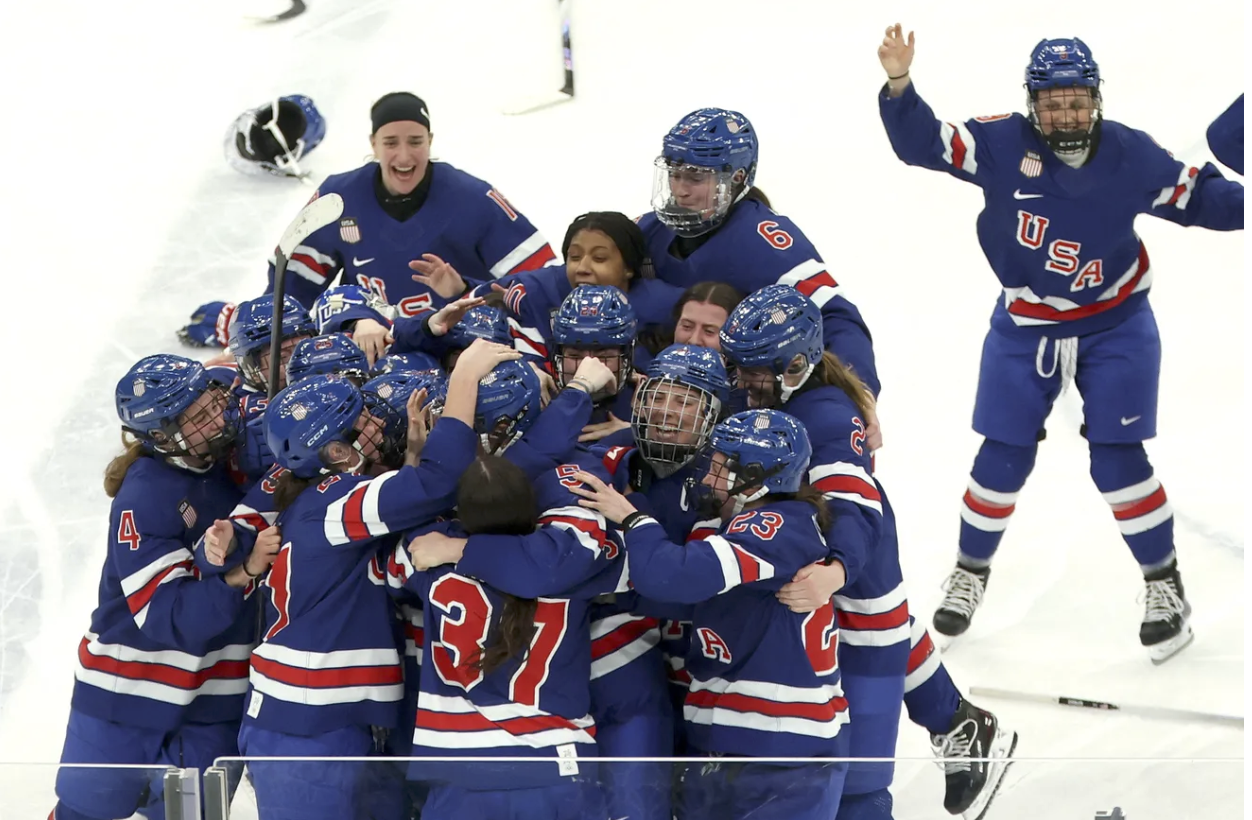
The United States women's hockey team celebrating after their victory over Canada. Image courtesy of the SC Times.
Different from the women’s side offering a stage for the women’s sport, the men’s side of Olympic hockey operates more of an “Avengers assemble” spectacle. Similar to other international team sports, countries call up their best players from professional leagues to play in games. Canadian and United States talent dominates the National Hockey League (NHL), meaning calling up the best of those players for international play leads to all-star game level play throughout the whole tournament.
The level of hockey viewers were able to observe in both final games was deserving of gold in and of itself. The men’s gold medal match, which was also a matchup between the USA and Canada went into sudden death overtime: three players from each team played for fifteen minutes, with the first team to score winning gold.
Well, they would have played for fifteen minutes if Jack Hughes from the United States hadn’t put the puck in the goal two minutes before. Hughes scored with a wicked shot and missing four teeth from a stick to the face earlier in the game.
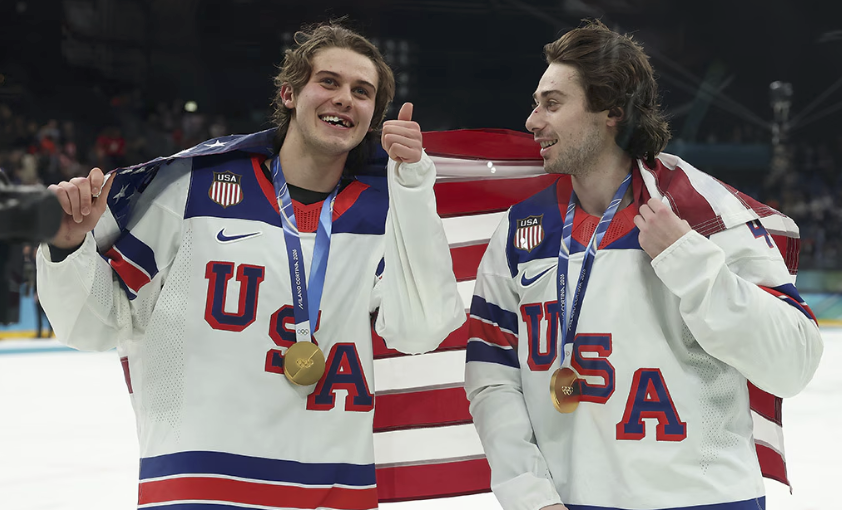
Jack Hughes (left), celebrating after the gold medal match. Image courtesy of E! News.
The win marked the first time the men’s side has won since the “Miracle on Ice” in 1980, where the underdog USA won against the powerhouse soviet team, and the first time both the men's and women's side won Olympic gold at the same time.
Curling and the “I could do that!” sports
If over the past month you turned on the TV and asked “What Olympics are on right now?”, the odds were it was curling. There seemed to be an abundance of curling matches taking up the broadcasting spots in between the more popular events.
It’s a sport many watch and consider boring, but this year’s curling competition brought its own fair share of dramatics. Canada’s highly competitive curling team found themselves in the middle of a cheating scandal when one athlete was accused of an unfair touch of the massive granite puck, called a Rock. An argument broke out on the ice, marking what was probably the first aggressive curling match.
It’s a natural instinct to watch the Olympics and wonder how you two can be decked out in gear, living in the village and prancing around at the parade. For many they set their sights on more niche sports as it’s not really realistic to place all bets on a sport like figure skating.
Sports like curling or skeleton often become the object of people’s desires. If you were wondering how you can become an athlete that hurtles down a track on what is practically a baking sheet, also known as skeleton, it doesn’t require child-hood training in the sport.
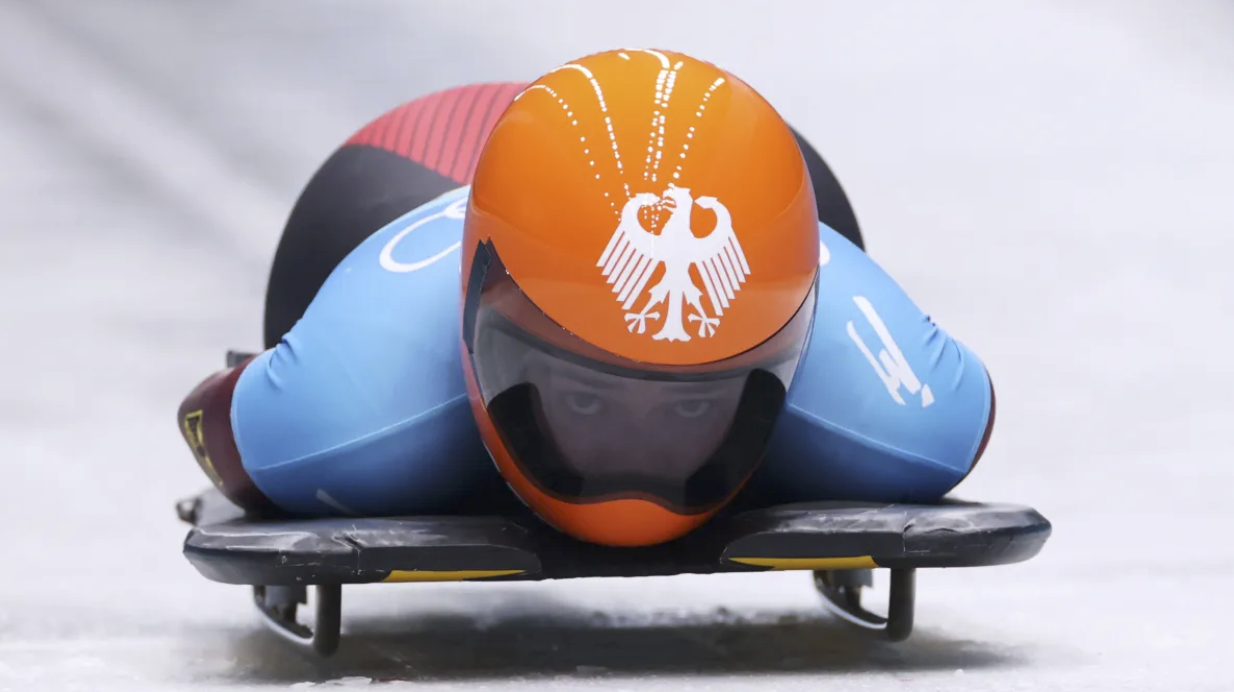
A Skeleton athlete competing in the 2022 Olympic games. Image courtesy of NBC Los Angeles.
Many skeleton, and similar sport athletes begin as track runners. Countries will scout competitive sprinters that won’t make it as a runner but are still extremely fast, take them to a facility and let them try out the sport. Due to the run up required to build speed for the event, runners make the best athletes in sports like skeleton.
Sports can be great unifiers to many. Feeling the off-field (or ice) stories play into the emotion you see contributing to the final push for a goal or landing the final jump in a skate program.
Olympics don’t exist outside the geo-political context of the countries competing in them. The 2026 games were no exception. Russia was banned from competing due to their invasion of Ukraine, although many athletes still competed in the games, just under different flags. US athletes were asked many times in press conferences their thoughts on representing the stars and stripes with the current administration.
The triumphant and inspiring moments don’t exist despite these pressures, they exist alongside them. Let the 2026 Olympics remind you that stories of sportsmanship and solidarity can still happen, despite everything stressful happening around us.