
Portland’s prized Powell’s — a look into the world’s largest independent bookstore
By Luna Flores ‘26
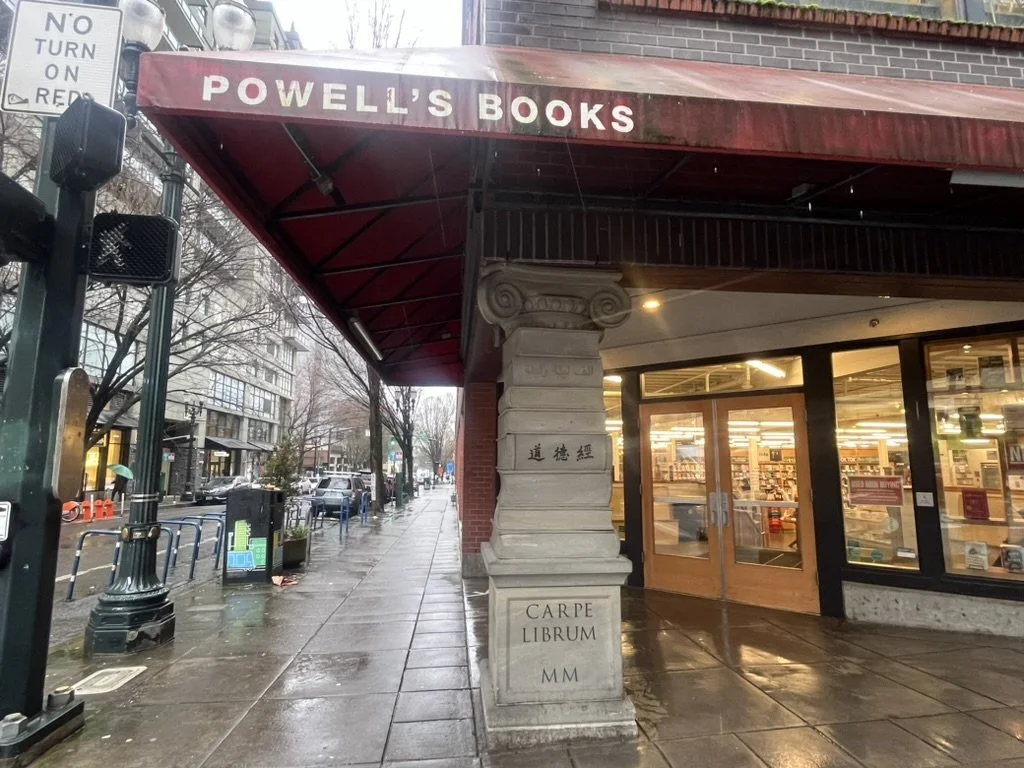
Photo by Luna Flores ‘26.
It’s a dreary February day as soaked Portlanders trudge through the downtown streets, when a beacon of light seems to illuminate off of one impressive 68,000-square-foot building: Powell’s Books. Here, the warmth and possibilities of sci-fi novels and self-help books radiate as you peruse the aisles of the four-story establishment.
Walking through the Southwest entrance on 11th Avenue and Couch Street, a pillar constructed of concrete books stands tall, branded with a play on the common Latin phrase Carpe Diem, meaning seize the day, but now Carpe Librum, meaning seize the book: certainly a philosophy held by plenty of storegoers, as Powell’s is a bustling place even on a weekday morning.
Rarely does any booklover who finds themself in the Pearl District not enter the store. The popularity of Powell's is known and recognized by Portland locals and tourists alike.
But…why has it grown to be so iconic? What's the difference between this world-renowned bookstore and any other small bookstore or mom-and-pop shop? Why does it consistently appear on travel guides and make Tripadvisor's top things to do in Portland list?
Catlin Gabel School (CGS) librarian Derek King reflected on his past experiences with Powell’s Books, “I often encounter so many books that I have either never heard of, have heard of and had some interest in, or…just different stuff.”
More than just the average bookstore, Powell’s is the world’s largest independent bookstore, with a particular emphasis on selling new and used books. While Powell’s has multiple locations in the Portland area beyond its Pearl District location (including a store in Hawthorne, Cedar Hills Crossing, and even the PDX Airport), the store is still considered independent.
This means Powell’s is locally owned, operated, and considered a non-chain retail business. Independent bookstores historically serve as community hubs for members, an important third place, an essential attribution of Powell’s brand and establishments.
Interestingly, Powell’s roots originally began in Illinois with a bookstore owner, Michael Powell, in 1970. His father, Walter Powell, worked one summer with him in the Chicago store, and loved his experience so much that upon returning to Portland in 1971, Walter opened his own used bookstore.
By 1979, Powell’s had grown immensely, partly due to the growing collection of used books that passed through the store’s doors. Once he returned to Portland, Michael joined his father in the business, creating a bookstore that had a unique quality: selling used, new, hardcover, and paperback books all on the same shelf.
The expansion of the book catalog sparked a need for a bigger location. The store moved to its current residence in the Pearl District, a former car dealership with tall ceilings and plenty of room.
Since then, Powell’s has become an iconic part of the Portland cultural sphere, opening up new locations across the city. King explained that when living in Southeast Portland, he’d often find himself conveniently at the Powell’s on Hawthorne, but now stops by the one downtown as it's on his way home from CGS.
Similarly, sophomore Rachel Meltzer ‘28 reflected on her experience visiting the various Powell’s locations, and spoke to the convenience of having the Hawthorne one “really close” to her home. When talking about her main motivations to enter the store, she exclaimed, “I love the smell of books, and I love being around other people who like to read.”
Though not a regular customer, Meltzer’s interactions at Powell’s seem to reflect those of King, someone who visits only a few times every month or so, but appreciates the ambiance of the store and never leaves empty-handed.
She added how “[she] definitely [goes] into it without an idea, and [she] usually [comes] out with a book,” explaining how, like King, the store often inspires her to pick up new books and start fun series.
26 CGS survey respondents seemed to share this experience, with many also noting that they visit the store a few times per month, across a wide range of locations (though it seems for the CGS community, there aren't many who visit the PDX airport just to get their Powell’s fix).
Meltzer reflected on how the last time she visited Powell’s, it was to buy one of her favorite books, Ace of Spades, as a gift for someone. Similarly, King often goes to Powell’s searching for possible gifts, adding that their options are "underrated."
Speaking specifically about his experience with finding gifts at the store, he recalled how his neighbors had recently bought him a cookbook from Powell’s for Chrismtas, “And I was like, oh I wasn't expecting that. I'm gonna do that, too.”
He explained how the next time he went to get a gift for someone, he looked in their large collection of cookbooks, “I knew I'd find something great there.”
CGS survey respondents, King, and Meltzer all agreed that more often than not, they visit Powell’s to find fun and eccentric gifts that aren't necessarily books.
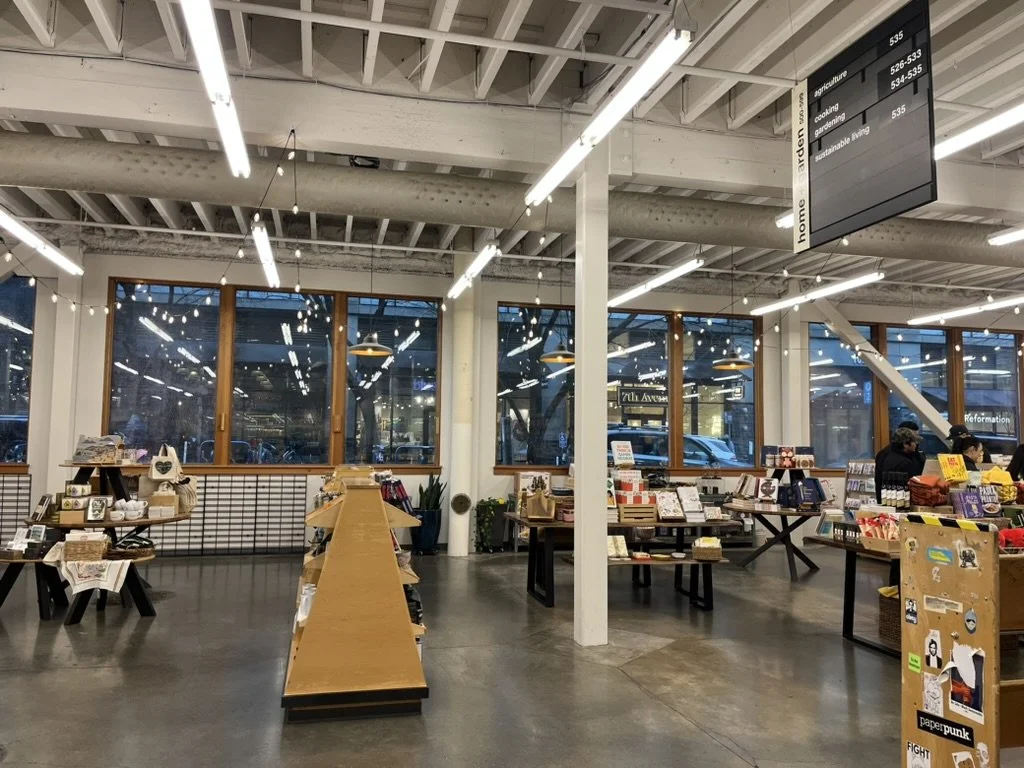
The gift section at the SW entrance of Powell’s Books in downtown Portland. Photo by Luna Flores ‘26.
Their gift sections, which often include various knickknacks and other smaller items, are what one survey respondent described as full of “lots of great goodies worth picking up in a pinch.” These items include homemade mugs, arts and crafts, puzzles, and a particular emphasis on Portland-based brands that reflect the funkiness of the city.
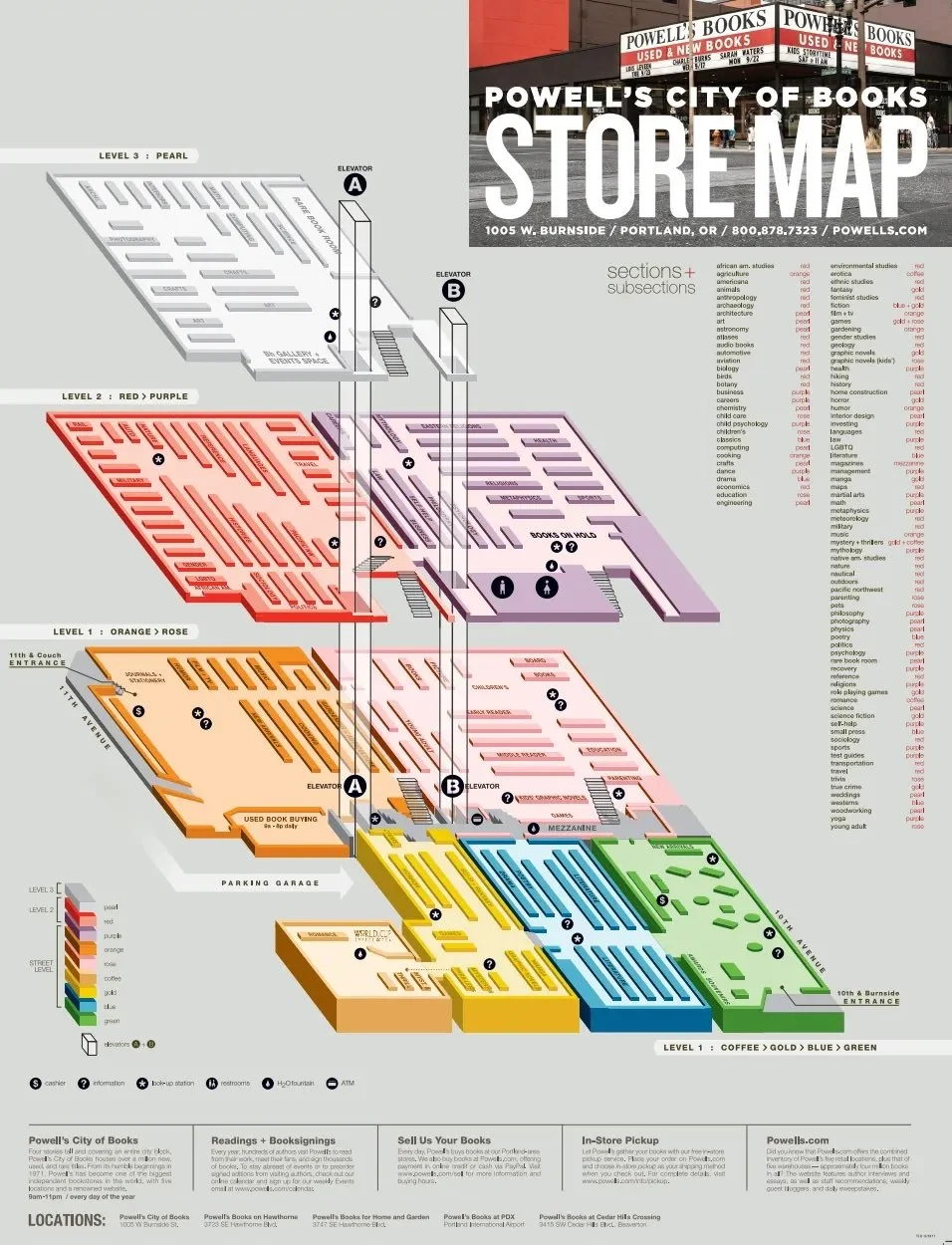
A map of the levels and rooms for the downtown location of Powell’s Books. Courtesy of Powell’s Books Website.
The unique organization of the store leans into that funkiness. In the downtown location, Powell’s is separated by “rooms” that are distinct and color-associated.
The multi-level building allows for the maximization of each room, with different levels assigned to different colored rooms. Each shelf is bursting at the seams, organized but varying in book texture, feeling, genre, and wear.
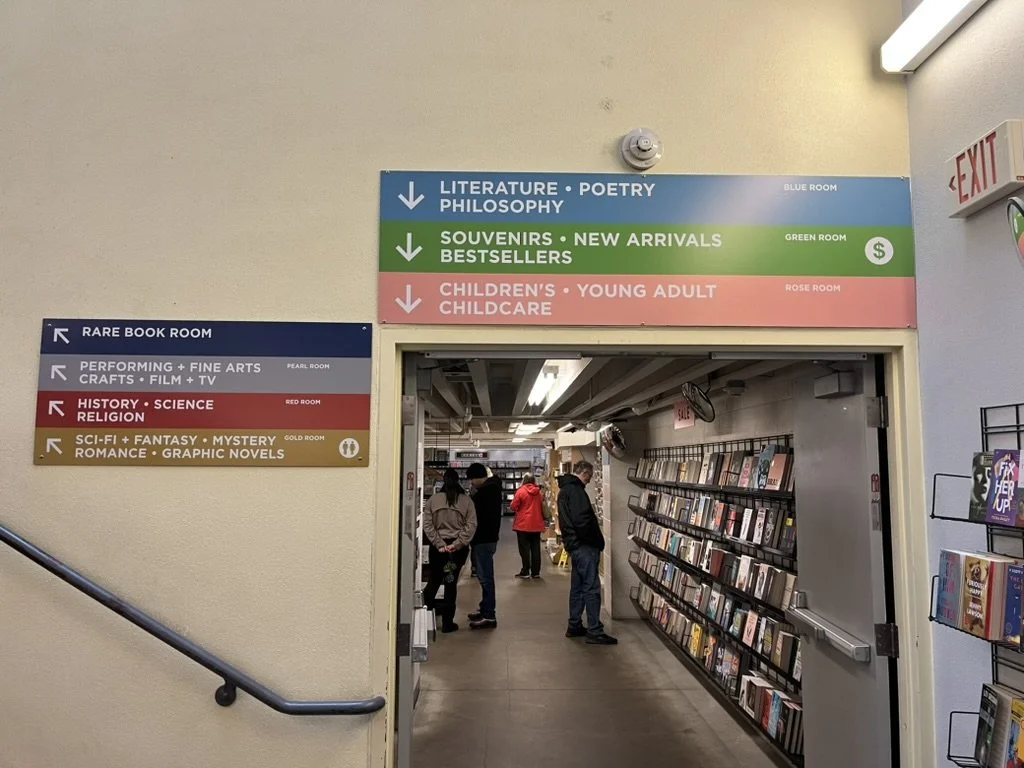

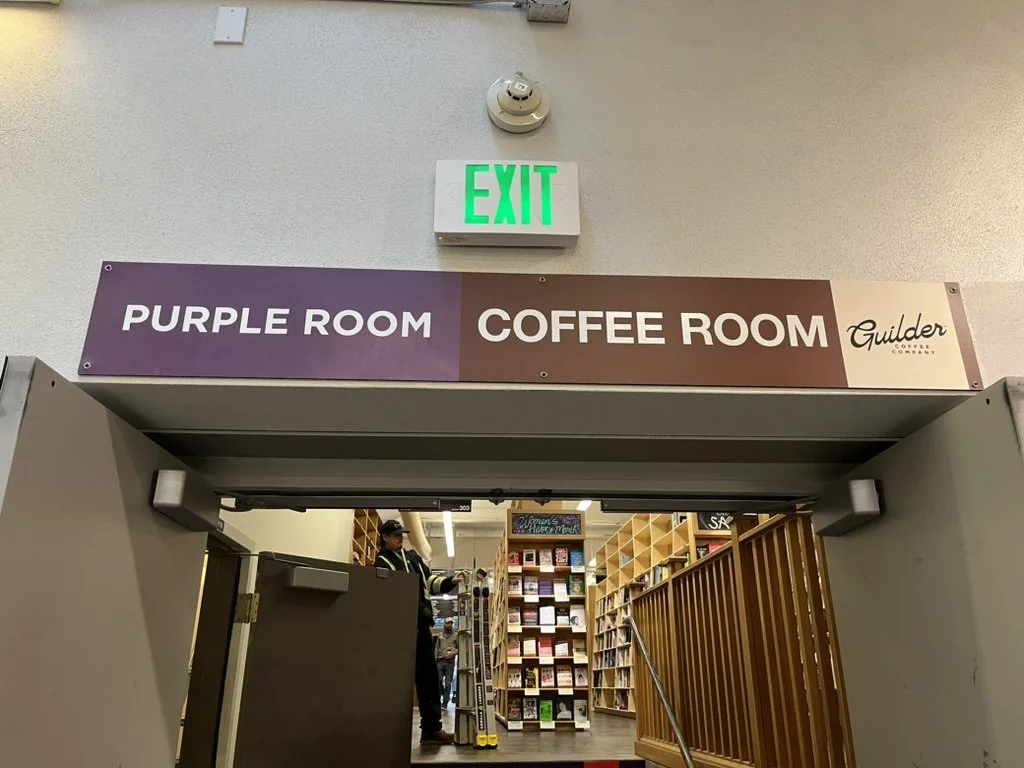
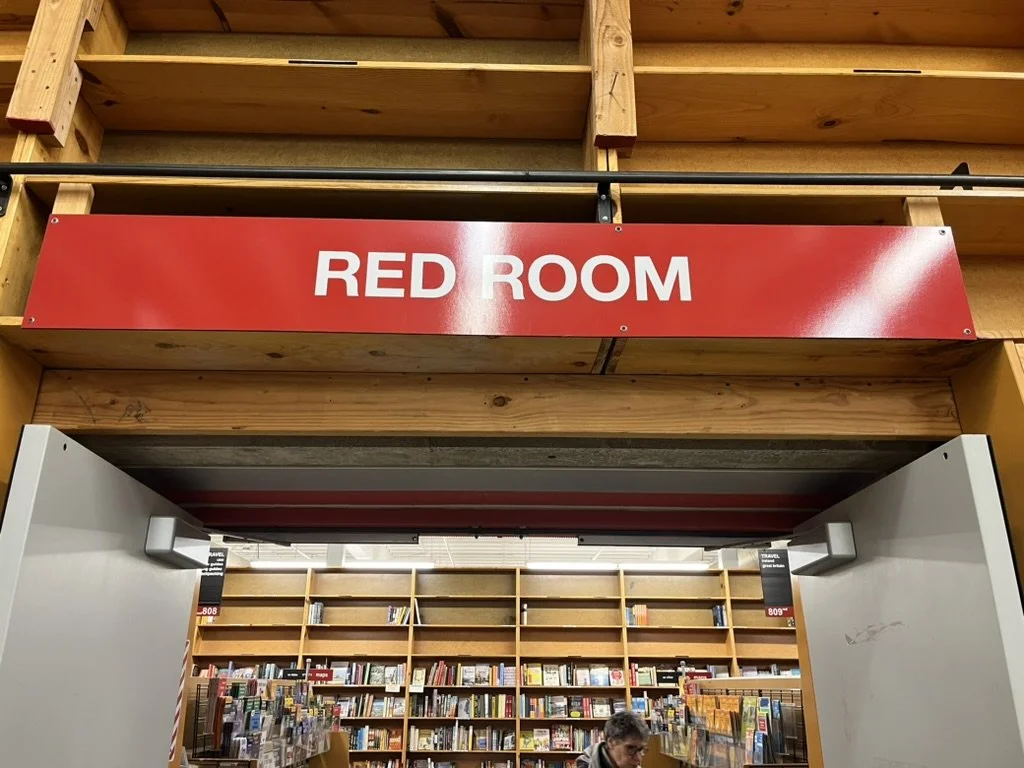
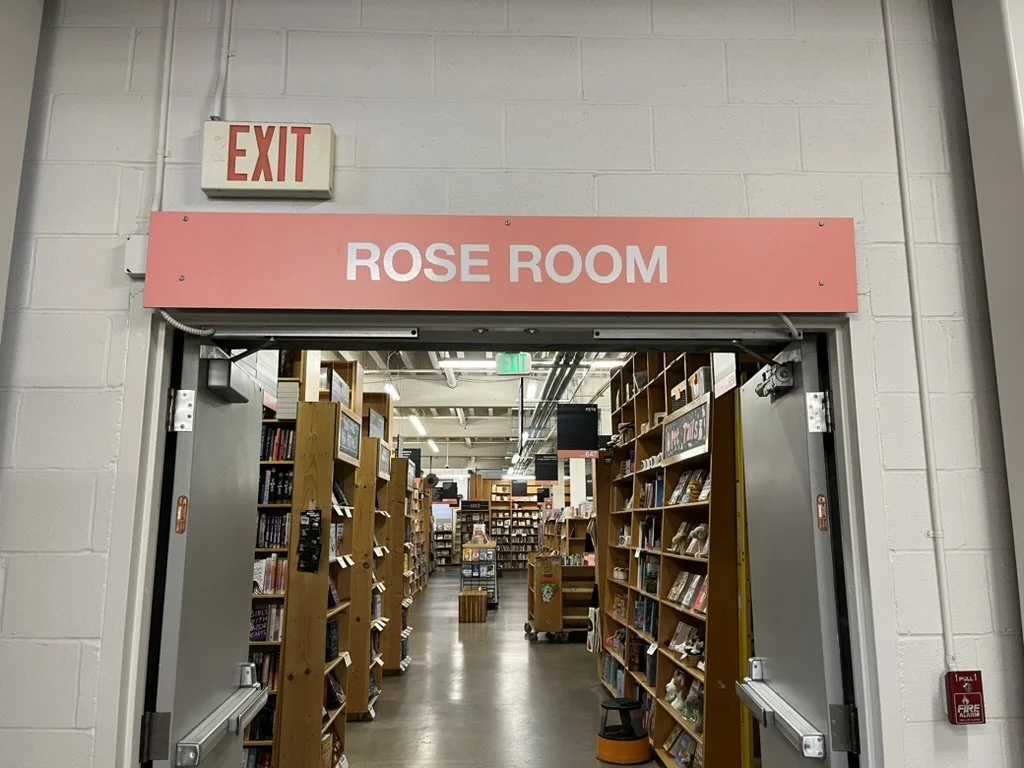
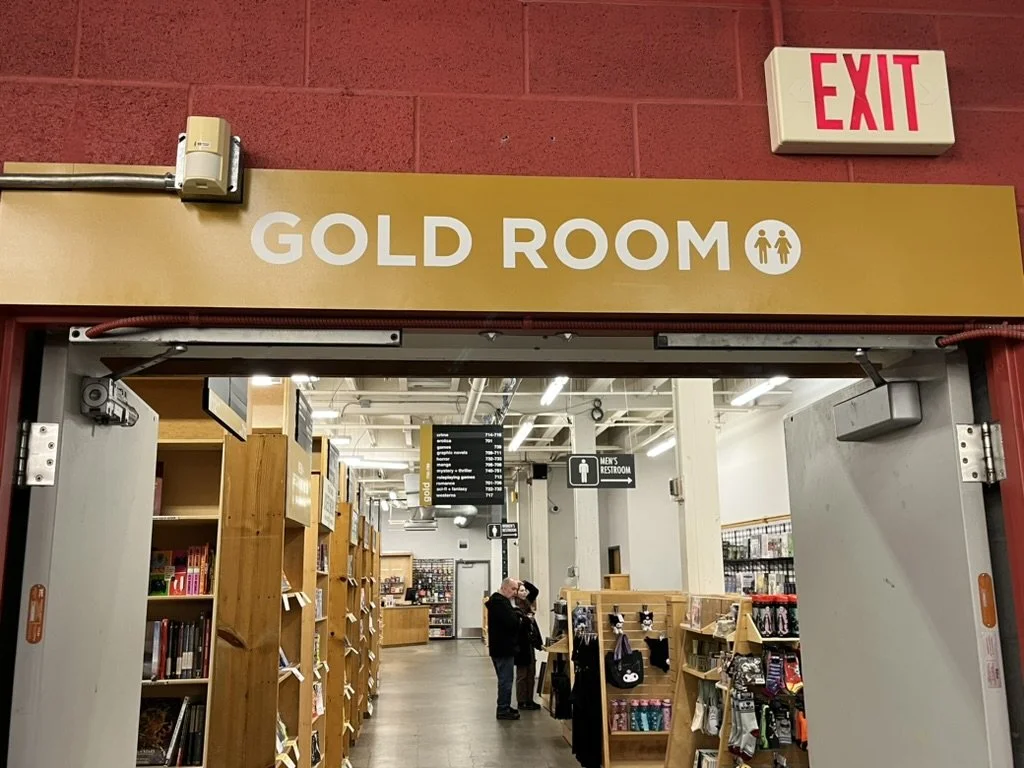
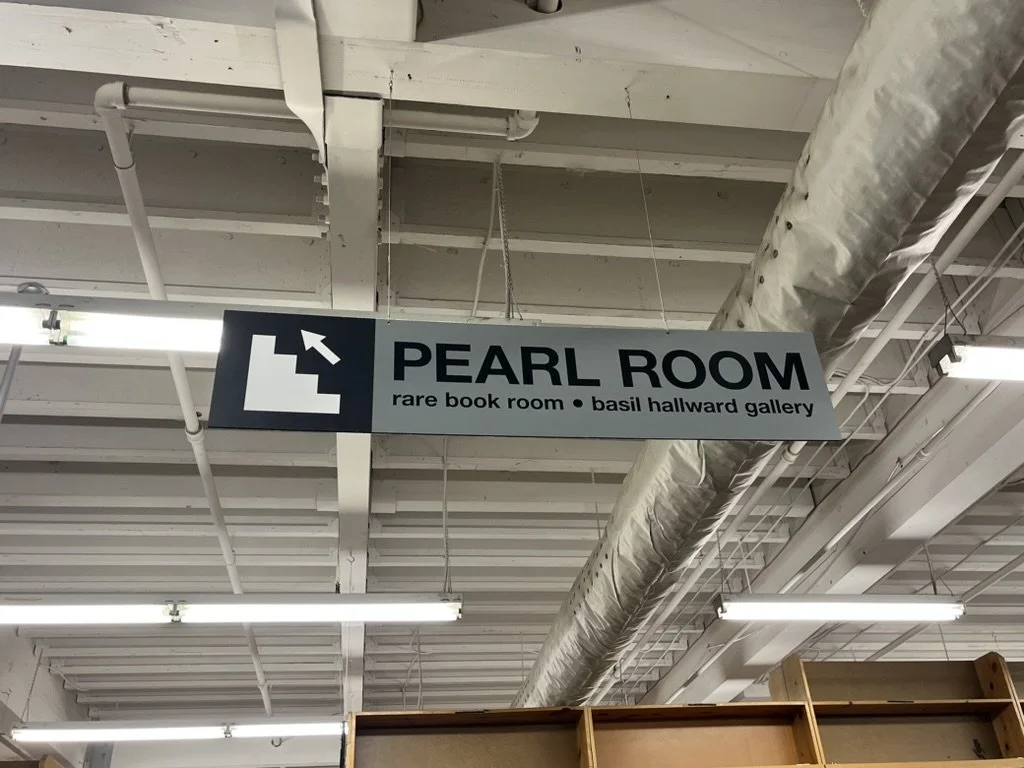
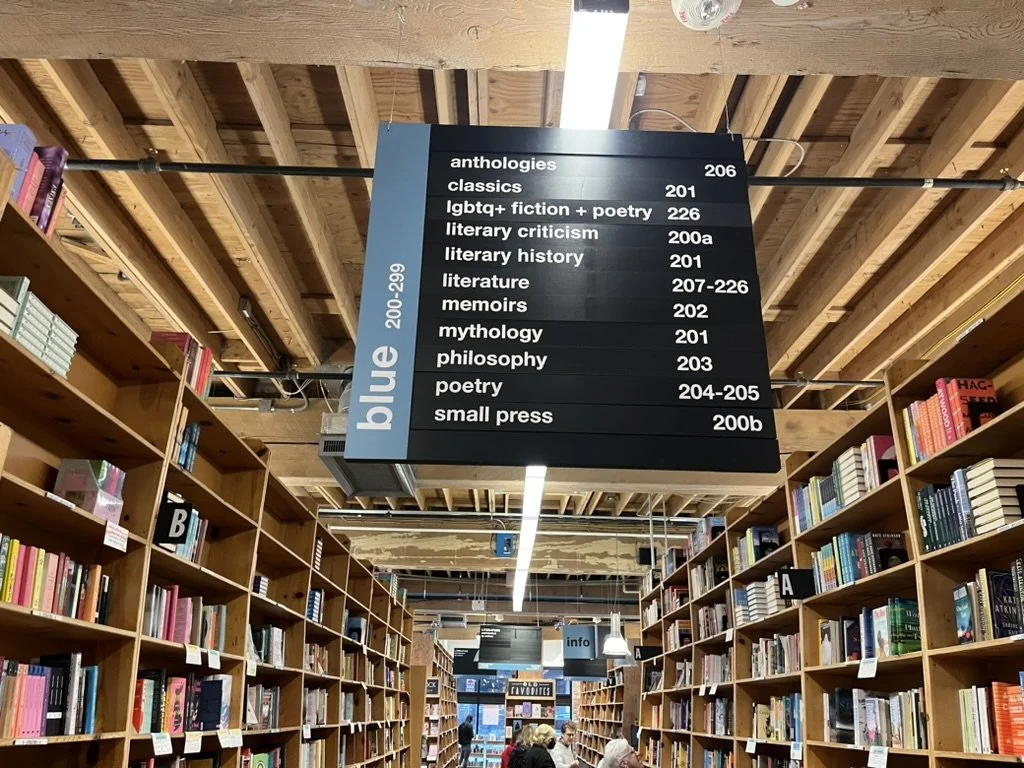
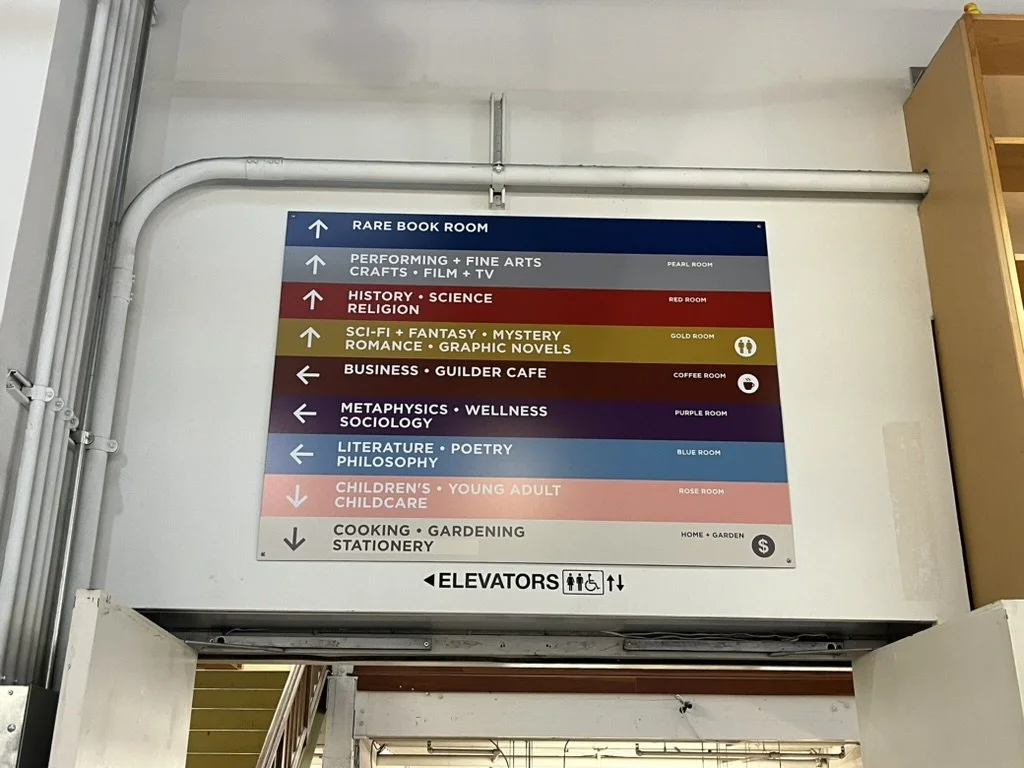
Colored signage clearly separates each room into specific genre and book sections. Photos by Luna Flores ‘26
Popular rooms include the “Rose Room,” typically where the young adult novels are located, and where many survey respondents wrote they often find themselves wandering. Additionally, CGS students appreciated the relevance and changing collection in the “Green Room,” where popular best sellers and new releases can be found.
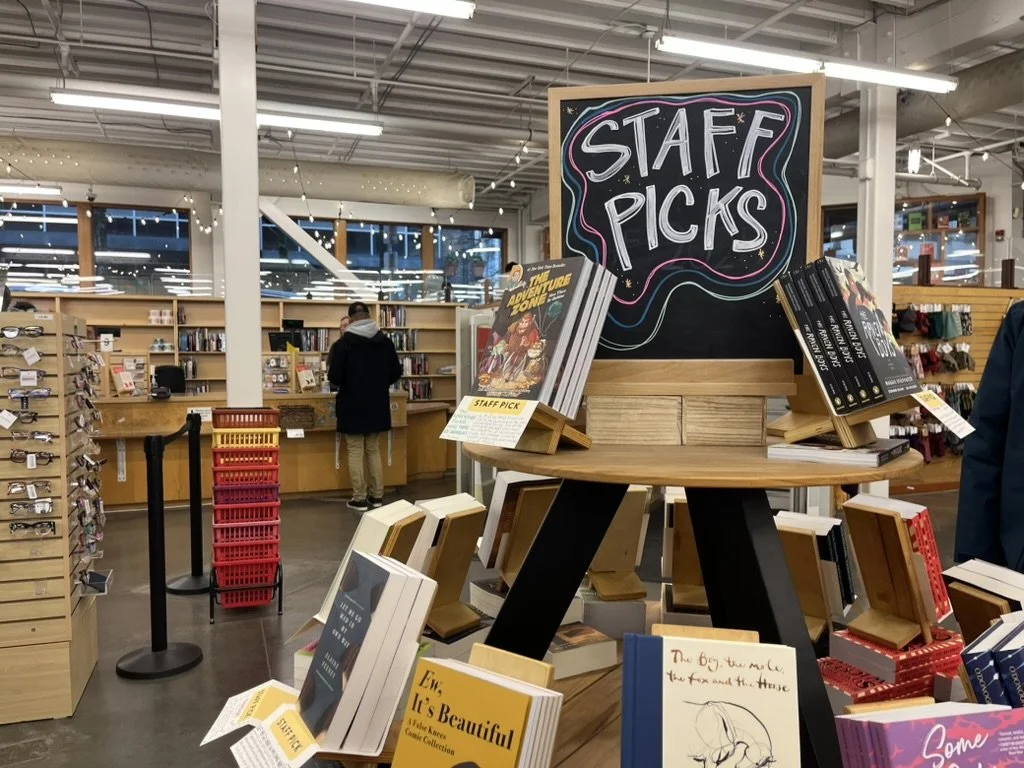
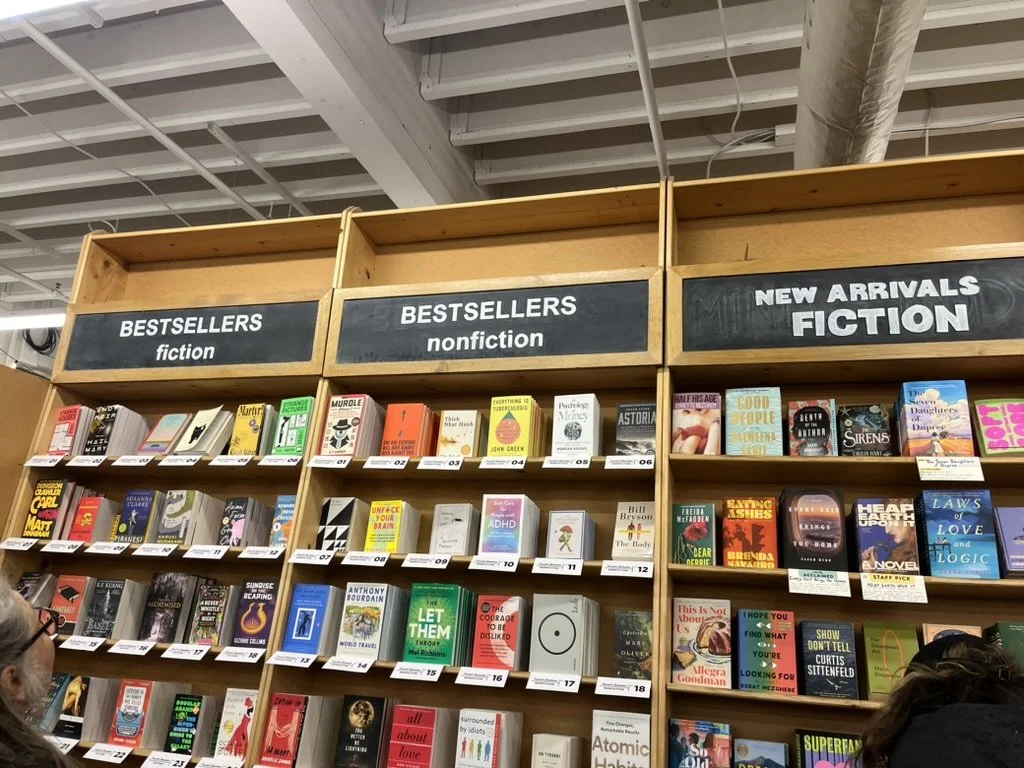
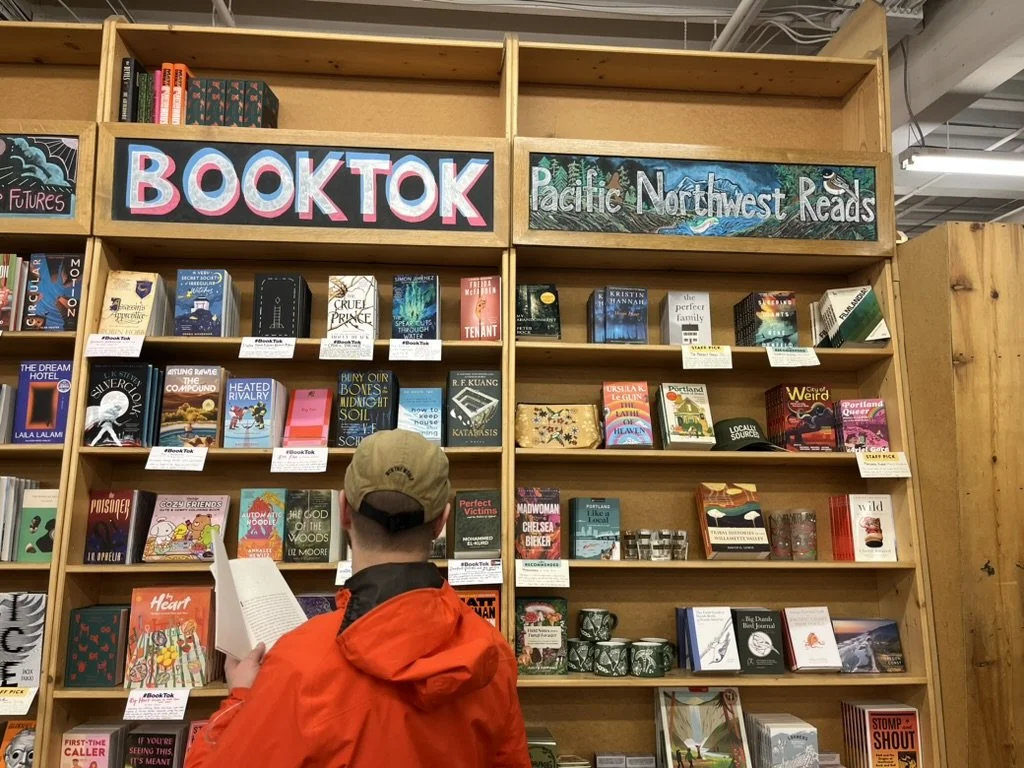
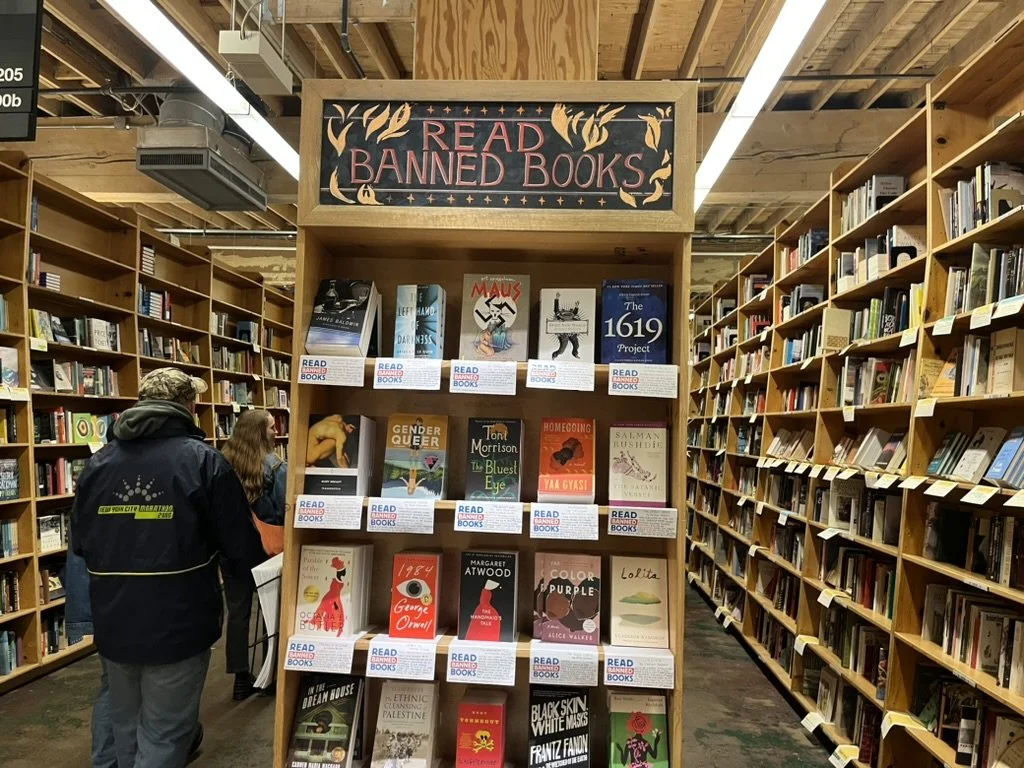
Book displays in the downtown location of Powell’s Books. Photos by Luna Flores ‘26.
Within each level, curated displays with intentional and eye-catching labels are scattered throughout the rooms. One student reflected on their appreciation for these displays, saying “The staff picks and top charts are always excellent and accurate to current trends.”
With the best seller fiction and non-fiction book displays even reflecting the book opinions of the CGS community itself, it’s clear that the procured pickings are an accurate reflection of true book popularities (with nods at current book culture, like a “BookTok” display and an entire banned books section).
Maps and signage around the store help visitors find what they’re looking for, but many wind up exploring nooks and crannies that they simply stumble across.
One such place that isn’t particularly advertised is located on the fourth and highest level of the Downtown Powell’s. Stepping into the “Pearl Room,” many would expect to see books on architecture, science, or photography, but may be surprised by something else it houses: The Rare Book Room.
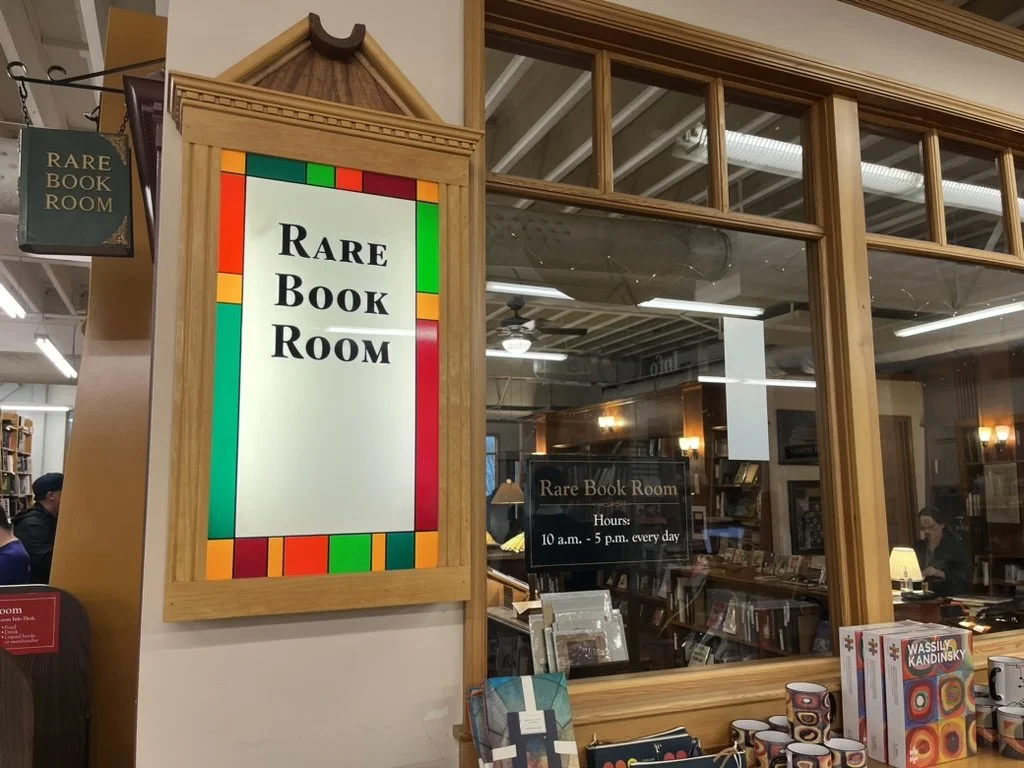
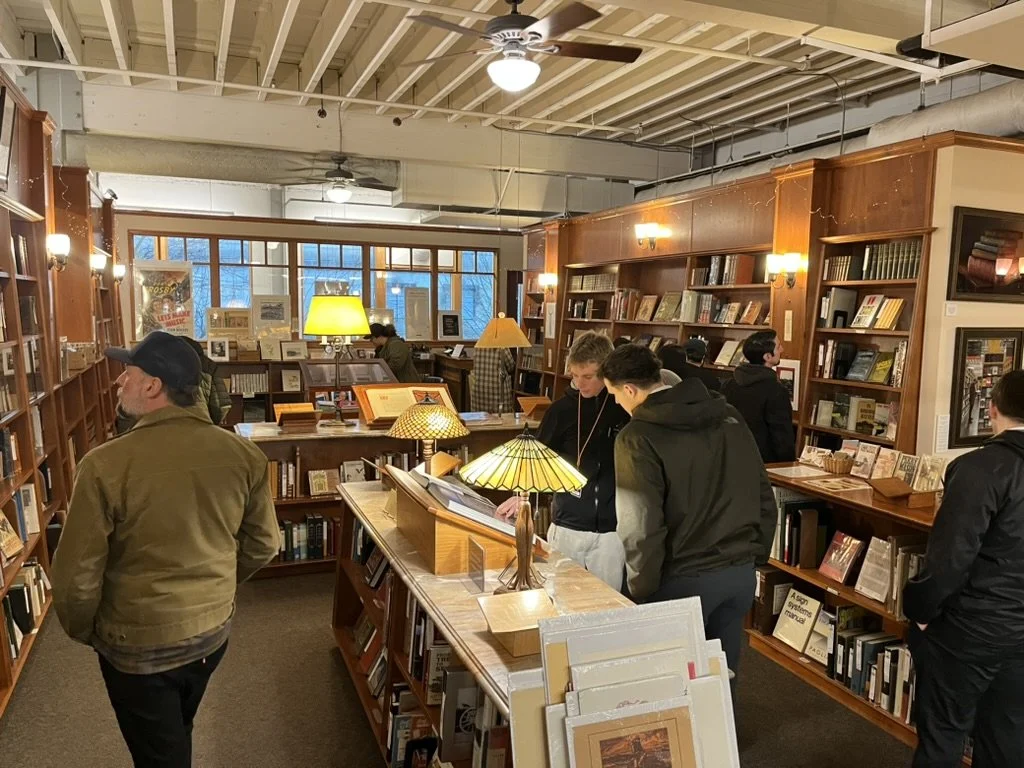
The exterior and interior of the Rare Book Room. Photos by Luna Flores ‘26.
The Rare Book Room is a 1,000-square-foot room with moody, ambient lighting, antique furniture, and carefully selected works of art pasted along the walls. Requiring an official pass from the information desk to enter, the room has a limited capacity of 14 customers and feels like a secret hideout separate from the rest of the store.
In this room, an extensive collection of old books, either displayed on shelves, behind locked glass shelves, out in the open, or behind signs reading “Do not touch” can be found. This antique book selection also includes a library of reference about antiquarian books and their own significance.
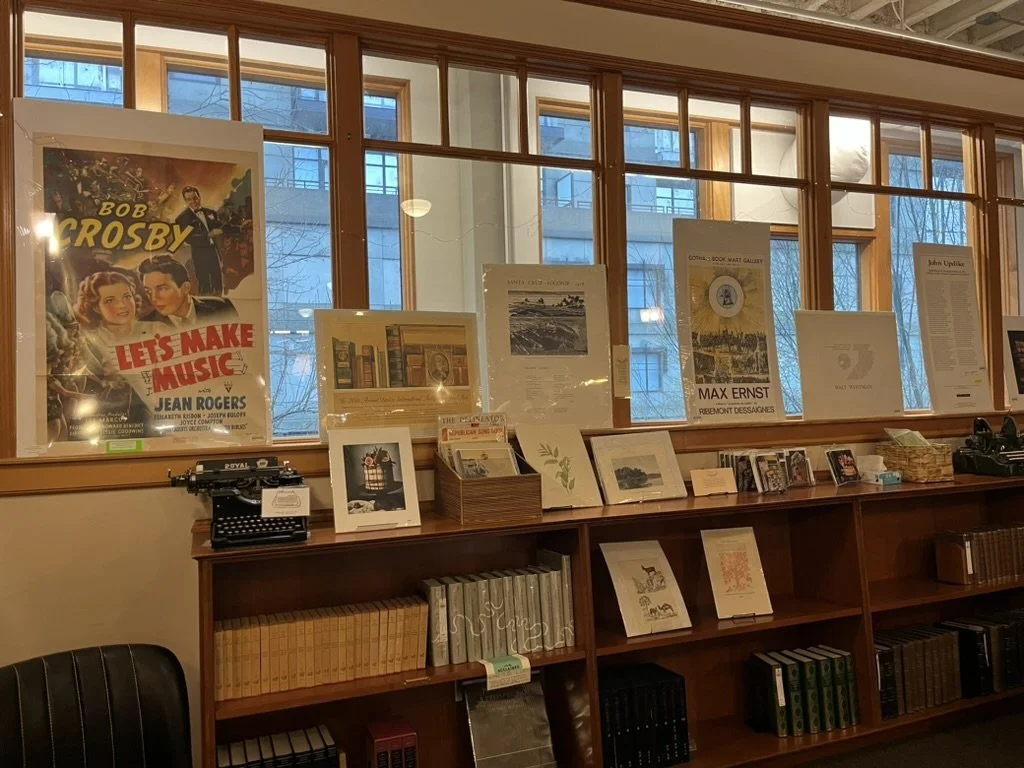
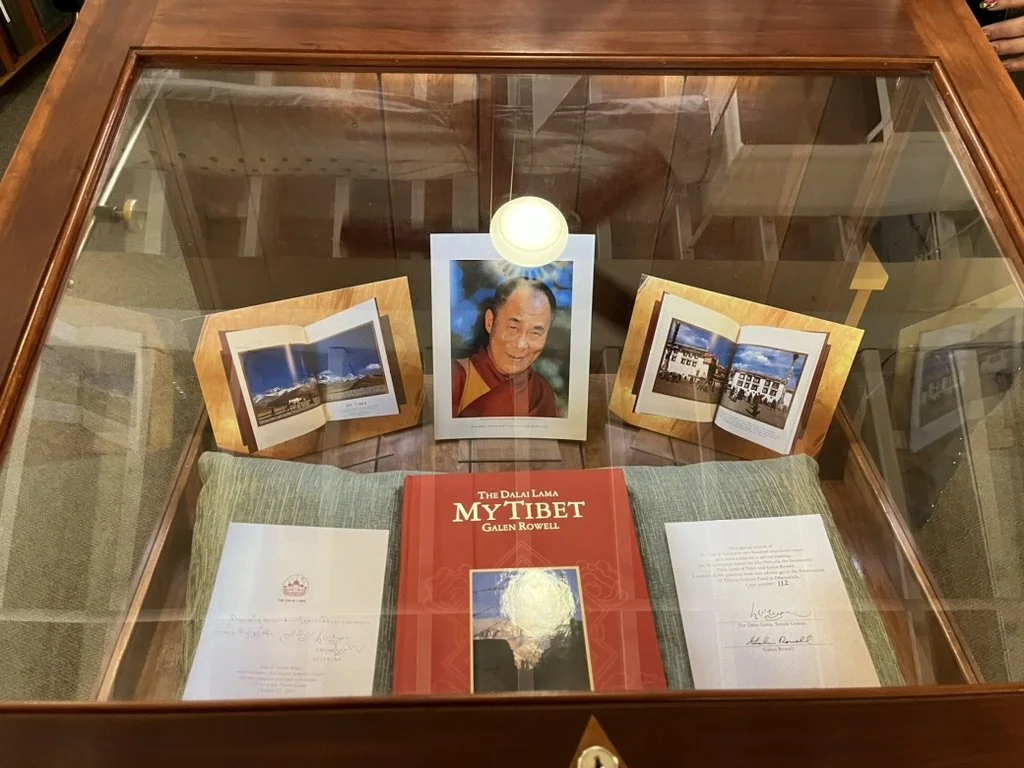
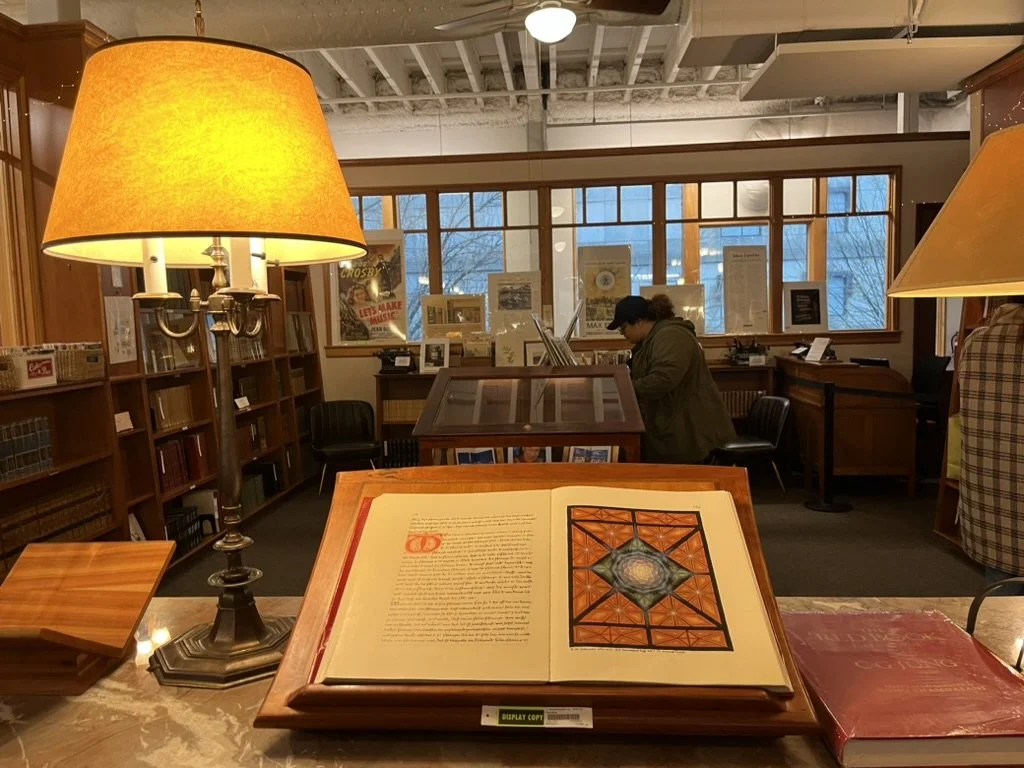
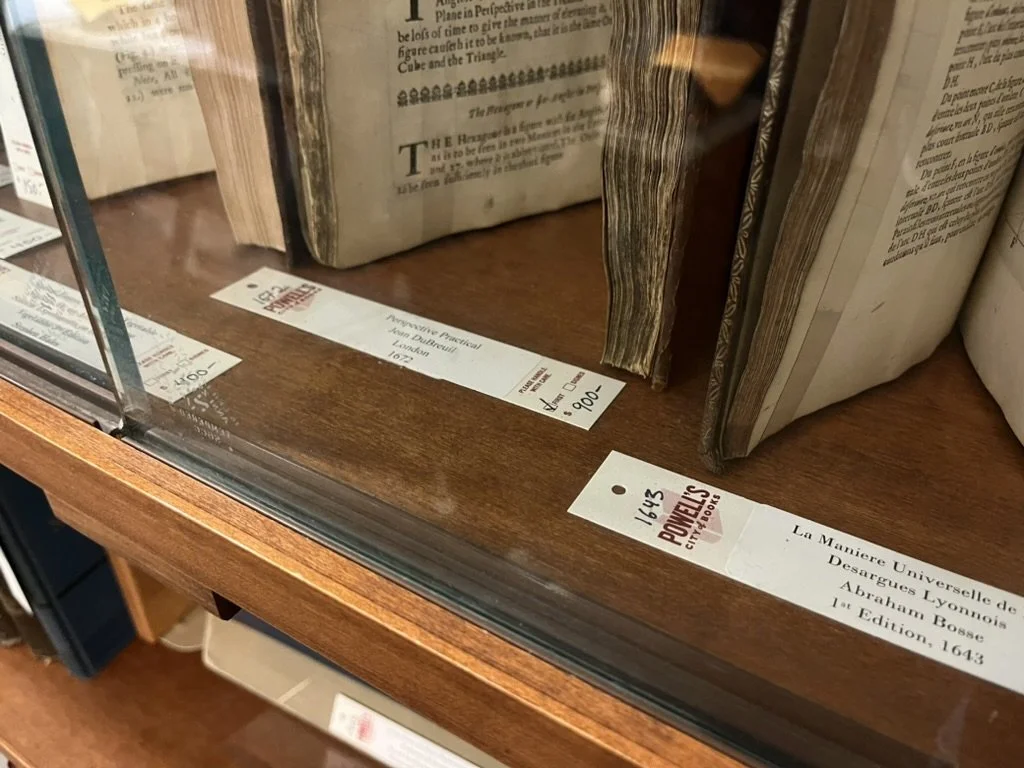
Displays, special books, and antique posters fill the Rare Book Room. Photos by Luna Flores ‘26.
The Rare Book Room feels like stepping into another world from a few hundred years ago, one full of possibility and history.
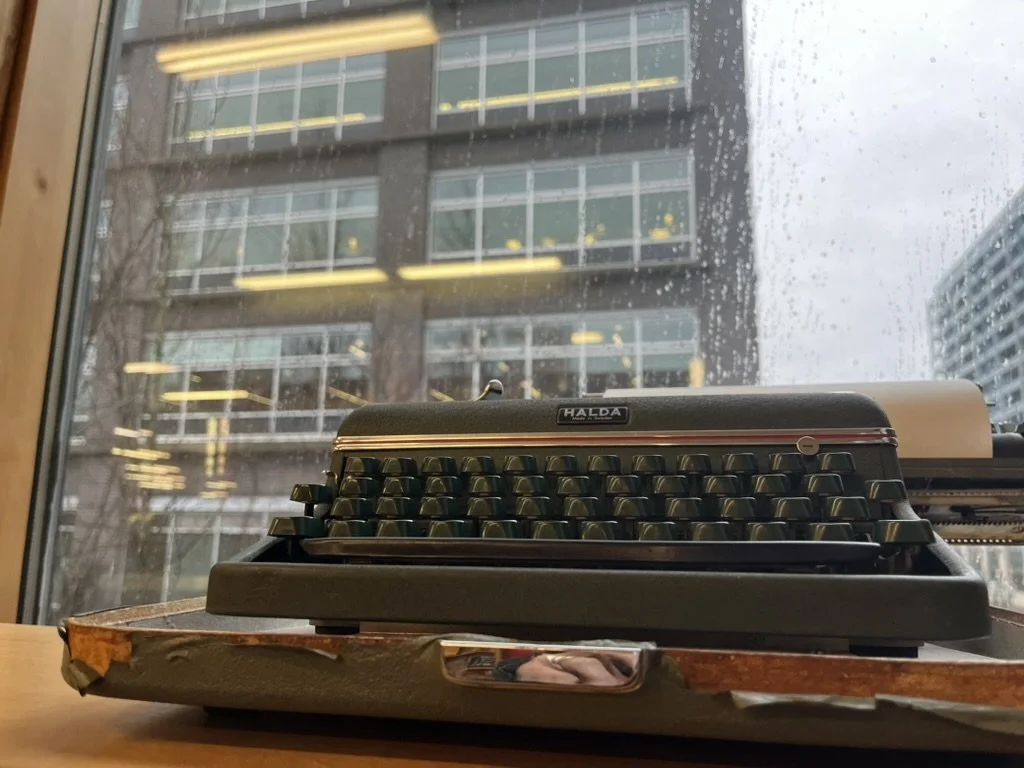
Photo by Luna Flores ‘26.
That sense of possibility is what seems to keep book lovers, Portlanders, and CGS students going back to any Powell’s store time and time again. For King, it's the chance of scanning a display, and coming across a new favorite book, as he adds, “So many of the best books that I've ever read have not been something that I necessarily specifically sought out.”
For Meltzer, it’s the store's ambiance and “vibe” mixed with its goal of being a used book store. “I think that makes it very different from a normal bookstore, because it's nice that the books are cheaper and that they're being reused,” she elaborated. She appreciates the fact that these beloved books now have a “second life” at Powell’s.
Powell’s not only creates an inviting vibe with its impressive collection, reliably relevant displays, gift options, and unknown parts, but it’s also the epitome of Portland culture.
Somehow, the store seems to satisfy the tacky Portland tourist and the homey local all at once. Maybe it's because stepping into Powell’s is like stepping into the mind of a Portlander: books as far as the eye can see, friendly staff with warm smiles, and whimsical customers.
King spoke about some of these kooky Portland aspects when mentioning parts of the store that make it special, “The floating napkin guy in the downtown location…he just does his thing all the time.”
And indeed he does. A staple in the Powell’s cafe, the napkin guy’s carefree artwork and perplexing nature draw bookgoers in, as customers continue discovering these hidden gems in the famous bookstore.
Maybe the next time you find yourself coming across the iconic black and red signage, open the front doors and take a moment to admire the handwritten staff signs, thousands of books that have had other lives, and smell of crisp pages wafting off the shelves.