
Is Gen Z really shifting away from religion?
By Hadley Cress ‘27
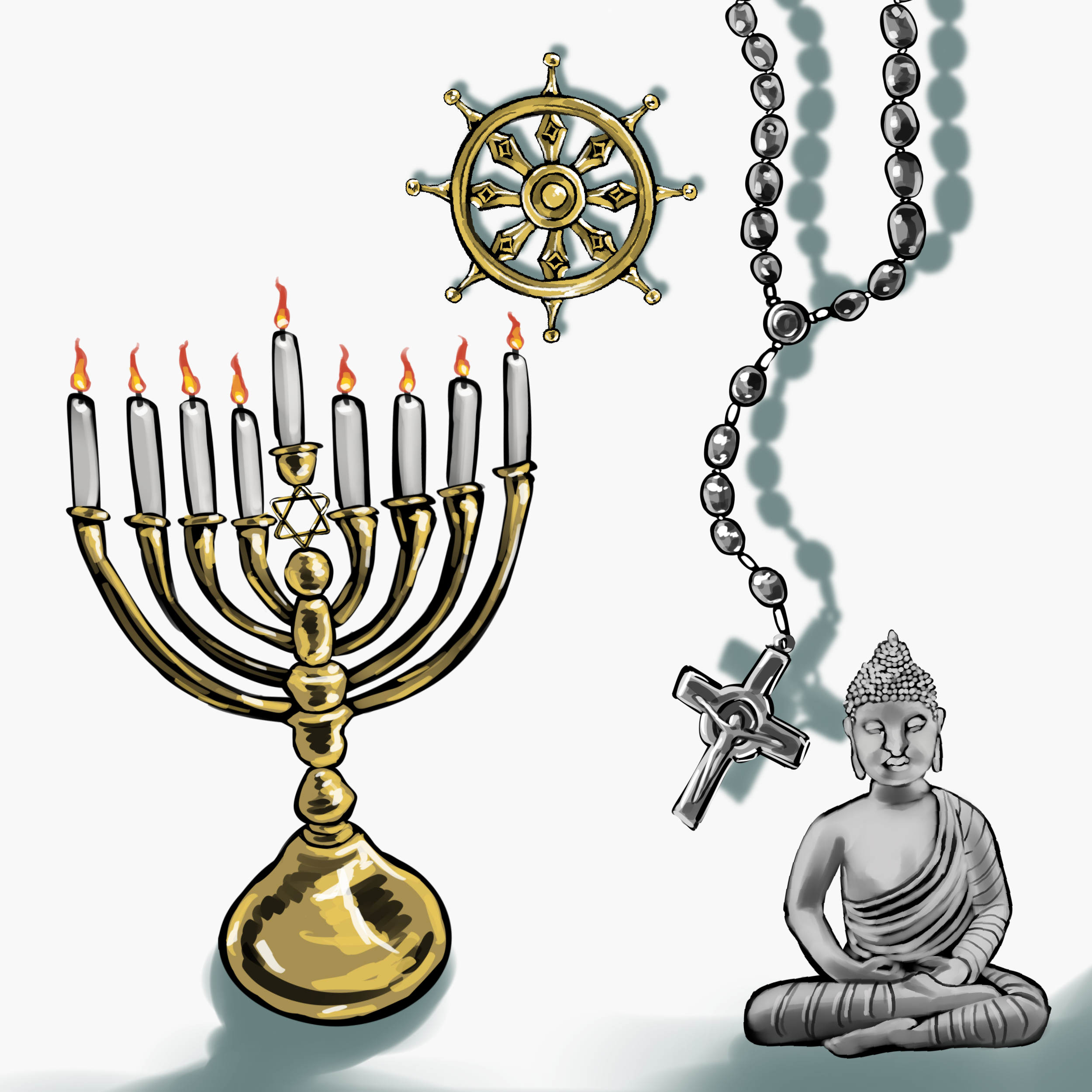
Photo by Ila Reynolds-Kienbaum ‘27
The world is experiencing a shift away from religion, but the ideas and practices haven’t left.
Within the United States, there has been a rise in people leaving the religion they were born into. 20% of Americans who were born religious have left and are no longer religiously affiliated. Compared to the 3% that became religious after growing up without one. The difference in these numbers is significant.
Gen Z, specifically, is the least religiously affiliated generation since before the silent generation, in which 9% identified as religiously unaffiliated. Gen Z on the other hand, is 34% religiously unaffiliated, and “For the first time in history, young women in the US are now less religious than young men, and less likely to attend church” wrote Freya India in her book, “Girls”.
Between 2009 and 2019, the percent of Christian Americans dropped from 77% to 65%, and people who identify as atheist, agnostic, or ‘nothing in particular’ increased from 17% to 26%.
These statistics show Gen Z shifting away from religion, and a rising trend goes further to imply gen z is moving towards forms of spirituality. “Gen Z-ers and religious leaders alike tell The Post that more young people are open to spirituality, but many of them are rejecting traditional religious labels in favor of more fluid groups that consider themselves non-denominational or interdenominational” writes Rikki Schlott in an article titled “Gen Z ‘more spiritual’ than Millennials – yet more suspicious of denominations.” The generation is not moving away from the specific practices but instead the titles that come with traditional religion.
Charlie Grant, one of the Upper School counselors at Catlin Gabel School (CGS), noticed how, when filling out a form, people will say they are not religious, but then talk about having faith. “Maybe people are finding these meanings making systems elsewhere” said Grant.
Traditional religious practices have spread throughout society and now can be seen as normal non religious practices. Mindfulness, for example, is a traditional part of Hinduism or Buddhism. Now, says Grant, this practice has become a widespread way to de-stress in some cases “before a life of opulence.”
For Deniz Avci, a senior at CGS, mindfulness practices like visualization can be beneficial during high stress periods of her life, like college application season. “I remember my therapist told me just close your eyes, and envision your application paper getting handed to the person reading it, and sprinkle some special dust on it, because in reality, it's all just luck at this point,” she said when describing her use of visualization.
The encouragement of mindfulness and other traditionally religious or spiritual practices can also be seen on social media, most prominently, Astrology and Witchtok – a subsection of Tiktok that celebrates witchcraft.
“Astrology is currently enjoying a broad cultural acceptance that hasn’t been seen since the nineteen-seventies. The shift began with the advent of the personal computer, accelerated with the Internet, and has reached new speeds through social media” wrote Christine Smallwood in her article “Astrology in the Age of Uncertainty.” Astrology has become another source of reassurance for people.
On social media, #Witchtok had over 20.7 billion views as of 2021 and has continued to grow. Some people use it as a way to cope with anxiety, while others find it gives them a sense of individuality, according to India.
It is very common to see healing spells or manifestations on platforms like TikTok, since it helps viewers feel a sense of control in difficult times. During the pandemic, specifically, Witchtok grew immensely, because of the sense of stability it gave to viewers.
Social media has also helped promote the idea of manifestation and therapy. Specifically, the idea of turning inward as a result of modern life being chaotic and confusing. Something that, in the past, has drawn people towards religion. Instead of turning to religion, for example people might choose to have a night of self care, or talk to a therapist.
While Gen Z and the world is experiencing a shift away from traditional religion, that does not mean the practices are gone. Religion has been around for a very long time, and has been attributed to the growth and stabilization of society.
As the younger generations' view is changing, religious roots continue to impact us. It has shaped society, and continues to be embedded in the everyday practices of many people. While people might be looking elsewhere to find coping mechanisms, those places often come from religious practices.