
OPINION: The myth of the matcha man — why you should stop calling men performative
By Nico Igarashi ‘26
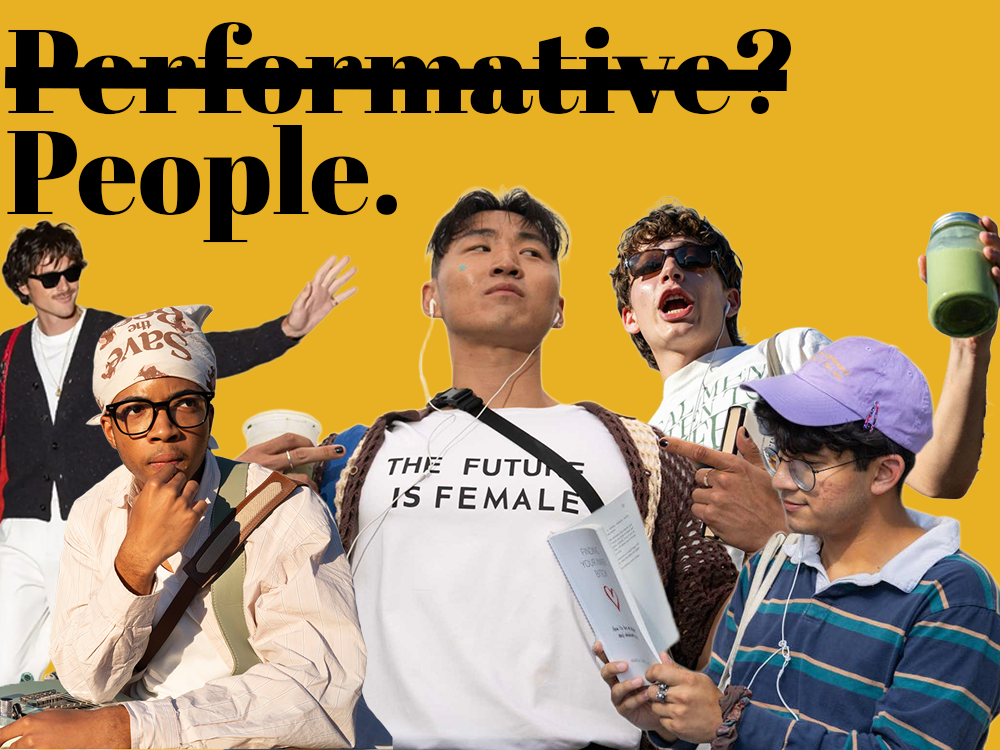
Courtesy of Nico Igarashi ‘26.
Performative men—we’ve all heard of them: the guys wearing baggy pants and button-up shirts, drinking matcha while reading Bell Hooks. In the recent year, there has been a surge of these males who engage in such activities, and an even larger surge of people who are highly critical of such men. But are their critiques valid?
As a co-leader of the Positive Masculinity Club and a man myself, I say, no. Honestly, it's a little abhorrent. Let me explain.
First off, we need to establish what being performative is, and why these men are being labeled “performative.” According to Merriam-Webster, performative within our context is defined as “made or done for show (as to bolster one's own image or make a positive impression on others).” Performative men exist within this same frame.
The trope is that they portray feminine traits or progressive values in order to gain the acceptance and affection of women. They disguise themselves under the false pretense that they revel in sipping matcha and spewing feminist ideologies.
This is especially problematic as it is disrespectful to a multitude of parties: the women and men who genuinely partake in such activities.
A majority, if not all of these “performative” traits are traditionally feminine and or liberal. So when you call a man performative, you’re pronouncing that it isn't acceptable for them to display non-masculine and progressive attributes, and reinforcing patriarchal standards and institutions.
In addition, when you reduce all of these epicene traits to jokes or ways to get a girl’s interest, you devalue and delegitimize them as just that. Suddenly no one can be taken seriously for truly being interested in or partaking in these proverbial performative demeanors and hobbies.
This is further exacerbated by the growing online trend of the performative male contest. The crux of this contest is to find the guy who can dress the most “performative” in their respective school, university, city, et cetera. Again, the problem with this is that it reduces all of these traits to jokes—jokes that are harmful to everyone involved.
The Amherst Student, the official student-run newspaper of Amherst College released an article about their very own performative male contest on the 24th of September, which aimed to debunk any denouncements of the trend. The author claimed that “Everything was clearly in good fun, and Contestants seemed more driven by the ‘meme’ of it than by actual personal experience.” Rather, the student failed to properly address any actual and deserved critiques of the contest, and boiled the whole debacle down to harmless fun.
While there is a level of truth to this, it’s a bit ironic for the #2 best liberal arts college in the nation to forgo any rebukes to the trend. The lack of seriousness from the article demonstrates the larger sentiment of the overall trend, the sentiment of, “it’s not that serious,” or “it’s being blown out of proportion.”
And that’s an oversimplification of what is going on.
This is all to say that the defamation of the performative man is unjustified. It's appropriate and expected for women to be skeptical of the performative man’s legitimacy, and the men who do it for show should be called out and held accountable for their disingenuous actions. However, this subsect does not account for all of the men involved in the trend.
The men who don’t do these practices are now being lumped in with hooligans and swindlers and judged for things that they very well may be interested in. They’re being generalized as deceitful and superficial people who have no real interest in progressive ideologies.
Kai Wolahan ‘26, a co-leader of the Positive Masculinity Club, brought up similar concerns. He talked about the growing insecurity that men face when engaging in performative practices. “I think that it is [the trend] honestly ridiculing a lot of men that maybe express themselves with more feminine interests and leads to a lot of men feeling isolated if they are engaging in these interests that people deem performative.”
When you call a person, especially a man, performative, what you’re insinuating is that their interests and hobbies aren’t legitimate. There may be people who do in fact have these intentions, and they do deserve to be called out; but to everyone else, this bandwagoning of performative activities that they are interested in only drives them away.
Roughly a third of respondents to an anonymous survey at Catlin reported that calling men performative was hurtful. Senior Vishaka Priyan, who opted for an additional interview, shared a similar sentiment.
She described the whole trend as something that started with a “kernel of truth,” but evolved into something that has gone past its bounds. Priyan explained that this has led to men being labeled as performative regardless of their intentions, and has turned from a criticism of individuals to a criticism of actions and behaviors.
More than that, she felt the entire trend was more indicative of larger societal problems that men and women face. “I think if you're [a guy] being called performative, the easiest thing is to laugh it off and then just be self-deprecating about it.” Because of that, she believes that these men internalize the belief that the performative behaviors aren't wanted despite being told that it is.
And this extends to what I have observed in my own experiences as a co-leader of the Positive Masculinity Club. In a recent joint meeting with the upper and middle school, a lot of participants mentioned that they felt uncomfortable sharing and being vulnerable with their peers for fear of being turned into a joke, or having their feelings shared with others.
I believe that it’s our culture of intolerance that has caused these boys to feel that way. The biggest irony that I encountered when writing this article was finding enough voices from men to include, and I think that speaks volumes to how we as a society have conditioned males to exist within certain boxes and identities. They are supposed to be stoic and strong, with nothing bothering them, and when they’re not, they joke and dismiss critiques with frivolousness.
So to go back to the initial inquiry, yes, calling men performative is hurtful. And it’s a nuanced topic that requires sensitivity and understanding for everyone involved. Women can be suspicious of the men who suddenly drink matcha, and dress in baggy selvedge denim.
However, putting them down and shaming them is not a productive means for change. Women have been maltreated and oppressed over the past hundreds of years, but to continue to perpetuate negative rhetoric isn’t moving the mark. If you want to preach equality, then stand by that and stop calling men performative.