
The trails as old as time, defining a pilgrimage
Eliana Yoken ‘26
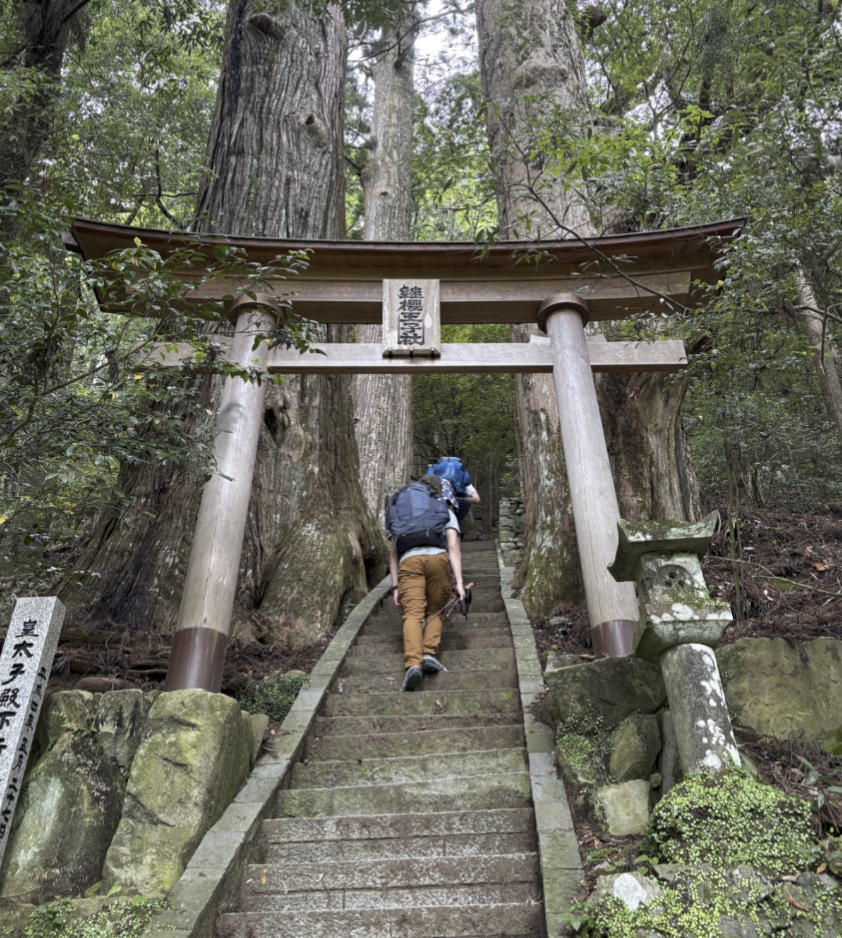
Kumano Kodo Trail. Courtesy of John Harnetiaux.
Blisters, long days of walking, and no cell service might not sound very appealing at first, but for thousands of years, people around the world have chosen to walk hundreds, or even thousands, of miles on pilgrimages in search of something deeper and more meaningful than their everyday lives.
A pilgrimage is a journey on foot, often of a spiritual or personal significance. Many people associate pilgrimages with religion, but the idea of walking long distances for reflection and growth appears across numerous cultures and traditions.
In an interview, Dave Whitson, long-time pilgrimage walker and former Catlin Gabel School (CGS) teacher, stated that in a pilgrimage, “there is some deeper purpose, some goal, some reason that you are embarking upon that journey, often with some sort of longed-for outcome.”
He explains that the outcome of these journeys could include reevaluating or reconsidering some things in your life, actively seeking intervention, or even honoring someone or something that has helped you through a difficult time.
Pilgrimages have been sought out for nearly two thousand years, making them a pillar of movement with an imbued intention in society. One of the most famous examples of a pilgrimage is the Camino de Santiago routes, which gained status from the United Nations Educational, Scientific, and Cultural Organization (UNESCO) for the important role they played in cultural exchange.
According to UNESCO, the Camino de Santiago has been a meeting place for pilgrims ever since it emerged a dozen centuries ago. It has “facilitated a constant cultural dialogue between the pilgrims and the communities through which they pass” and was also a key commercial and intellectual corridor, fostering development along its routes.
The Camino can now be seen as an opportunity to visit another country or region on foot. The movement of pilgrims can facilitate cultural exchanges, simultaneously having a positive effect on local economies and contributing to the development of towns, cities, and their infrastructure.
In other cultures, however, pilgrimages can be seen as spiritual journeys. The exact origins of pilgrimages are difficult to pinpoint; however, they can be traced back centuries from Christianity and Judaism to Islam, Buddhism, or Shintoism.
National Geographic recently named some of the most historic pilgrimages. Their list includes, but is not limited to, Bodh Gaya in India; St. Paul Trail in Turkey; March for Jobs and Freedom in Washington, D.C.; St. Patrick’s Footsteps in Ireland; Moffat Mission in Northern Cape, South Africa; and several others.
These routes reflect sacred journeys in which spiritual and physical transformation is known to occur.
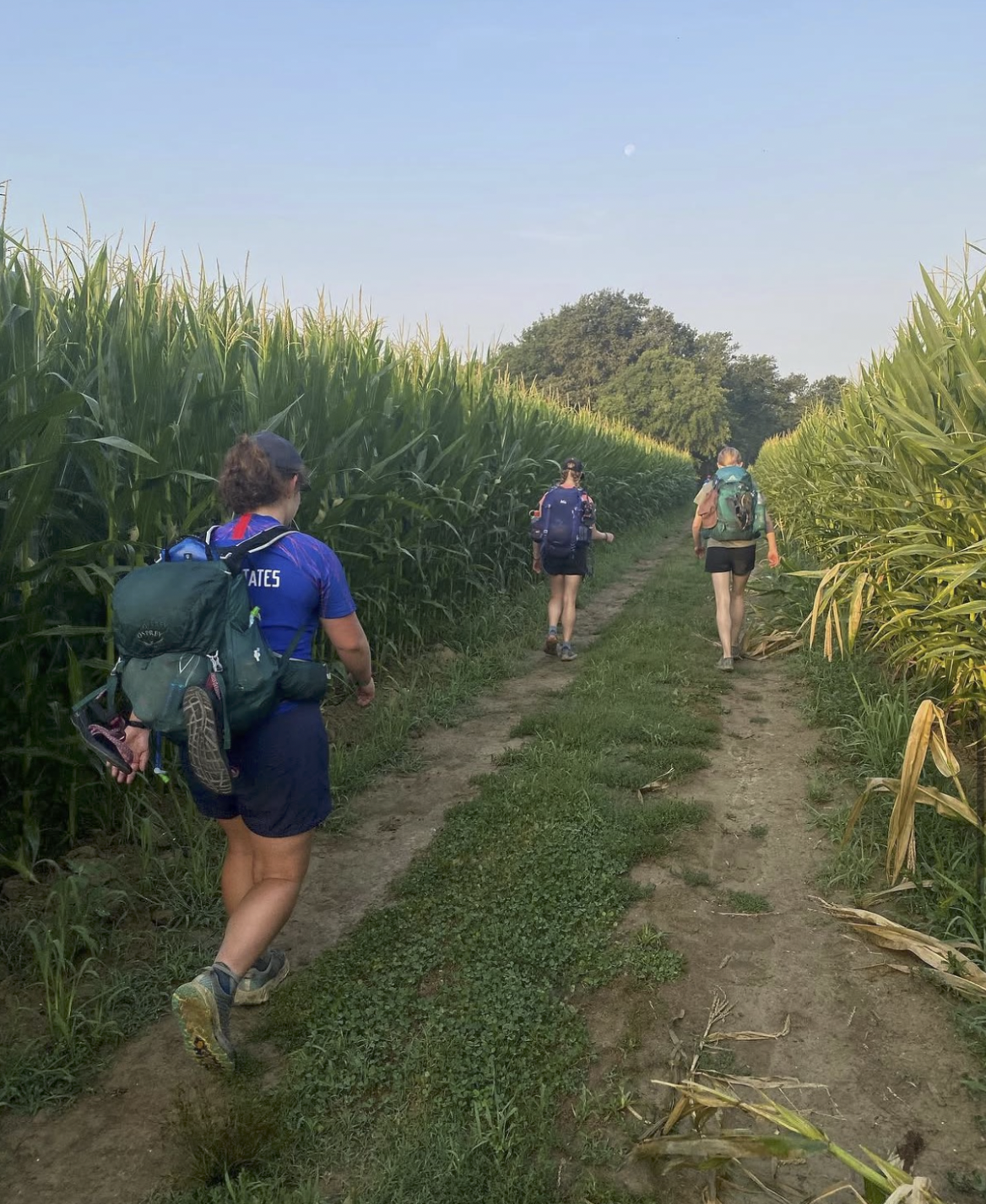
Camino de Santiago. Courtesy of Dave Whitson.
Bilal Muratov ‘26, a CGS senior, explained that every summer, with his family, he treks for several hours to the top of a mountain in Uzbekistan to reach the Hazrat Ali Buhar site. This is known as an Islamic Ziyarat, meaning a visit to a sacred shrine.
He said that the annual pilgrimage “truly lets [him] connect with [his] extended family, which [he] only sees once a year” and that also lets him “observe the spiritual and historical values of the country that [his] parents immigrated from, which lets [him] connect to the culture [he] never got to experience as a child.”
Muratov serves as an example that the modern concept of a pilgrimage embraces a wider idea of spirituality, being an inclusive experience that can be largely open to all regardless of faith or background.
In 2013, Whitson brought the first pilgrimage trip to CGS, with the hope of bringing his love for these journeys to the community. Now, Whitson fills his time with walking and guiding others through pilgrimages in his books and has been doing so since his first Camino de Santiago almost 25 years ago.
He illustrated three major benefits of walking a pilgrimage in his explanation of why he brought them to CGS. First, you have the opportunity to focus on self-care. In high school, he explained, self care is not often prioritized, so having the time and the need to practice that skill is special.
Secondly, he stated that you gain independence when you find yourself “alone on a trail, where do you go, what do you eat, when do you stop?” In these moments, independence is a vital skill. Lastly, he explained that a “pilgrimage is a liminal space, which means it exists outside of the norm.”
Liminal spaces offer serenity and reflection, allowing someone to truly understand complex moments in their life. They break repetitive patterns while offering creativity and can seldom not be found while walking a pilgrimage.
John Harnetiaux, CGS dean of students, reflects on his first pilgrimage, the 2025 Japan trip, as “very much about carrying something heavy and then making sense of that heavy thing in a positive way.” This was in part thanks to the liminal space he was able to enter.
Harnetiaux illustrates the art of walking as simplistic. “You walk from point A to point B,” he said. Yet he also believes there is a lot of skill in being able to navigate the different emotions that might arise while walking.
“There's awe in these beautiful vistas, but there is also frustration and annoyance and pain, and you navigate all of these different feelings,” Harnetiaux said, adding that “a pilgrimage teaches you how to navigate the roller coaster and to allow each phase [of emotions] to show up and yet be able to keep moving.”
The trip allowed him to “zoom out and think about something bigger than his everyday worries," and he is excited to guide more students in that same journey, psychically and mentally, through Catlins’ Japan Kumonu Kodo pilgrimage in May.
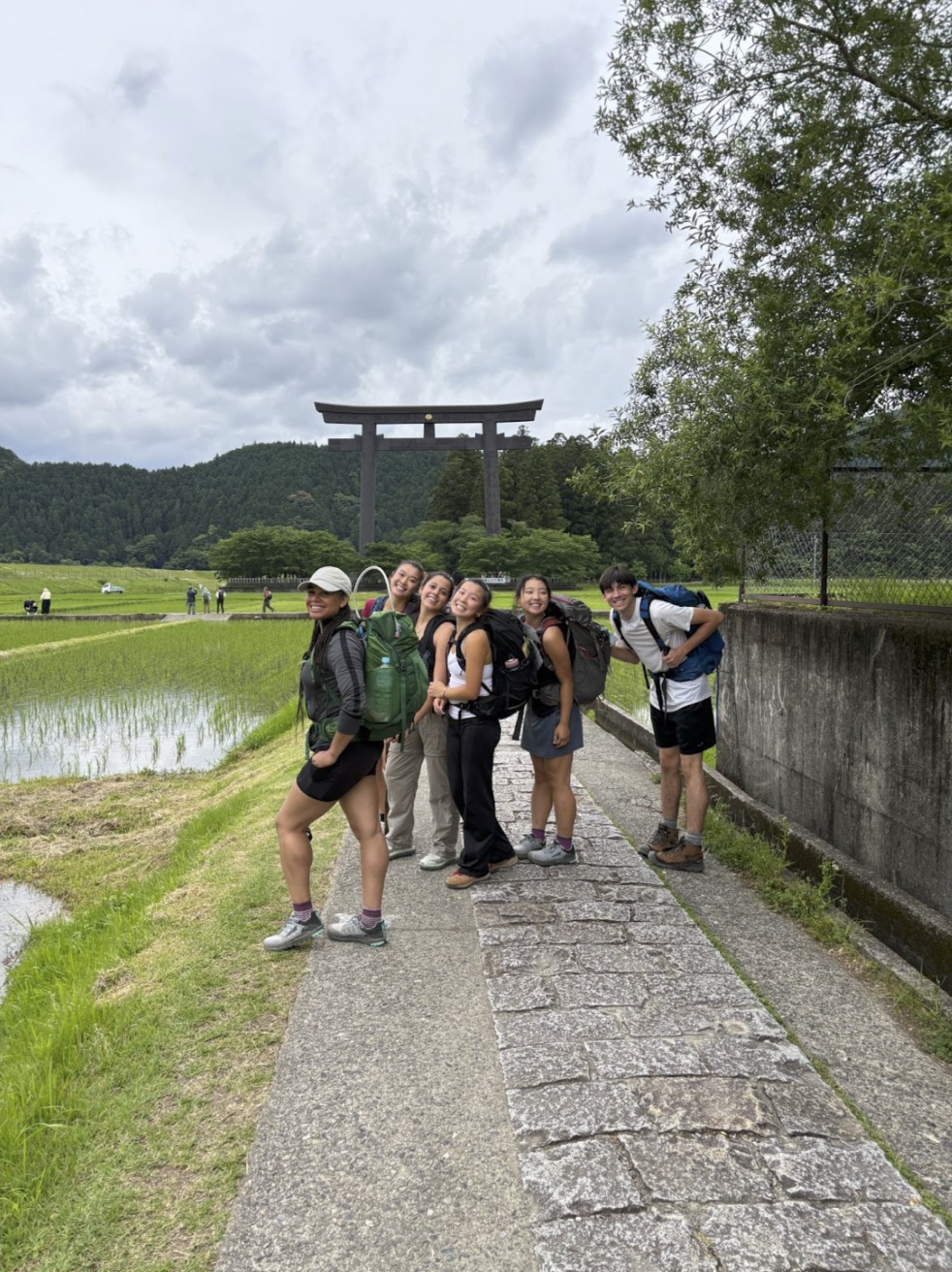
Kumano Kodo Trail. Courtesy of John Harnetiaux.
Oregon, too, is beginning to recognize the value of this kind of journey. Inspired by the thousand-year-old routes such as the Camino de Santiago, Oregon's rotary clubs are developing their own initiative. The plan is to curate a network of walking routes designed to encourage reflection and connection.
Rather than being a spiritual journey like Islamic Ziyarat, the initiative emphasizes accessibility and personal meaning, encouraging people to explore Oregon’s natural landscapes with intention. Whether that be in preparing for pilgrimages worldwide with a local community or simply reconnecting with nature, the routes will be open to all.
Carving out time to walk and allowing yourself to sit in that liminal space, as Whitson describes, can be a starting point. The key is the purpose behind the journey.
As these ideas become more and more accessible, the concept of a pilgrimage becomes much more widespread. You no longer need to travel across the world to walk a pilgrimage journey, or better yet to find a liminal space.
Setting a goal to embark on a pilgrimage, whether that means walking a section of the Camino de Santiago one day, participating in a future CGS trip, or simply going for a long, intentional walk closer to home, can offer many of the same benefits.
In the end, a pilgrimage is less about reaching a certain spiritual outcome or a number of miles but rather about embracing the discomfort that comes with the journey while finding meaning in the uncertainty of life.
Editor’s Note: This article was edited after publication to fix minor typos. No substantive changes have been made.