
What the last decade of Super Bowl halftime shows says about culture
By Prisha Garg ‘26
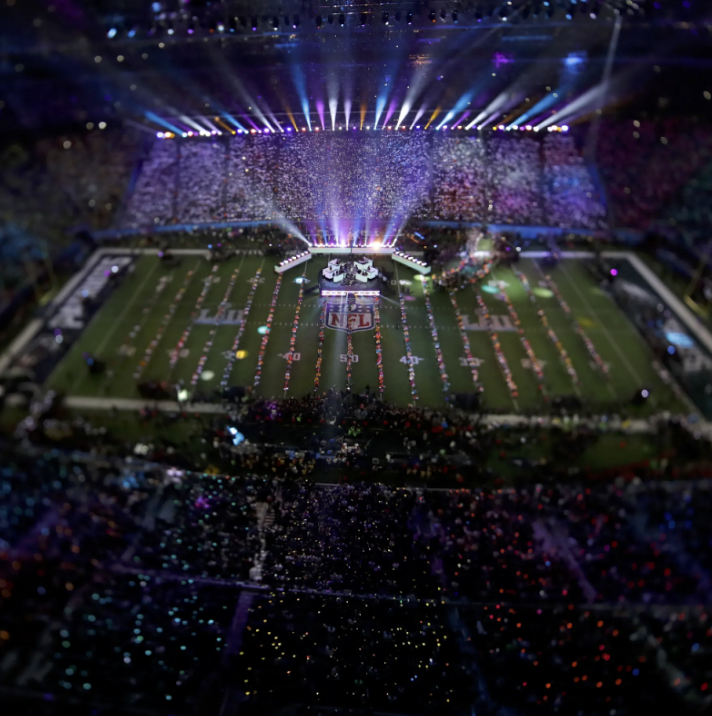
Super Bowl football stadium with Justin Timberlake performing the halftime show. Courtesy of Morry Gash, The Associated Press.
Every second Sunday of February is allotted to a very special event. More than 100 million people sit on their couch to watch the Super Bowl, not just for the football game, but also for the halftime show. Official viewership data reported by ESPN for this year’s game peaked at 137.8 million viewers, which is a record high, marking this show as the most-watched television event in America.
The game is important to many football fans; however, the next day at school or online, people aren’t debating defensive formations or who fumbled. They’re discussing the halftime show. The halftime show has become a part of the night that often overshadows the game itself.
Over the last decade, what began as a simple intermission featuring marching bands has evolved into the global music stage we know today. It's become something way bigger, a reflection of American culture and about who gets to be celebrated and what messages we hear on one of the biggest stages in the country.
If you look at the last ten years of the halftime show and the one we just witnessed, that shift is clear.
To understand how people see this shift, especially in younger generations, senior Ishaan Goel and 9th grader Diego Flores provided incredible insight as peers who watch the Super Bowl for both the game and the halftime show.
Super Bowl XLIX 2015 Katy Perry

Katy Perry performs onstage during the Pepsi Super Bowl XLIX Halftime Show. Courtesy of Anthony Castellano.
In 2015, Katy Perry opened her performance riding a giant golden mechanical lion during “Roar,” which was a bold statement. The stage was filled with cartoonish and hyper-saturated visuals. But what really went viral about the show was not her popular hit songs but one of her backup dancers: “Left Shark,” a slightly offbeat and awkwardly freestyling background dancer, became an overnight meme.
That moment marked a shift, and the halftime show became more talked about in everyday conversations and news. It no longer ended at the 13-minute mark but continued online and was replayed and reframed through memes and media commentary.
As Goel said, “I think honestly that’s the way we judge the halftime show more than actually watching it.”
Social media became a second platform. Results from a student survey conducted within a random sample of Catlin Gabel School (CGS) Upper School states 61.9% and 57.1% of students said they remember halftime shows for the viral moments and political messages distilled online after the game, so the performance reaches far beyond the stadium.
The following year, we saw the tone of the show change.
Super Bowl 50 2016 Coldplay, Beyonce, and Bruno Mars

Beyonce, Guy Berryman of Coldplay, Chris Martin of Coldplay, Mark Ronson, and Bruno Mars perform during the Pepsi Super Bowl 50 halftime show. Courtesy of Ezra Shaw/Getty Images.
In 2016, even though Coldplay technically headlined, Beyoncé and Bruno Mars arguably stole the show.
Beyonce’s tribute to Black culture and history was important; it wasn’t just about her choreography or vocals. Dancers dressed in black berets and leather outfits, which evoked the imagery associated with the Black Panther Party. At the end of that number, they formed an “X,” widely interpreted as a tribute to Malcom X.
Commentators on networks like CNN argued about whether the performance was empowering or “too political.” Goel comments on those and notes that “it’s gotten more political…or at least the reception has gotten a lot more polarizing.”
The fact that a 13-minute performance could be the subject of so much discussion and constantly make headlines for days is proof that the halftime show has evolved.
These performances didn't invent or create political messaging in music, but just showed how inseparable these two things already were.
Super Bowl LI 2017 Lady Gaga
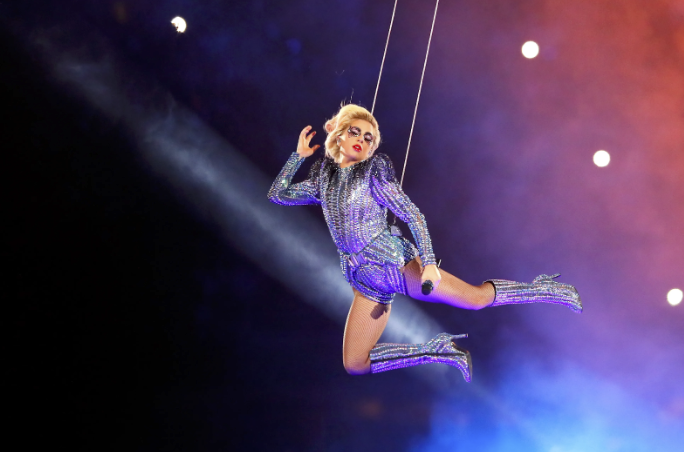
Lady Gaga performs during the Pepsi Zero Sugar Super Bowl 51 Halftime Show. Courtesy of Patrick Smith/Getty Images.
In 2017, Gaga delivered one of the most technically demanding halftime shows ever. She began her performance on the stadium roof, silhouetted against hundreds of synchronized drones forming an American flag in the sky. After singing one of her songs that referenced unity and freedom, she leapt dramatically onto the stage below.
Her setlist subtly touched on themes of unity during a politically tense year in the U.S with Donald Trump’s inauguration and the start of the #MeToo movement creating a deeply polarized political climate. She sang “Born This Way,” a song closely associated with LGBTQ+ pride, and emphasized inclusion without explicitly naming political events. Without overtly referencing politics, the performance reflected a nation divided and used pop music as a unifying force.
Not every halftime show reshaped culture in the same way, however.
Super Bowl LII 2018 Justin Timberlake
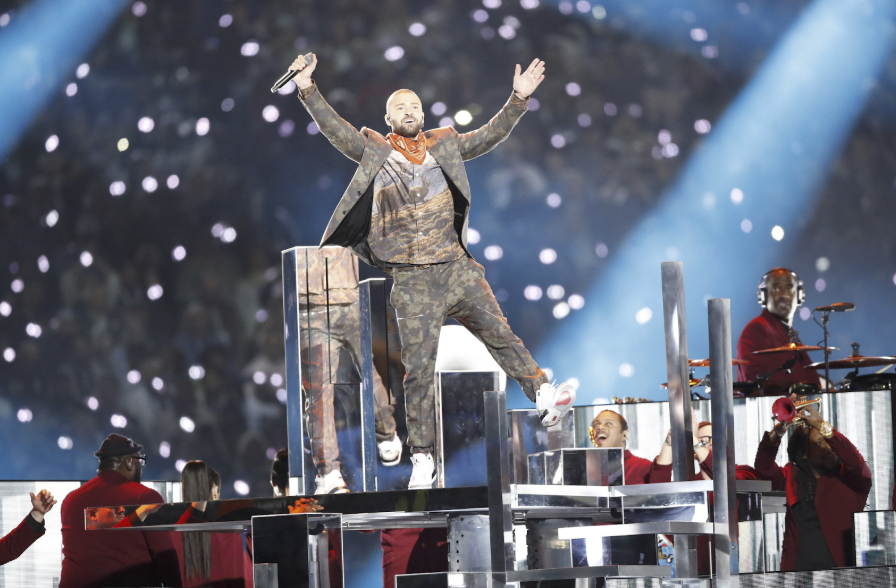
Justin Timberlake performs at the Super Bowl 52 halftime show. Courtesy of AJ Mast for The New York Times.
Justin Timberlake’s return to the Super Bowl stage was highly anticipated after his major wardrobe malfunction with Janet Jackson during his last time on stage in 2004. Yet the performance felt restrained. A hologram tribute to Prince sparked debate with a projected image of Prince appearing as Timberlake sang “I Would Die 4 U,” given Prince’s known opposition to hologram performances.
The tribute quickly caused backlash. Prince had publicly opposed the idea of hologram performances before his death. Instead of celebrating nostalgia, the moment raised questions about artistic legacy and consent. While musically solid, it didn't leave a lasting cultural imprint.
Super Bowl LII 2019 Maroon 5, Travis Scott, and Big Boi
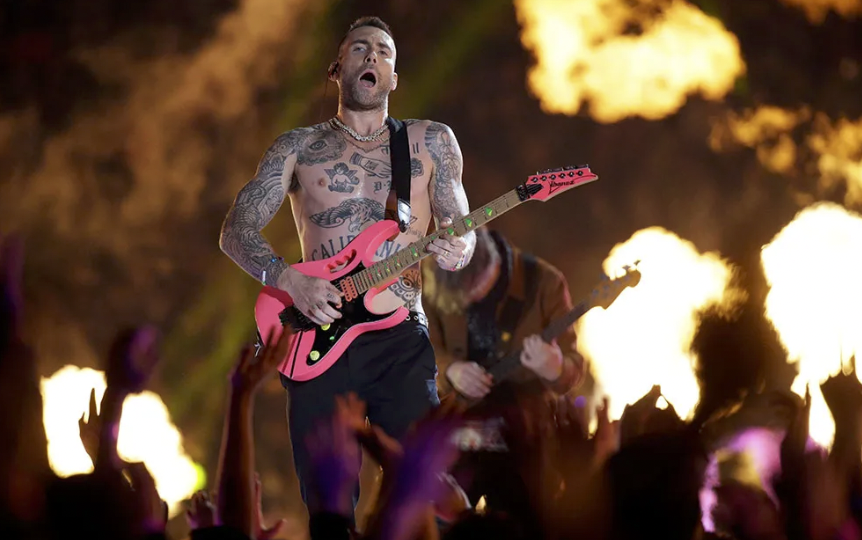
Maroon 5’s Colin Kaepernick performs at the Super Bowl LII halftime show. Courtesy of Mark Humphrey/AP/REX/Shutterstock.
A year later, Maroon 5 headlined amid controversy surrounding players kneeling during the national anthem. Several artists had reportedly declined to perform in solidarity with Colin Kaepernick. The show was polished and well done, but many viewers described it as too safe or cautious of the political climate at that time.
Super Bowl LIV 2020 Shakira and Jennifer Lopez
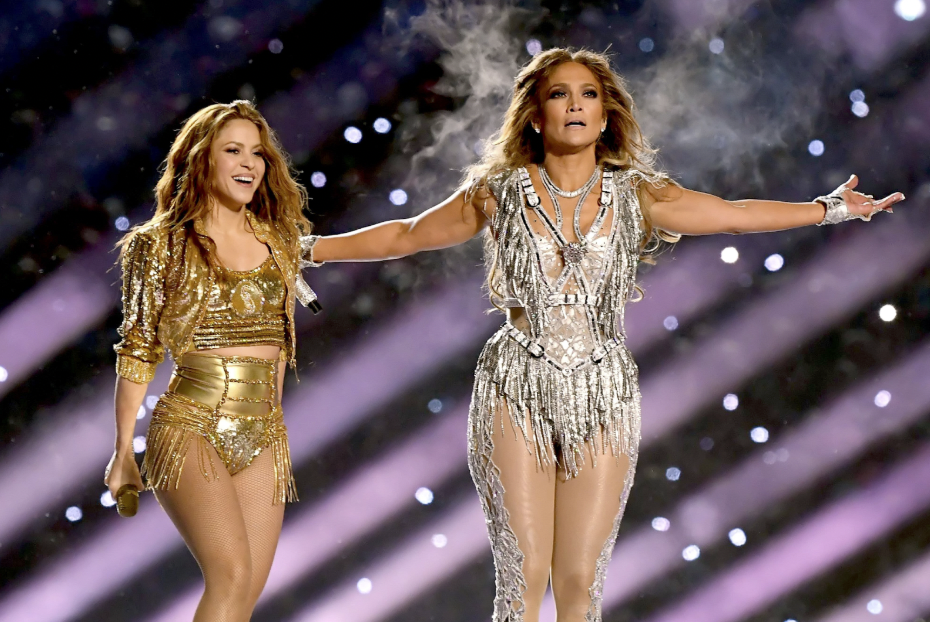
Jennifer Lopez and Shakira perform at the Super Bowl LIV halftime show. Courtesy of Kevin Winter/Getty Images.
By the time Shakira and Jennifer Lopez co-headlined in 2020, the conversation was centered around Latin identity and bilingualism. Bilingual lyrics, salsa and reggaeton choreography, and visual nods to immigration made the show more symbolic.
Goel adds to this and notes, “I think it’s the most important thing in picking an artist that represents America [and the] music scene very culturally.”
The performance reflected demographic and musical shifts, where Spanish-language music increasingly topped U.S. charts.
Super Bowl LV 2021 The Weekend
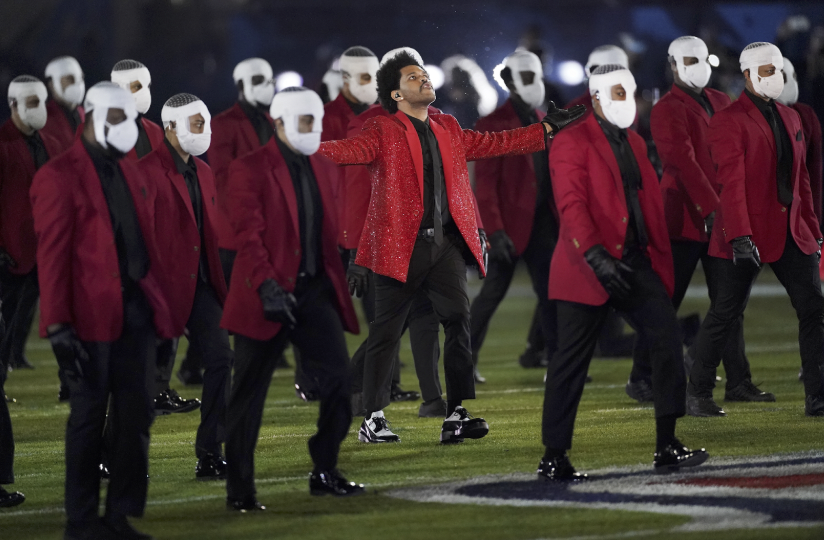
The Weekend performs at the Super Bowl LV halftime show. Courtesy of Layla Ilchi.
In 2021, the weekend performed his half-time show in the midst of the COVID-19 pandemic. With limited stadium capacity and masked dancers moving through a maze of mirrors, the show captures the global disorientation that a lot of people were feeling. Even without a full stadium, the performance felt intimate yet eerie and almost spooky, a statement during a world mid-crisis.
Super Bowl LVI 2022 Snoop Dogg

Snoop Dogg performs during the 2022 LVI Super Bowl halftime show alongside Dr. Dre, Kendrick Lamar, Eminem, Mary J. Blige, and 50 Cent. Courtesy of Ronald Martinez/Getty.
At the 2022 Super Bowl halftime show, Snoop Dogg helped lead a significant cultural moment for hip-hop. He kicked things off alongside Dr. Dre with classics like “The Next Episode” and “California Love,” setting the tone for a celebration of West Coast rap and Black music culture.
The performance also featured some surprise appearances, including 50 Cent performing “In Da Club” and Mary J. Blige singing “Family Affair” and “No More Drama.” Kendrick Lamar delivered “Alright,” and Eminem closed with “Lose Yourself,” before the whole crew reunited to finish “Still D.R.E.” This performance evoked feelings of nostalgia and expressed a lot of cultural pride, leading many fans to call it one of the most memorable halftime shows in years.
Super Bowl LVII 2023 Rihanna

Rihanna performs at the Super Bowl LVII Halftime Show. Courtesy of Gregory Shamus/Getty Images.
In 2023, Rihanna headlined a halftime show celebrating hip-hop and R&B music. The previous year had featured a hip-hop-focused lineup including Kendrick Lamar. Despite the popularity of Rihanna and her music, this performance also went viral after her live pregnancy announcement during the show, causing a lot of surprise from her audience.
As Goel explained, “music with meaning often is very harsh to separate from politics.” So, trying to take those messages only takes away from what the music is trying to bring.
Super Bowl LVII 2024 Usher
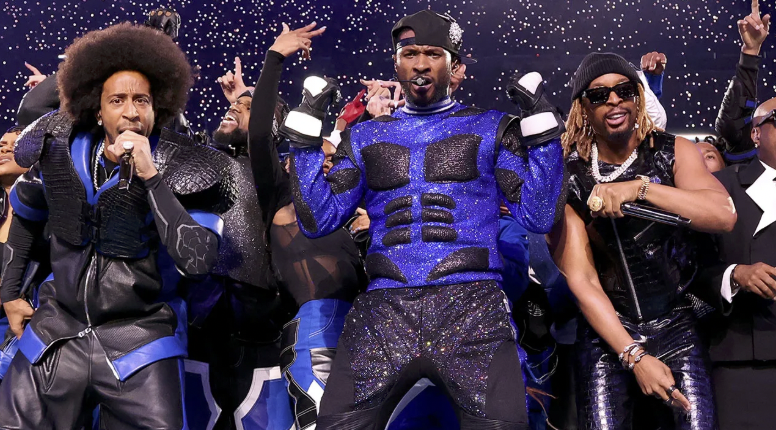
Usher performs at Super Bowl LVII halftime show, featuring from left: Ludacris, Usher, and Lil Jon. Courtesy of Kevin Mazur/Getty Images.
Usher’s show celebrated R&B’s longevity and Las Vegas showmanship. Bringing out multiple collaborators and delivering choreography-heavy nostalgia, it honored early 2000s pop culture. While less politically charged than others, it reinforced the Super Bowl as a stage for genre celebration and legacy recognition.
Super Bowl LIX 2025 Kendrick Lamar
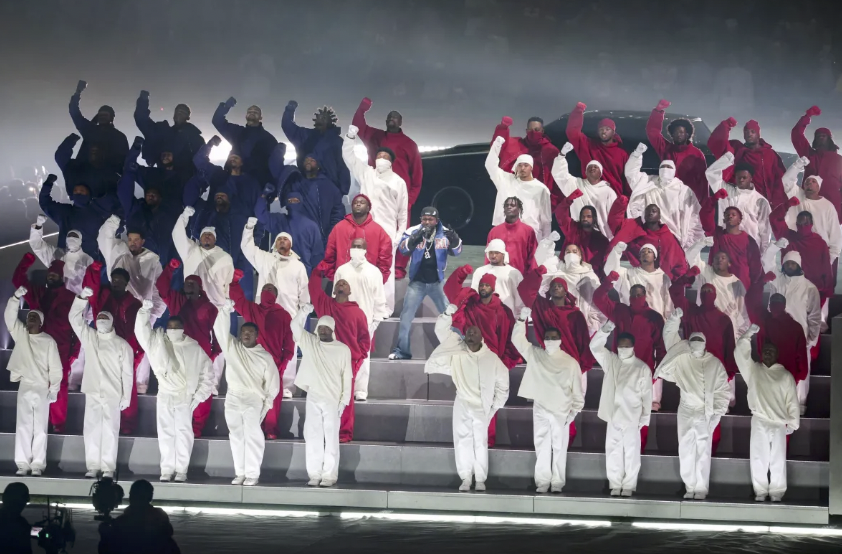
Kendrick Lamar performs at the LIX Super Bowl halftime show, creating an American flag with his backup dancers. Courtesy of Christopher Polk/Penske Media via Getty Images.
By 2022 and 2023, hip hop had taken over halftime show music. Kendrick Lamar is an artist whose music already carries and expresses strong social themes and political messages. Kendrick's performance with SZA addressed systemic racism and black identity.
Super Bowl LIXX 2026 Bad Bunny
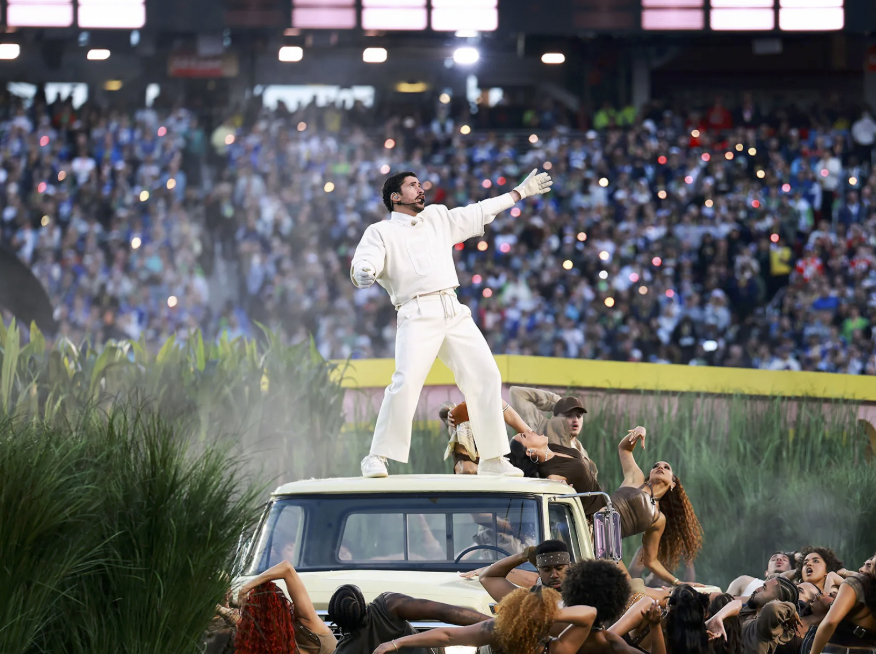
Courtesy of Kathryn Riley/Getty. Bad Bunny performs at the LIXX Super Bowl Halftime show.
As Latin artists continued to dominate streaming platforms, performers like Bad Bunny have become central to the halftime show’s direction. His rise to popularity reflects broader shifts in American music, where Spanish albums regularly top U.S. charts. Now, Spanish artists are even earning their recognition through award shows, such as Bad Bunny recently winning a Grammy for album of the year.
Bad Bunny opened his show with “Titi Me Preunto” while dancers performed synchronized reggaeton choreography scattered across a grass field, and the stage visuals displayed Puerto Rican flags and vibrant colors. He closed with “I Like It,” incorporating bilingual lyrics and salsa, and celebrating Latinx identity and culture.
This performance was a huge milestone for Latin representation on one of the world’s biggest stages. Featuring bilingual hits, cultural dance styles, and political undertones about immigration and identity, it celebrated Latinx influence in American pop culture. It was vibrant and historic.
According to the Pew Research Center, political polarization in the U.S. has intensified over the past decade. That polarization shows up in how we interpret and interact with these performances.
Social media has transformed the halftime shows, turning short clips into viral moments that circulate across platforms, generating mixed reactions.
For many viewers, the Super Bowl halftime show has become just as important as the game itself. In the same student survey, 73.9% of respondents said the halftime show is either slightly more important or much more important than the football game itself. This is important because it shows how important that 13-minute artist segment has become and the influence and impact it has on culture and on individuals.
This cultural shift is quantifiable, too. After each performance, streaming numbers for featured artists surged, expressing even more so that the halftime show is one of the most powerful stages in the world.
These performances illustrate how the halftime show increasingly mirrors the country’s evolving identity, racially and linguistically. They get people talking and thinking about the world around them more critically, challenging us to pay attention to the stories being told through music and cultures, why they matter, and celebrate different perspectives and identities.