
Behind the scenes of Catlin Gabel’s favorite assemblies of 2025
By Krish Caulfield ‘26
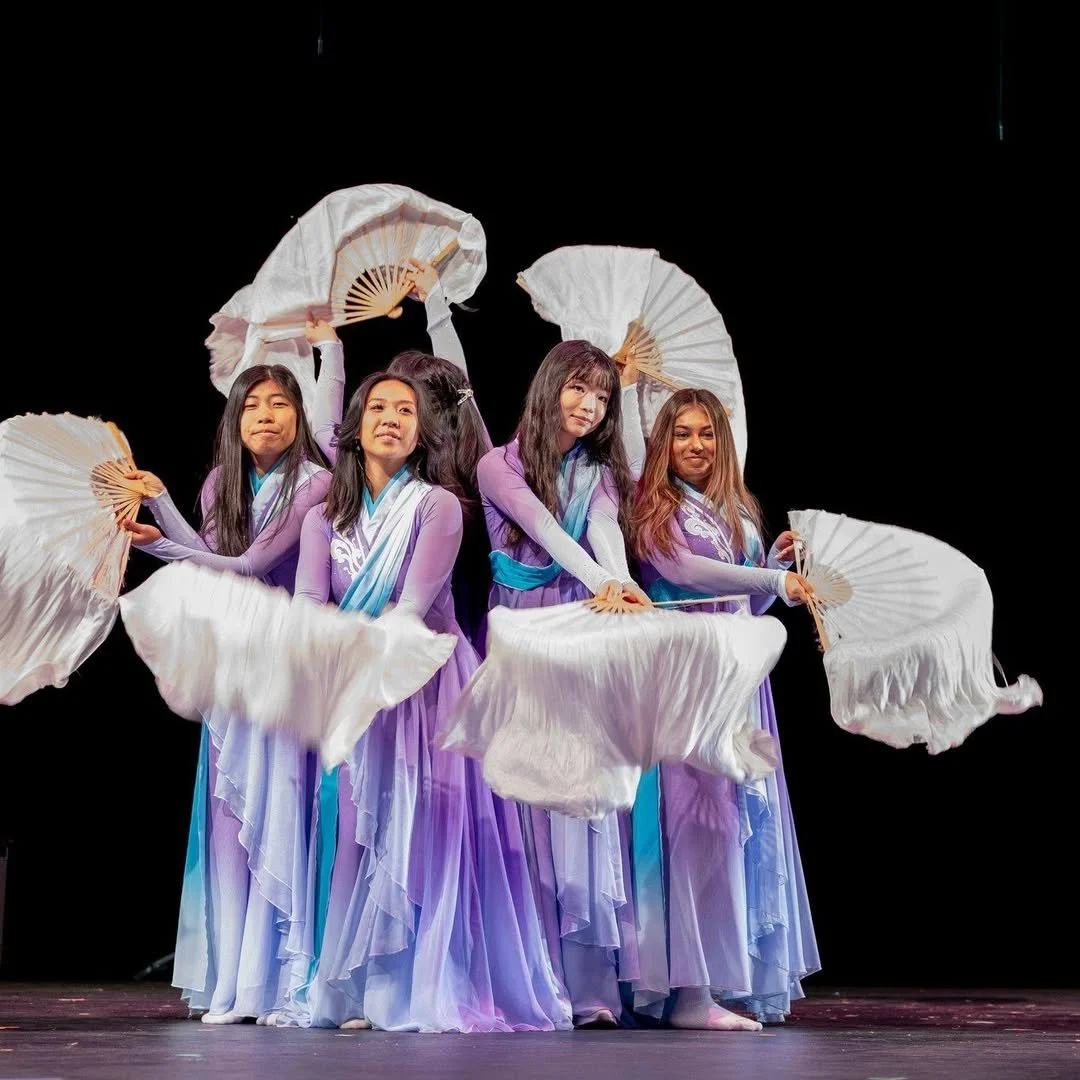
Lucky Liu ‘27, Jorie Liang ‘26, Lexi Ye ‘26, and Jiya Mehta ‘26 (left to right) perform a traditional Chinese fan dance. Photo courtesy of Catlin Gabel School (CGS).
Students slump into Cabell Theater’s seats, AirPods tucked discreetly under non-religious headwear, eyes half-shut under dimmed light, seemingly collectively hoping that John Harnetiaux might just end this one early. This is the image that many carry regarding CGS assemblies: bodies are present, but minds are elsewhere.
Nevertheless, plenty of assemblies in 2025 refused the apparent inevitability of this fate, demanding attention and serving as reminders that there is genuine value in purposeful community gathering.
According to an Upper School community census, which garnered 124 responses, three of the CGS community’s favorite assemblies were the Asian American and Pacific Islander (AAPI) Celebration Assembly, the Winter Assembly, and the Fall Play Preview Assembly.
To better understand how these assemblies manage to impress us all from the Cabell Stage, it’s time to hear from leaders and/or performers from each assembly and look back on the glory of some of the year's most influential community gatherings.
Asian American and Pacific Islander (AAPI) Celebration Assembly (May 7th, 2025)
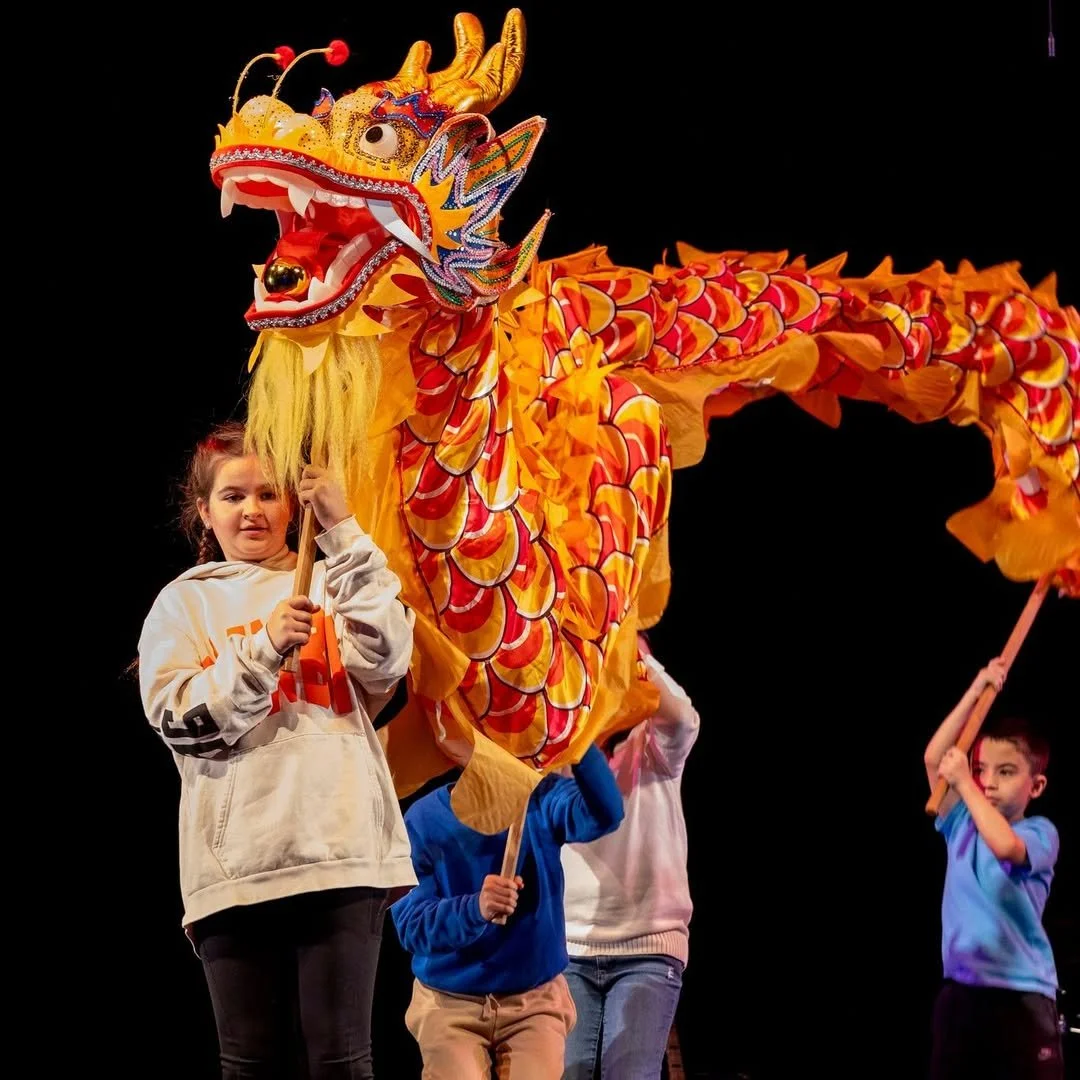
Lower Schoolers perform a Chinese dragon dance. Photo courtesy of CGS.
Nearly half of the survey’s respondents—61 community members or 49.6%—ranked the AAPI Celebration Assembly within their top three, placing it definitively among the community’s favorites.
This popularity is far from accidental. In fact, long before students poured into the seats of Cabell Theater, planning had been underway for months. This extensive preparation was necessitated by the AAPI Affinity Group's long-standing record of excellence in performance and presentation at these assemblies.
As students filed into those seats, there was a distinct “buzz of excitement,” in the words of avid assembly observer Karen Heredia ‘26, as “everybody’s already anticipating something.” This anticipation quickly became laughter and applause in Heredia’s favorite event, the spicy ramen-eating contest. “I never get sick of it,” she noted, before she offered the reminder that, last year, Theo Fisher ‘27 did, as he struggled to surmount the capsaicin-laced noodles.
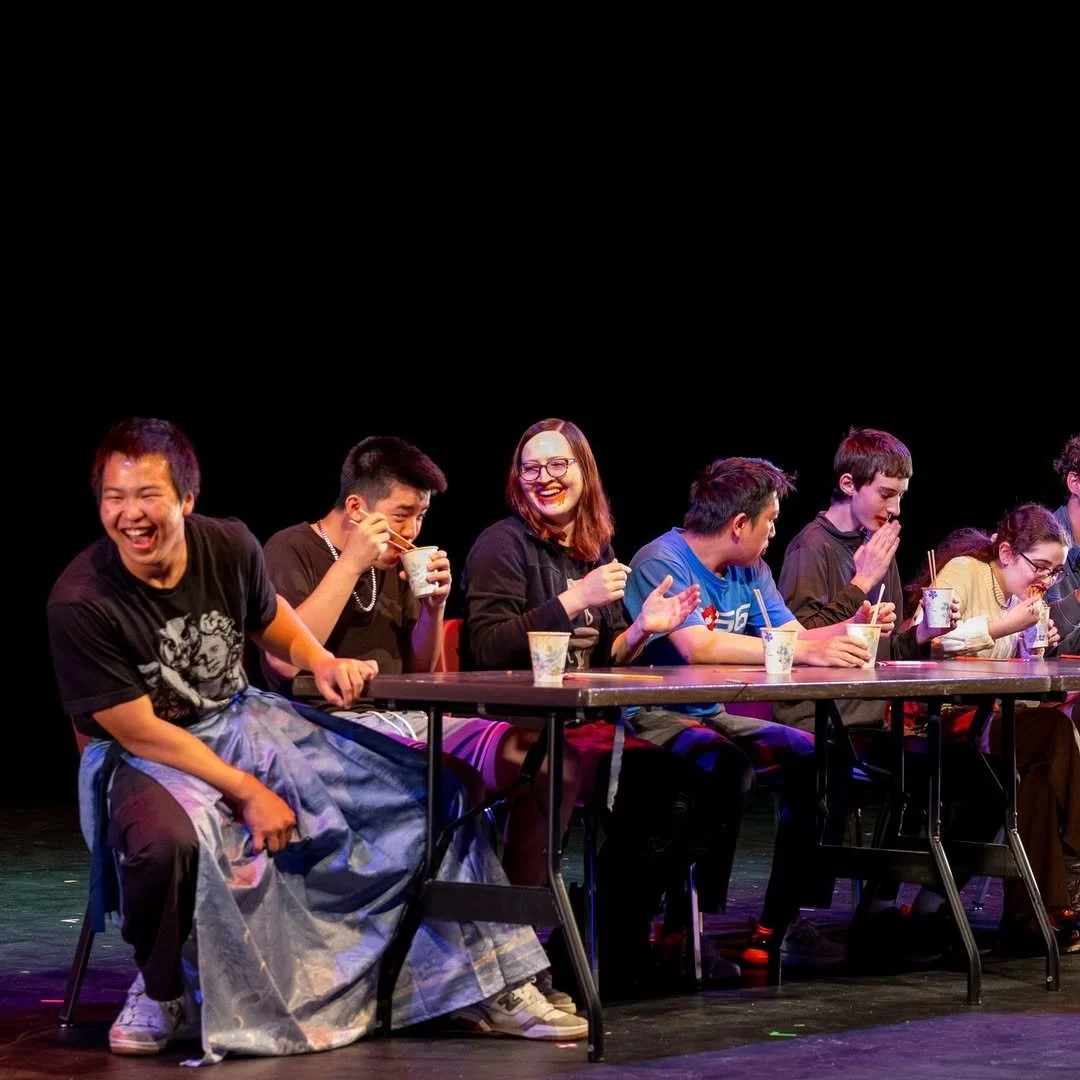
Kenny Ma ‘25, Ethan Chen ‘28, math teacher Bailey Stewart, Alvin Zhang ‘26, Theo Fisher ‘27, Sophia Saliba ‘28, and Riley Nordhoff ‘25 (left to right) participate furiously in the spicy ramen-eating competition. Photo courtesy of CGS.
Behind the energy onstage is an immense load of unseen labor. Jorie Liang ‘26, who serves as a co-leader of the AAPI Affinity Group and directed the assembly last year, described the planners’ juggle of logistics, fashion, choreography, organization, and scheduling. All in all, preparation for the assembly began two months prior and involved dozens of students of all ages from across all three CGS divisions.
The ambition of the assembly, however, stems from more than a desire to put on a spectacle or one-up past celebrations. It has personal stakes.
Liang referenced the reality that during COVID, there was an abundance of anti-Asian (particularly anti-Chinese) hate, and that hate was spewed at a time when current CGS students—many then Middle Schoolers—were “really impressionable.”
She stated, “All this hate online made us really insecure about our culture, our physical appearances, our ethnicity, and our families. So being able to have this space where we’re able to reclaim the magnificence of our culture, how beautiful our clothing is, all the different aspects, is really important.”
That intention was evident in the programming’s balance this year: long-standing traditions such as the fashion show or dragon and lion dance were paired with the more interactive and competitive nature of the Super Smash Bros or spicy-ramen eating finals. Heredia also recalled the past performance of drummers brought in by Upper School Chinese teacher Beining Hu, which, alongside the fashion show, made the AAPI Assembly something she “would pay to go to.”
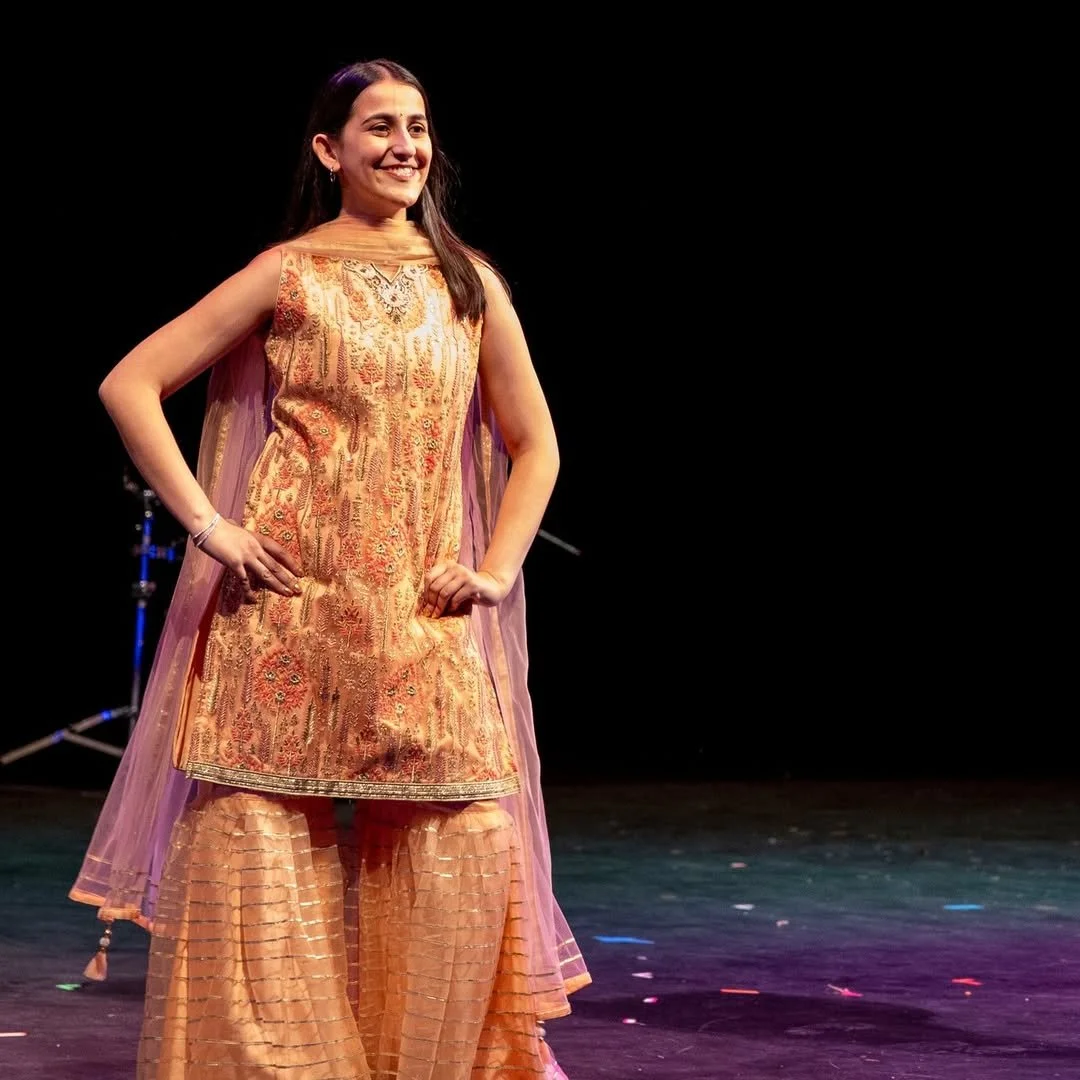
Riddhi Mahajan ‘25 looks into the Cabell crowd as she dons traditional Indian garments during the fashion show. Photo courtesy of CGS.
Liang added that “performance arts are a big part of Asian culture, like martial arts, dancing during fancy banquets, and operas. It just seemed right, to be honest, to have our assembly be more performance style.”
To Liang, the meaning of the celebration emerges from this self-determined performance component, identifying the fruits of the assembly as the pride found in putting on something that is “engaging, beautiful, meaningful to us, and how we want to represent ourselves.” She added that she hoped the audience found an appreciation for Asian culture thanks to the mesmerizing display on the Cabell stage. It seems many did.
Fall Play: Robin Hood Preview Assembly (November 5th, 2025)
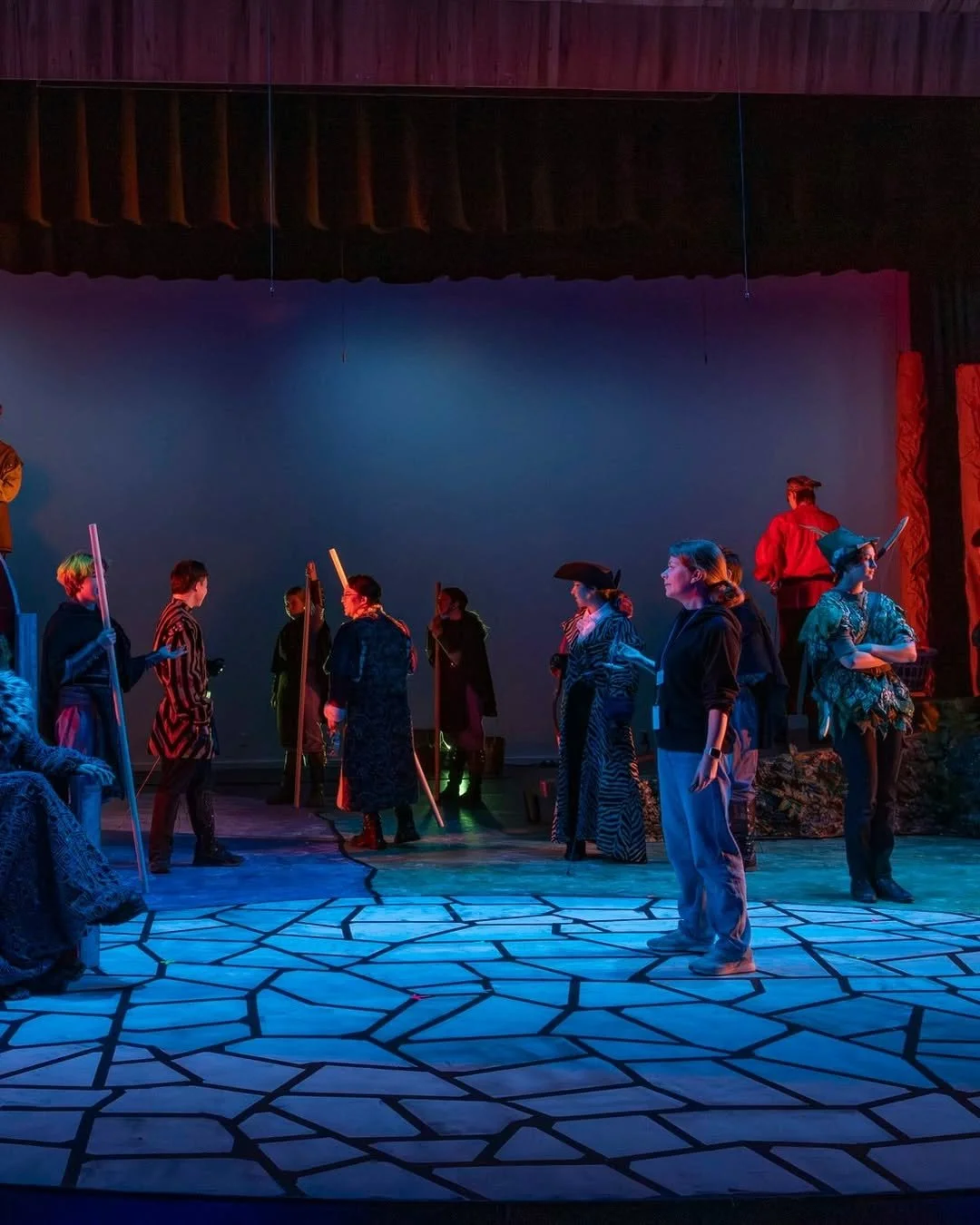
Theater director Elizabeth Gibbs directs the cast of Robin Hood. Photo courtesy of CGS.
This past year’s Fall Play Preview of Robin Hood was ranked among the top three assemblies by 40.7% of survey respondents (50 respondents).
The scene selected was the archery contest, in which a disguised Robin Hood (Tia Bailey ‘26) vies for victory against cocky competitors during Prince John’s (Scarlett Keys ‘26) shooting tournament, which is a set-up to capture Robin Hood himself. As the theatrical games were underway, the audience got to sit back and enjoy a fast-paced and undeniably comedic glimpse at the hard work of their theater-involved peers.
From the Cabell stage, however, the experience was far less comfortable.
Scarlett Keys ‘26 shared that the play preview “is the first time we perform in front of an audience ever,” and the performance (usually) falls in the middle of tech week. On top of this, the house lights remained on, illuminating rows of all-too-familiar faces. “It was really, really, really scary,” Keys added, as audience reactions were fully visible.
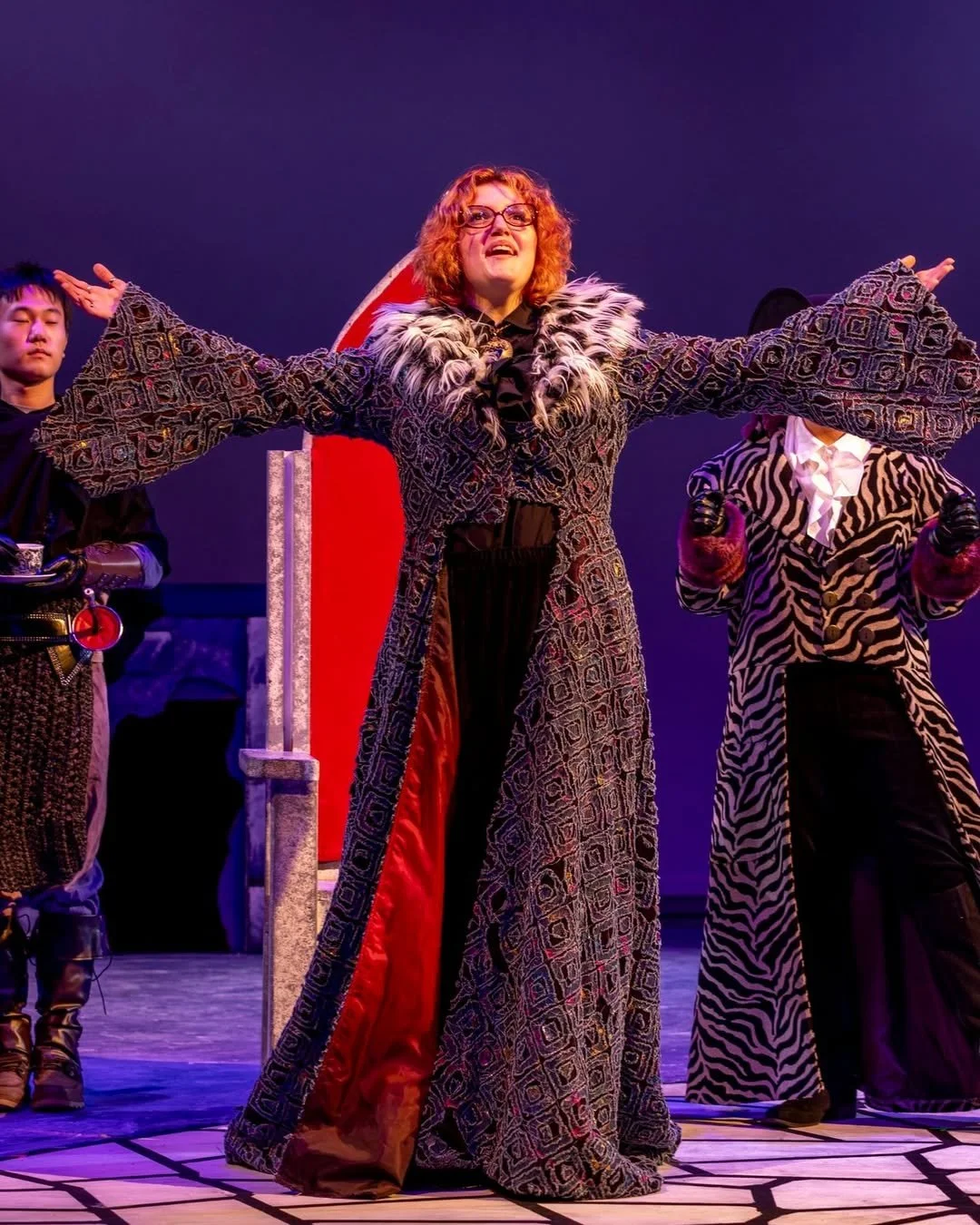
Scarlett Keys ‘26 as King John. Photo courtesy of CGS.
Preparation for the preview proceeded quickly, as approximately a week earlier, Upper School Theater Director Elizabeth Gibbs informed the cast of the scene they would perform. They rehearsed it amid the already demanding tech week schedule and, on the morning of the assembly, were pulled out of class early to run it a few final times.
This year’s production required some extra courage, as Keys mentioned that “for this year's Fall Play, it was especially frightening, because I think everybody had a sillier, for lack of a better term, more out-there role.” Keys flagged that the challenge is that performers are expected to fulfill their roles, perform for the audience, and then, “twenty minutes later, you have to go to class with them.”
Yet, it seems that risk is what helped the assembly stand out. For the crowd, the appeal can often be personal, as Heredia, who has plenty of friends in the theater program, mentioned: “I always hear about going to rehearsal … seeing the preview, you're sitting down, and you just get to see your friend's hard work laid out in front of you.”
When asked why she thought the CGS community so enjoyed this year’s Fall Play Preview, Keys credited its ability to convey that “theater is this magical thing where it's a form of entertainment, but it can also be a call to action. It can also be storytelling. And so, getting to watch your friends go up on stage and clearly do something they're passionate about is an amazing experience.”
As the barrier between the performer and audience thins, the assembly becomes a compelling—simultaneously vulnerable and flamboyant—invitation to go see the real thing.
Winter Assembly (December 19th, 2025)
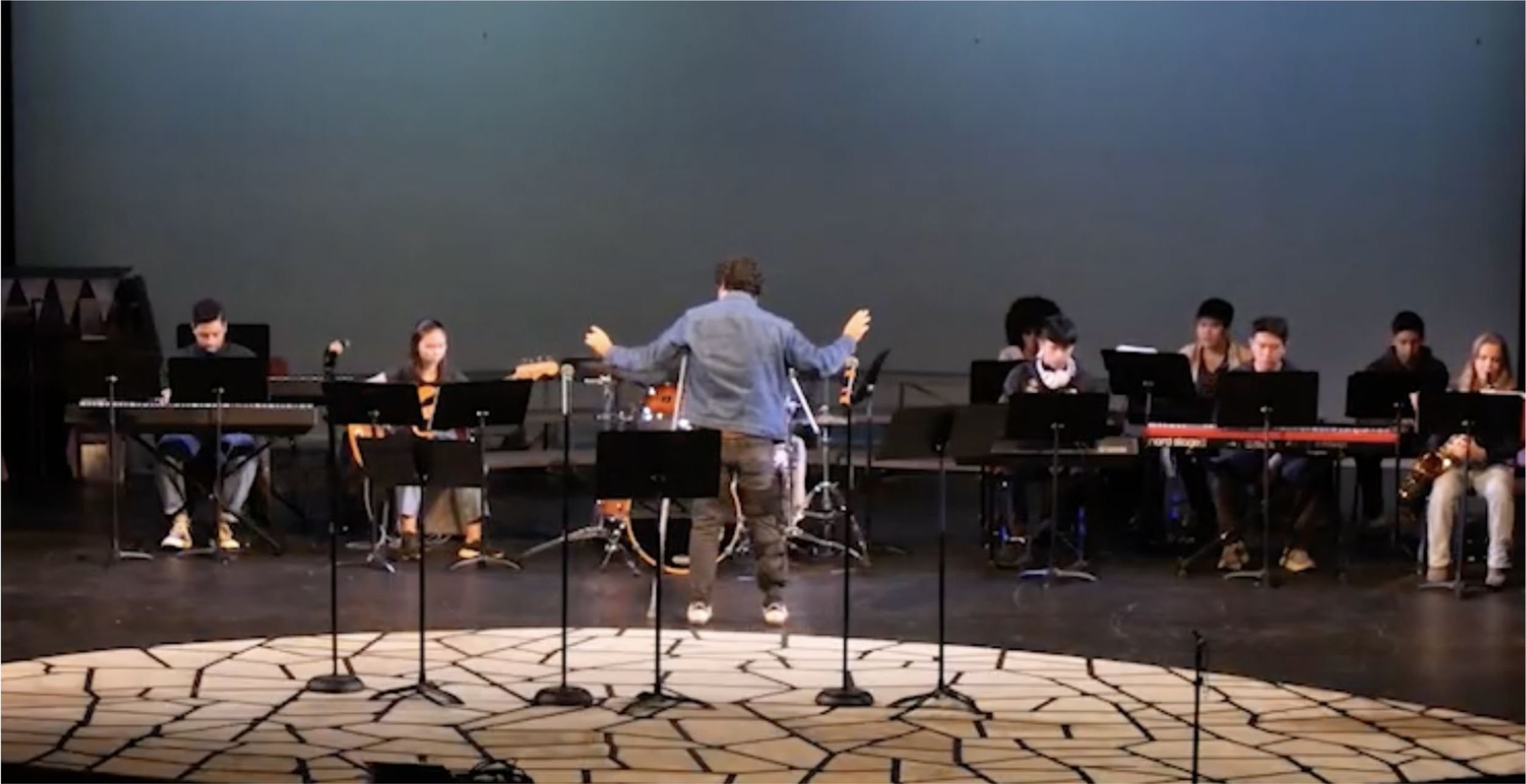
Middle and Upper School music teacher Alex Juarez conducts the Jazz Band in their performance of “Linus and Lucy.” Screenshot from recording courtesy of John Oribello.
The most popular assembly, ranked in 50.4% of top threes and by 62 community members, was the Winter Assembly.
Held after a final block seven class on the cusp of winter break, the assembly arrives in an atmosphere of excitement. “Everybody's giddy,” Heredia said, “You're about to get out of school.”
That atmosphere is quickly fortified by sound as the Jazz Band takes the stage. This year’s performance was a compilation from A Charlie Brown Christmas, featuring familiar melodies in tracks such as “Linus and Lucy” and “Christmas Time is Here.”
For Heredia, who also has friends in the Jazz Band, the moment never fails to land: “I always cry at least once. It's been a tradition, and I keep doing it.” Once “Snoopy and Peanuts music starts playing. I shed a little tear,” she added.
Long-time Jazz Band member Ishaan Goel ‘26 shared that there were months of preparation leading up to the performance, beginning in early fall and then carrying through the winter’s concert season. Beginning in October, they learned plenty of songs, primarily for their Fall Concert, many of which they then carried through into the Winter Assembly or later performances while picking up a few Christmas or winter-themed tracks.
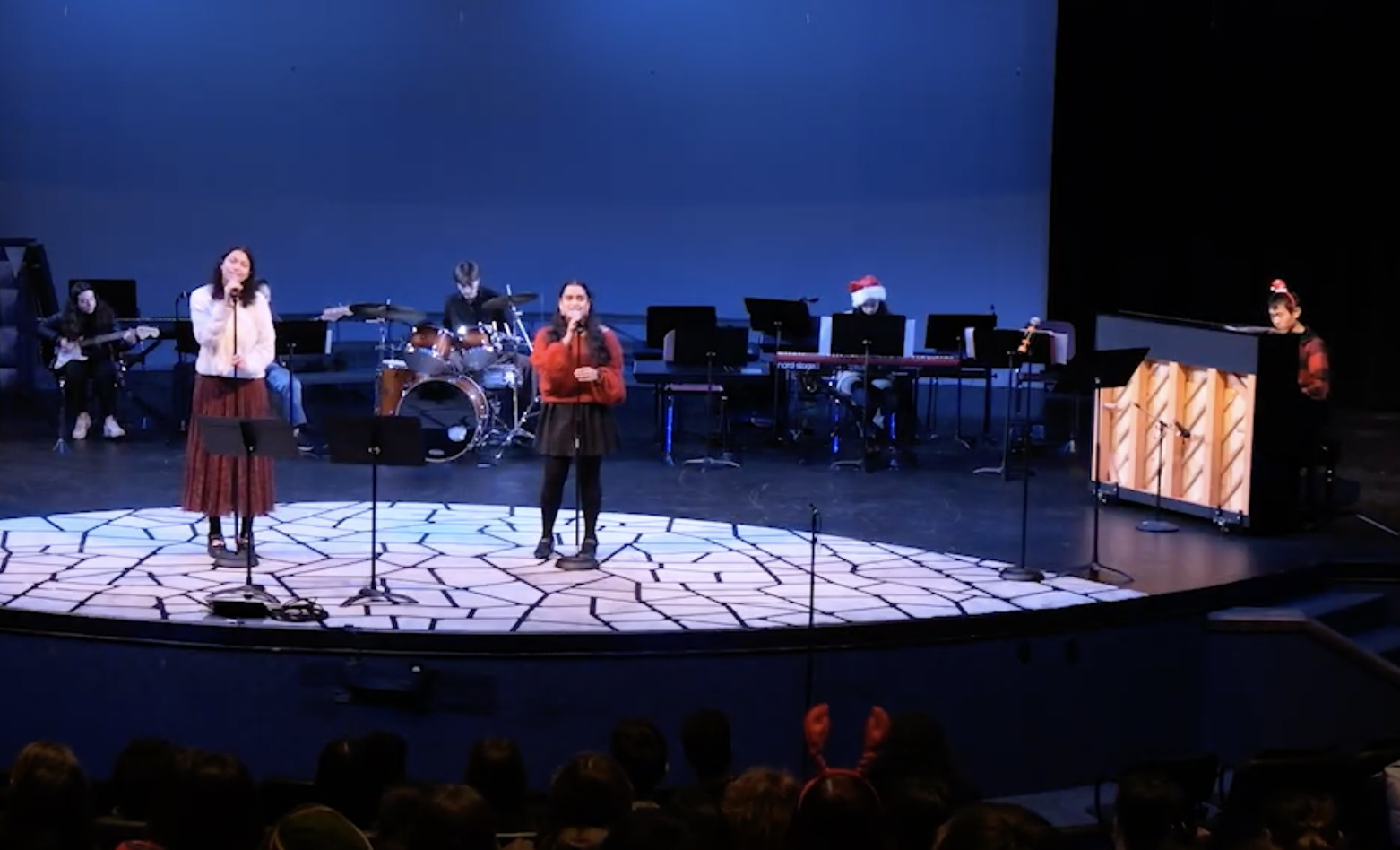
Isabel Doogan ‘26 (left) and Nivriti Behera (right) perform “Last Christmas.” Screenshot from recording courtesy of John Oribello.
The addition of that handful of pieces gives the Winter Assembly its distinctive cohesion, which extends into student vocal performances. A favorite this year was “Last Christmas,” sung by Nivriti Behera ‘26 and Isabel Doogan ‘26. Heredia said that the performance found some extra emotional impact in that “they did a redo of it from freshman year. I just thought that was so sweet.”
Much of the power of a music-centered assembly stems from the ability to have continuity not only from piece-to-piece, but from year-to-year. As CGS students spend four years in the Upper School, they can draw on their memories not only of specific performances and unique renditions of the same songs, but also of the assembly as a whole.
Heredia even fondly reminisced that “a couple of years back, Sam Langer ‘25 played a guitar song, and I did shed a tear.” The memory of any assembly, particularly for students in their junior or senior years, is inseparable from the previous ones they’ve seen.
“Art is a universal language,” Goel added, “everyone can resonate with music." There is a simplicity in merely demanding that an audience listen to art and take a moment. Goel said that the performances resonated because of the power in seeing “your fellow classmates and friends go on stage and pour their hearts out on their instrument,” especially when it’s abundantly clear how hard they’ve worked.
All that work, alongside the tremendous vibes of the hour before winter break, led the community out of 2025 on a high note, in some ways, literally.
Final Thoughts
Both Heredia and Keys highlighted that assemblies derive their power from the reality that they’re one of the somewhat rare times that the whole CGS Upper School community is gathered together. Heredia suggested that assemblies serve as a reminder that members of the CGS community “are part of a team.” It only makes sense, then, that the community comes together frequently to recognize that reality.
Keys, who also heads the Catlin Gabel Student Association (CGSA)’s assembly subcommittee, explained that assemblies also offer permission—particularly within the context of CGS’s rigorous academic environment—to pause. She addressed the reality that many students have complained that they could be using assembly time to do homework, and countered that “the whole point is that you’re not—you’re sitting here, your brain’s resting.”
That relaxation, she suggested, is a deliberate product of the togetherness facilitated by assemblies. Recall that the community’s most favored gatherings were not purely informational but also performatory, centering student voices and putting creativity at the forefront.
“It's a beautiful opportunity, because most schools get together once a year, but we can every week,” Keys continued, mentioning the need for “a big perspective shift.”
And so, it’s not that we have to go to assembly. We get to go to assembly.
We get to watch our peers strut in cultural garments their grandparents wore, demonstrate the unwavering courage of embodying complex and comedic characters, or play Peanuts music they’ve spent months preparing to, all on the same Cabell stage. That is a gift.