
Inventing optimism—breakthroughs that gave 2025 hope
By Eliana Yoken ‘26

Courtesy of Gracyn Gardner ‘26.
From climate change to escalating geopolitical conflicts, and health scares to doom scrolling, bad news in 2025 felt nonstop and exhausting. However, underneath all of that were inventors and designers creating a future we can be proud of. All over the globe, people were looking to solve real-world problems.
At the Papé Family Innovation Center Lab at the University of Oregon, innovators have been focused on solving high-impact biomedical and life-science challenges. These solutions include “advancing wound healing technologies, environmental contaminant testing, accelerating DNA and protein discovery, and microbiome-sourced therapeutics.” 3D-printed microfiber scaffolds mimic natural extracellular matrices, enabling advances in regenerative medicine, cancer research, and drug discovery.
So even though the news might have felt exhausting, Forbes suggests: “Despite political and economic challenges, scientists and engineers kept pushing the envelope in 2025 to develop new technologies that will pave the way for the economy of the future.”
While labs were pushing medicine and science forward, other innovators were tackling one of the biggest contributors to climate change in a surprisingly simple way. Here are some innovations of 2025 that can give you some hope.
FutureFeed Asparagopsis Supplement

Red Asparagopsis seaweed. Courtesy of Times Magazine.
Cows are responsible for 40-45% of global greenhouse gas emissions, due to the extremely high amounts of methane they produce through livestock burps and manure.
In 2025, scientists at the Australian federal government agency for scientific research, CSIRO, discovered that feeding cows a type of seaweed alters this process. By adding a small amount of a specific red seaweed to cows’ diets, researchers found that they could change the chemical reactions occurring in a cow’s stomach that produce methane in the first place.
The seaweed, called Asparagopsis, has been shown to reduce methane emissions from cattle by 80% or more. Rather than asking farmers to completely overhaul their operations or consumers to drastically change their diets overnight, this solution works within existing food systems. It is a rare example of a climate innovation that is both highly effective and relatively easy to implement.
According to Time Magazine, FutureFeed, the company CSIRO created to commercialize Asparagopsis, is now sharing the technology with seaweed farmers in places like Hawaii, Australia, New Zealand, and Europe.
This small change in how our livestock is fed could have a massive effect on the planet’s future. Asparagopsis is proof that climate solutions do not always have to be extreme or unrealistic. Sometimes, real change can start with something as mundane as adding seaweed to a cow’s dinner.
CRISPR Breakthroughs

Penn Medicine’s Kiran Musunuru and Rebecca Ahrens-Nicklas holding baby KJ post-CRISPR infusion. Courtesy of Children’s Hospital of Philadelphia.
In 2025, numerous noticeable medical breakthroughs occurred. CRISPR (short for clustered regularly interspaced short palindromic repeats), a technology that allows research scientists to selectively modify the DNA of living organisms, successfully treated a child diagnosed with a genetic disorder thanks to their customized gene editing therapy.
Megan McLain, a biology teacher at Catlin Gabel School (CGS), says, “There has been a big CRISPR breakthrough recently. We are studying CRISPR in Honors Biology right now as well: pretty amazing stuff.”
In a study at the Penn School of Medicine, an infant named KJ was born with a rare metabolic disease known as “severe carbamoyl phosphate synthetase 1 (CPS1) deficiency.” After spending the first several months of his life in the hospital, on a very restrictive diet, KJ received the first dose of his unique therapy in February, between six and seven months of age. The school has now reported that “the treatment was administered safely, and he is now growing well and thriving.”
KJ is the first of many who will be able to receive CRISPR treatment. Thanks largely to AI, CRISPR was able to innovate at a more successful level than in previous years. Stanford Medicine’s “CRISPR-GPT” demonstrated an AI copilot that can guide design, plan experiments, and target more in-depth diagnoses.
CRISPR could change millions of lives; it’s sparking hope and innovation across the globe in the fields of medical research.
Claros Technology and Forever Chemicals

Diagram of potential placements of the PFAS destruction system. Courtesy of Claros Technology System.
“Forever chemicals” don’t break down and end up in water and soil, polluting the earth we live on. Many students at CGS have noticed this and pushed for better recycling practices in recent assemblies.
Claros Technology developed a way to destroy these forever chemicals. Rather than prevention, the company is undoing damage already done.
They do so by placing the technology either upstream or within a treatment chain, rapidly destroying the per- and polyfluoroalkyl substances (PFAS), large groups of more than 12,000 to 15,000 synthetic chemicals, known as “forever chemicals.”
This technology is inspiring as it shows we’re not stuck with our past mistakes. Innovation can clean up after us, not just move us forward.
Claros Technology stated that: “The first viable closed-loop solution that permanently destroys PFAS with proprietary, industry-tested technology. ClarosTechUV™ permanently destroys 99.99% of all targeted PFAS species (long, short, and ultra-short), and is proven safe and cost-effective.”
Its additional benefits are numerous. Unlike traditional treatment chains, which are placed downstream of the waste, ClarosTechUV™ can be placed upstream of large, expensive filtration methods, destroying PFAS in rapid destruction times. Not all innovation is about creating something new. Sometimes, it’s about undoing the harm we’ve already caused.
Vera C. Rubin Observatory
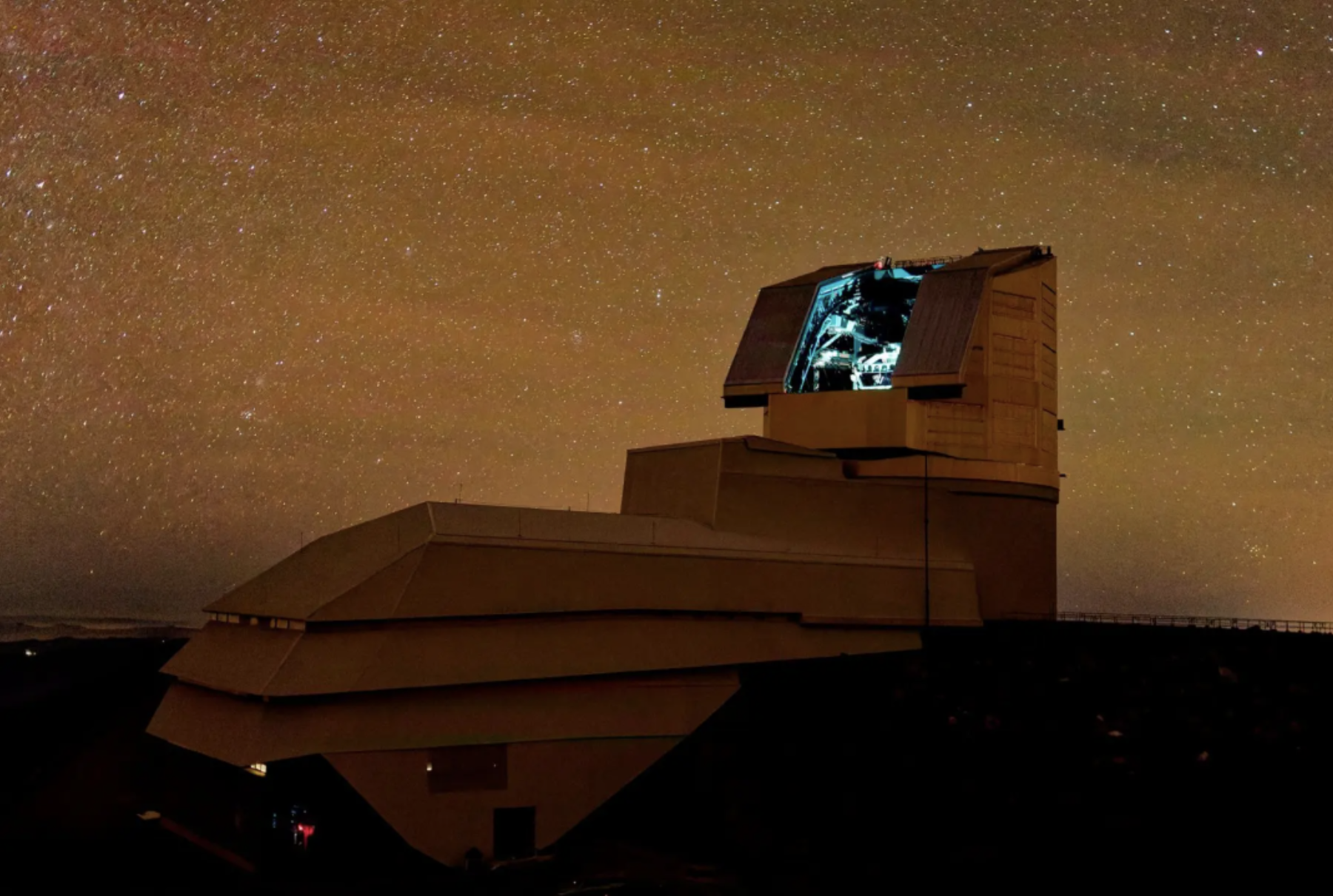
Vera C. Rubin Observatory. Courtesy of Times Magazine.
Perhaps, the future isn’t on Earth. After more than 20 years of hard work and design, the Vera C. Rubin Observatory took its first pictures of the cosmos on June 23, 2025. It sits atop a mountain in Chile, taking roughly 1,000 pictures of the southern sky every single night.
According to Science Daily, “the LSST camera can photograph 45 times the area of the full moon in the sky with each exposure. The high-definition images, which use six different colour filters, capture the entire southern night-sky in just three nights of shooting.”
This observatory helps scientists study dark matter, catalog solar system objects, map the Milky Way, and detect transient cosmic events. Unlike the other inventions, this is not about fixing a crisis, but rather about understanding how the universe around us actually functions.
The pictures from Vera C. Rubin can remind us that the world is bigger than the disappointing headlines of every day.
Sandrine Thomas, the deputy director of Rubin's construction, calls it a “discovery machine.” In a preview this summer, Rubin captured more than 2,000 never-before-seen asteroids.
Why These Inventions Matter
From a new food for cows to brand new technology that can get rid of scary forever chemicals, each of the innovations of 2025 tackles a different problem, whether that be climate, health, pollution, or understanding the universe.
Terra Hiebert, Papé Family Innovation Center Lab Manager, suggests that “Science and engineering underpin nearly every aspect of daily life, whether people realize it or not—from healthcare and environmental monitoring to food systems, materials, and therapeutics.” These inventions focus on the future, not quick wins.
2025 harbored a lot of bad news, but it also fostered progress. At CGS, where students are constantly studying and diving into the news, ending the year with hope matters. There are numerous opportunities at CGS, from robotics to computer science to problem-solving in our other classes; it is essential to get involved.
Hiebert says that if you have an idea for an invention, “Jump in and try things! Be curious, ask questions, seek feedback, but don’t focus on perfection. Innovation rarely begins with a perfect plan.”
Each invention underscores the necessity of responsibility and long-term thinking. And moving forward, the future is in our hands.