
Bianca Knoll Nakayama on teaching, traveling, and David Bowie | Humans of Catlin Gabel
By Priya Klein ‘26
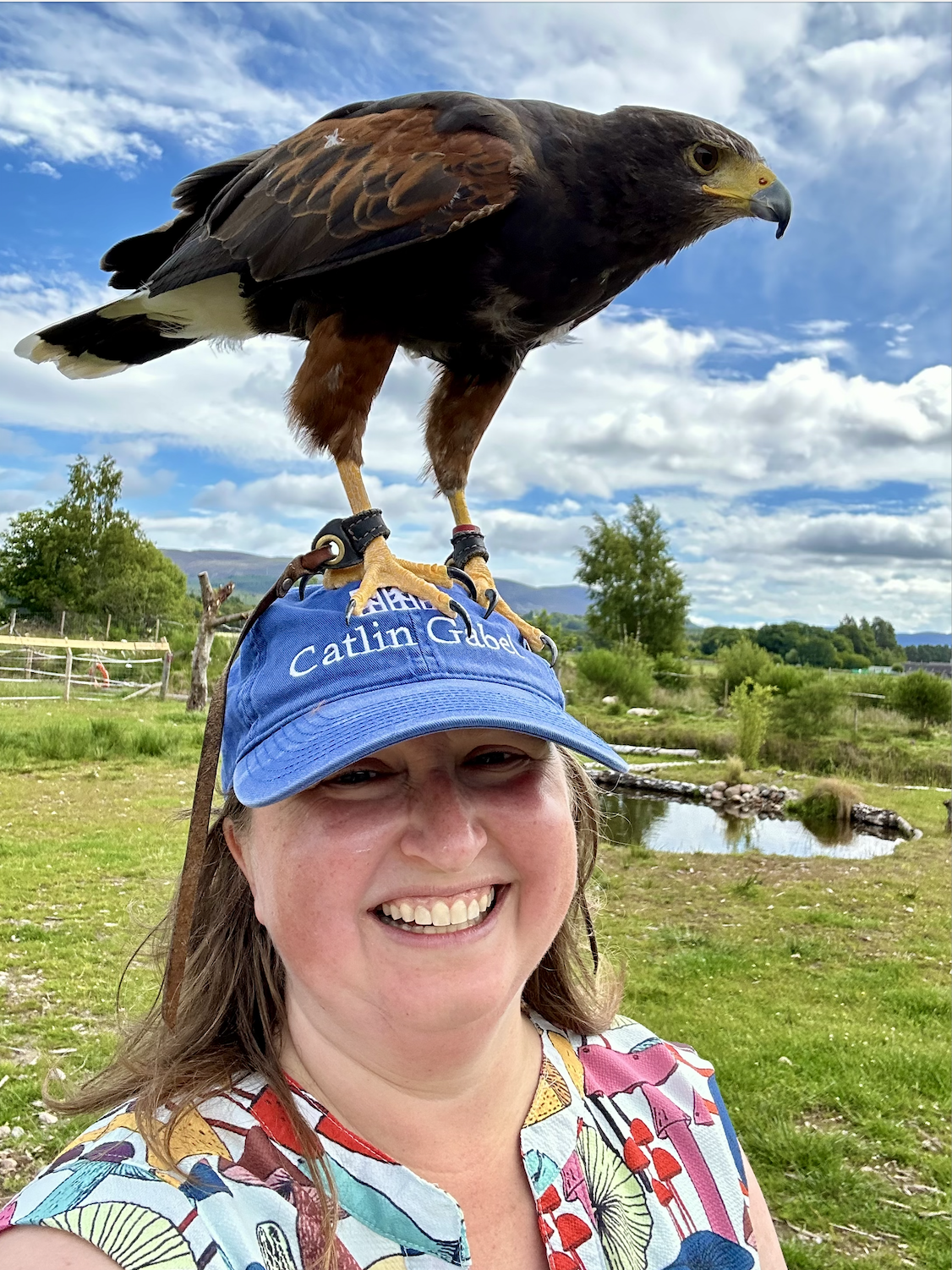

Knoll Nakayama with a Harris hawk on her head in Scotland, Knoll Nakayama with Peppermint Bonbon (her vespa). Courtesy of Bianca Knoll Nakayama.
It's a bird? It’s a bike? It’s Bianca Knoll Nakayama arriving at the Catlin Gabel School (CGS) campus on her mint green Vespa (affectionately named Peppermint Bonbon after the name for mint chocolate chip ice cream in Knoll Nakayama’s home state of Minnesota)!
Long-time Upper School (US) science teacher and revered member of the CGS community, Knoll Nakayama, manages to balance her interests in genealogy and archeology, satisfy her love of reading, and find time to travel with her son. Where did it all start, and how does she do it all? I sat down with Knoll Nakayama herself to find out.
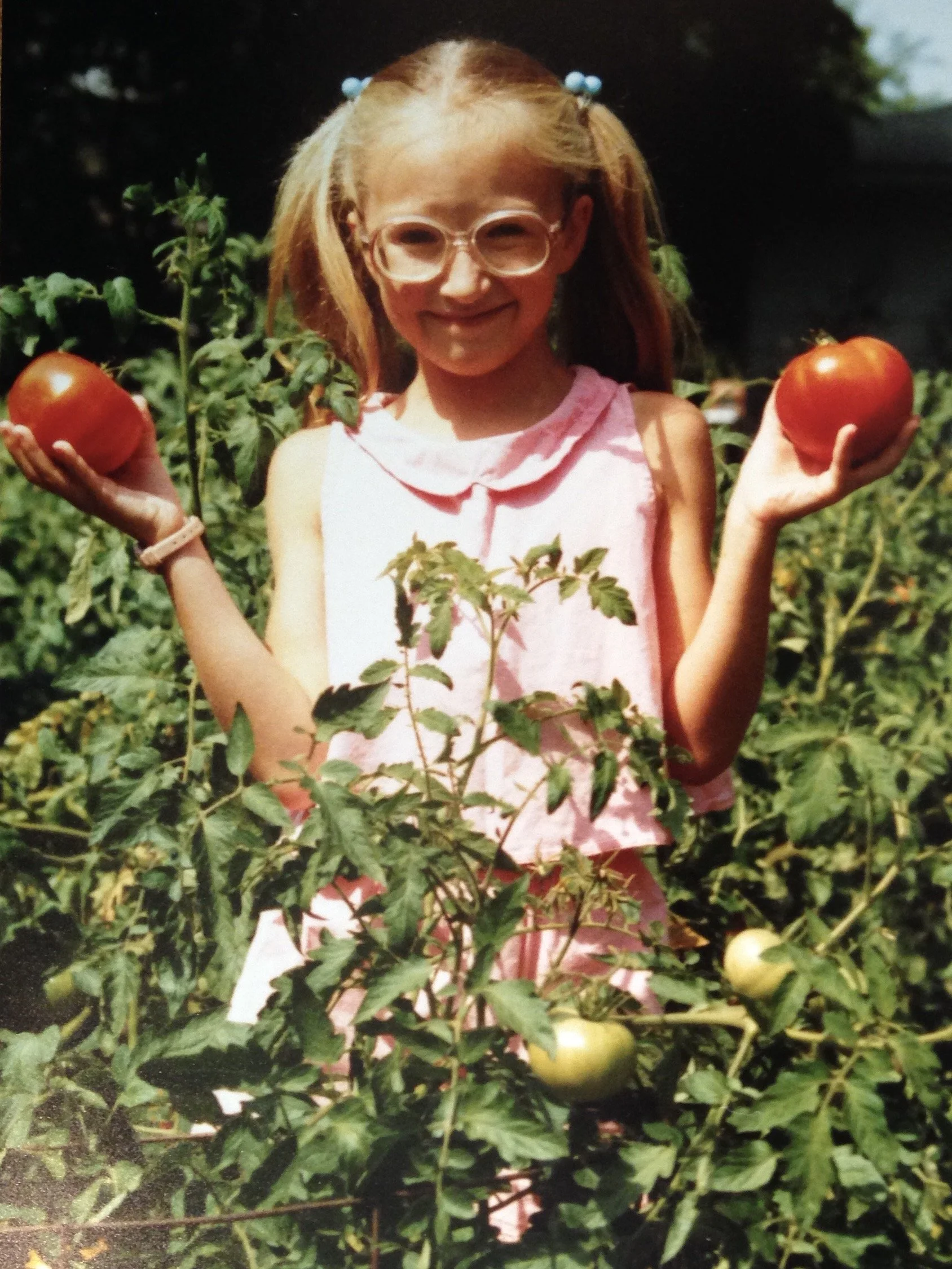
Knoll Nakayama in grandparents’ garden in Iowa. Courtesy of Bianca Knoll Nakayama.
Knoll Nakayama spent most of her upbringing in Mahtomedi, Minnesota, a small town outside of St. Paul. Her father was a biomedical engineer and her mother was a teacher.
As a child, Knoll Nakayama could be identified by her “mega giant thick 1980s glasses” and the tendency to bury her head in a book. “I was obviously a huge nerd,” said Knoll Nakayama. She admits to being a “total tryhard” in school and throwing herself into her academics, something that would eventually manifest into a lifelong love of learning.
After school hours, Knoll Nakayama nourished her passion for ballet dancing, participating in annual productions of the Nutcracker and Swan Lake. Her love of dance would become a defining memory of her childhood.
Knoll Nakayama’s whole life changed when she first saw the 1986 fantasy musical Labyrinth in theaters. Entranced by the masterful puppeteering of Jim Henison and the synth sounds of David Bowie, she quickly fell in love with the film. From that point on, her heart and record player were entirely dedicated to David Bowie.
Was it a coincidence that Bowie-loving Knoll Nakayama and her family then moved to West Germany right after the fall of the Berlin Wall? Yes, actually, it was for her father’s job.
Nonetheless, Knoll Nakayama emphasized the significance of living in Germany during such a transformative period of European history. Being only in the 4th and 5th grade, the few years that she spent there were “really formative.”
Germany wasn’t the only time Knoll Nakayama lived outside of the United States: she studied abroad during college in an Australian rainforest. “Everything was trying to kill me; I had so many crazy adventures.” In one instance, she recalls a serious run-in with a stinging plant where the residual pain lasted six months.
She spent the summer of her senior year of college in Wisconsin, on a monarch butterfly farm, raising close to a quarter million monarch butterflies for various occasions: to release at weddings, for funerals, or for scientists to study. “It’s not great for the ecology,” she admits now, “but it was a really interesting experience.”
The following summer, she coincidentally traveled to Mexico on vacation and was able to see where many of her butterfly offspring had migrated to. “It was this year where I was all in on monarchs,” said Knoll Nakayama. Regrettably, her trip predated digital cameras, so she has little record of her excursion.
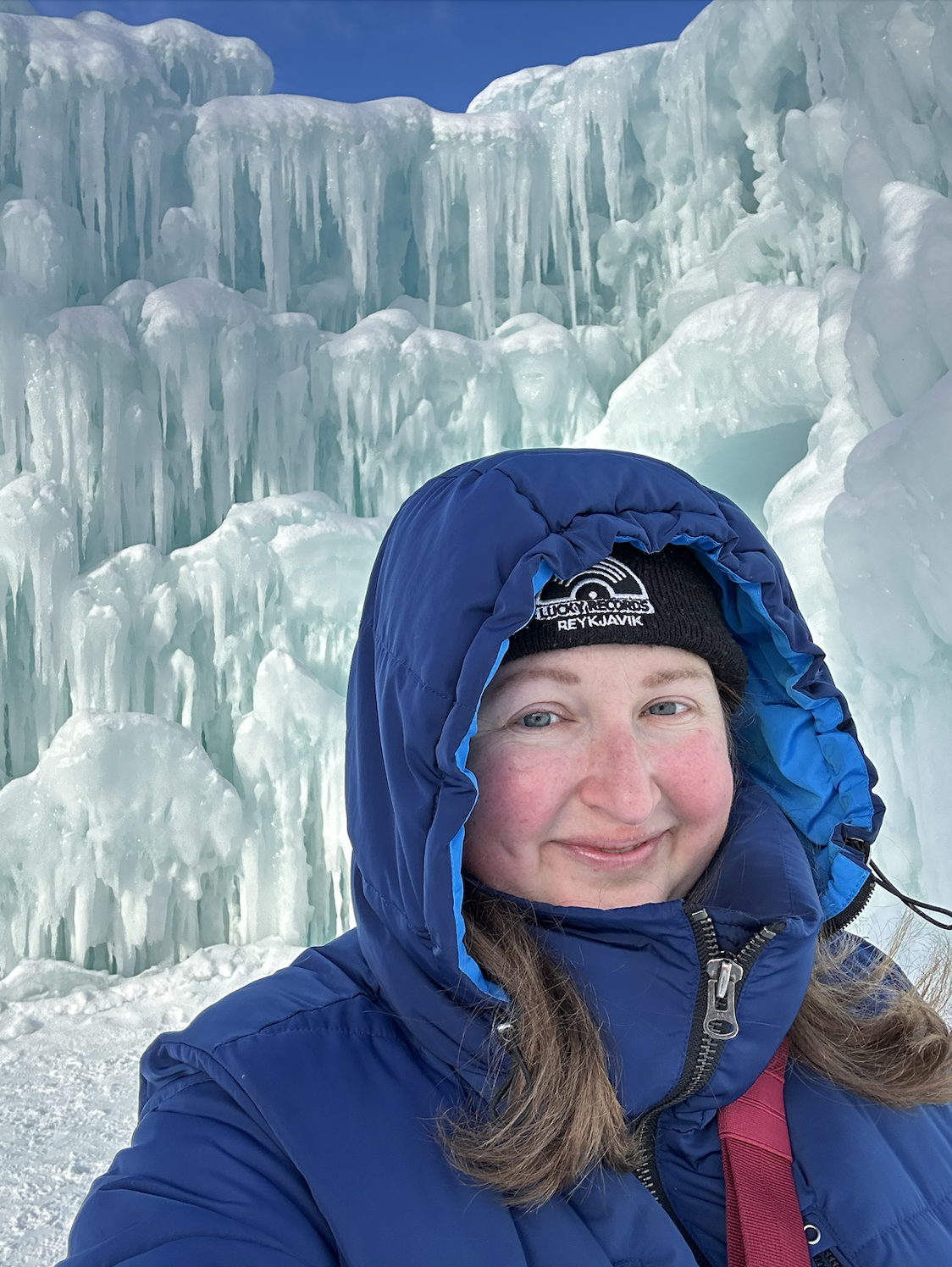
Knoll Nakayama in Minnesota at an ice castles exhibit in winter 2025. Courtesy of Bianca Knoll Nakayama.
She briefly lived in Philadelphia for a year, but found her way to the West Coast to attend graduate school at UC Berkeley. There, in the Bay Area, she worked in Silicon Valley as a teacher before eventually finding her way to the Pacific Northwest and CGS.
At CGS, she’s performed a variety of different responsibilities: from US science teacher to Health 9 teacher to advisor of various clubs. She currently teaches Science II and Evolutionary Biology, in which she’s known for her energetic teaching style and clearly genuine passion for the subjects.
She hadn’t always wanted to become a science teacher, though.
She began college as an intended German major, teaching German in the summers. Quickly, though, she discovered her love of botany and decided to do her PhD in such, thinking she might become a botanist or botany teacher. However, working on her doctorate substantiated her love of teaching and led her to pursue it as a career.
Knoll Nakayama identified the learning possibilities of teaching as one of her favorite aspects of her career. Through keeping up with new scientific developments and through her interactions with students and other faculty, she is constantly learning new things. “I’m never bored and I really, really, really value that,” she said.
Knoll Nakayama’s love of reading has followed her throughout her life. Now, she even makes a challenge out of it by trying to read a gross (144) of books every year. Her favorite ways to reach this number are mostly non-fiction books and the works of Barbara Kingsolver and Richard Powers.
As many students on campus know, she also thoroughly enjoys the sports romance series “Heated Rivalry” and affectionately refers to herself as a “loon,” the name for fans of the series.
Knoll Nakayama also loves traveling. She has a goal to travel with her son everywhere that he has known ancestry before he graduates — a task that has led the two all over the world (mostly to Europe, and parts of Asia and Polynesia). These trips are often supplemented by expeditions to Frank Lloyd Wright architectural sites, with their total number of visits reaching close to 30 out of the 75 publicly available sites.
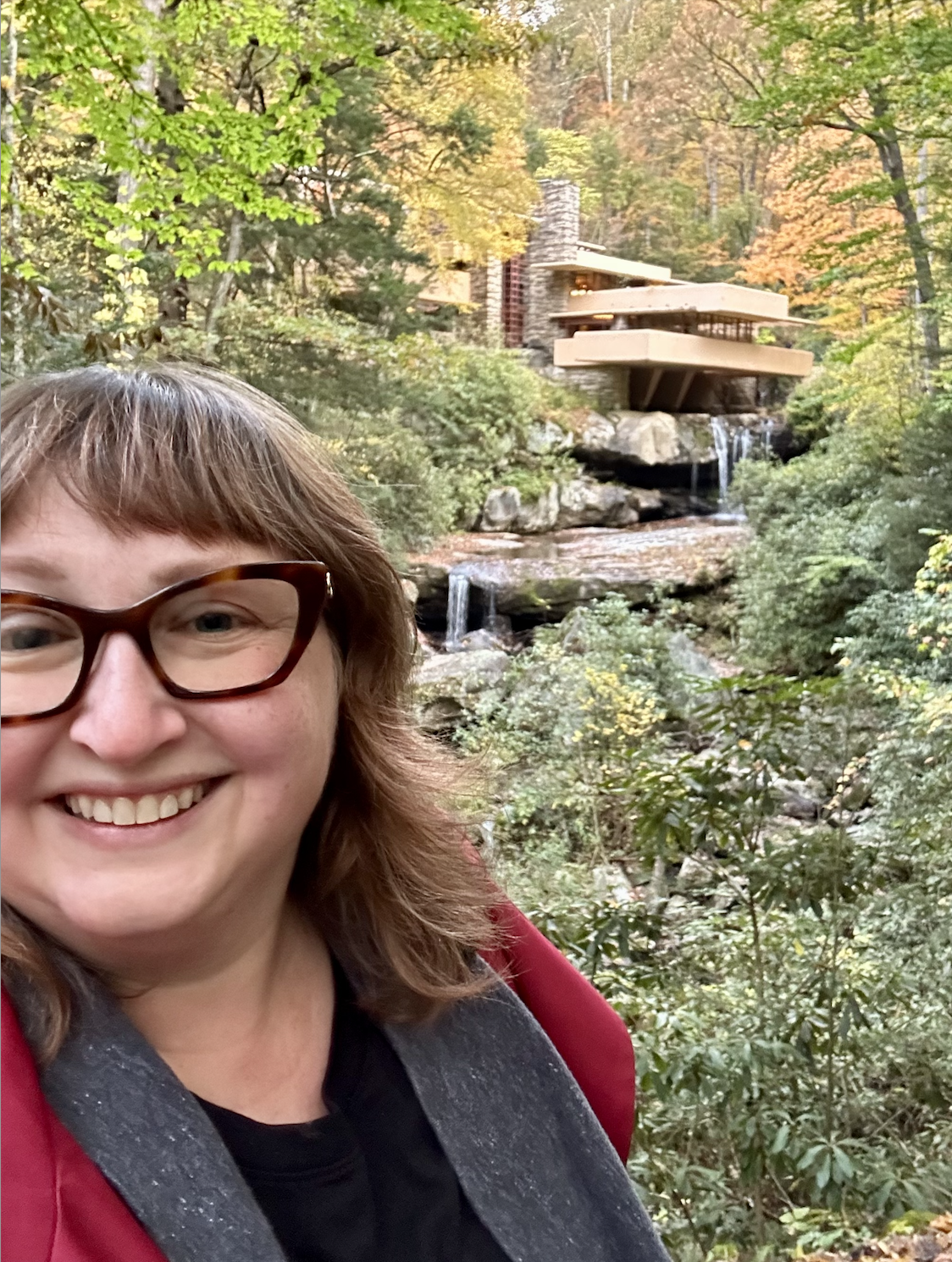
Knoll Nakayama in Fallingwater, a famous Frank Lloyd Wright design in Pennsylvania. Courtesy of Bianca Knoll Nakayama.
Recently, Knoll Nakayama’s son’s interest in competitive sports stacking led them to a cup stacking tournament in Korea. They were some of the only non-Koreans in the tournament, but felt very welcomed by everybody nonetheless. “I definitely felt like a fish out of water; it was a great experience,” she said.
If she were to create another global trip, she would like to travel to the Olduvai Gorge in Tanzania for a trip focused on evolutionary biology and human history. Students would get to see early hominin fossils and learn about human ancestry.
Knoll Nakayama’s interest in travel is supplemented by her passion for language learning: She’s conversationally fluent in German; retained some Spanish from her time spent in Latin America, collecting plants in graduate school; remembers a little bit of Japanese from sitting in on a Japanese language class where she taught in California; and for fun, has learned the Korean alphabet in preparation for her trip to Korea.
Knoll Nakayama’s wild adventures around the world have afforded her (or perhaps are because of) a resourceful outlook on life. Reflecting on her life and travels, Knoll Nakayama urges readers: “If you have the right of way, take it.”
For now, Knoll Nakayama can most likely be found in the science building in her signature classroom, “Newton,” or out and about around campus. So, next time you see her, seize that opportunity and strike up a conversation. Whatever Knoll Nakayama is up to, I promise it won’t be boring.