
Developments and history of the Third Sudanese Civil War
By Andy Han ‘26
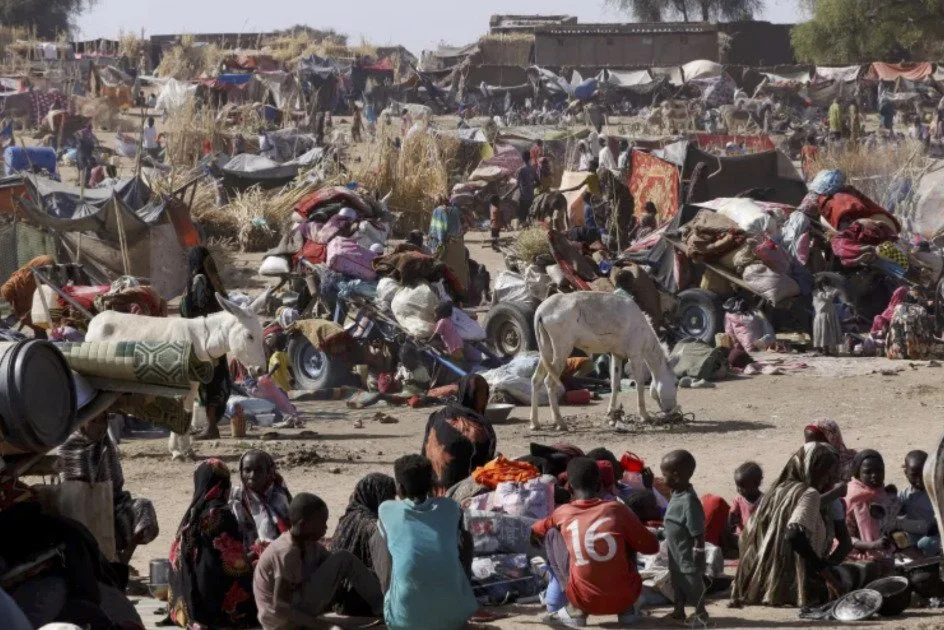
Displaced citizens of Al-Fashir.
Courtesy of Al Jazeera.
Since the conflict in Sudan began between two factions of Sudan’s military government, the Sudanese Armed Forces (SAF) and paramilitary Rapid Support Forces (RSF), it is estimated that at least 25 million people are facing starvation, 12.4 million are displaced, and up to 400,000 have died from malnutrition, disease, and violence.
According to the United Nations (UN), as of December, these figures have risen further. They declared the war in Sudan as one of the worst humanitarian crises of the 21st century, driven by economic, political, and ethnic strife.
However, despite its scale, awareness of the conflict remains limited. As sophomore Nuri Sahavi, a Political Spectrum Club member, commented, “I was thinking about it, and I was like, this is terrible…there are a lot of people who really have no idea what’s going on.”
This is the third civil war in Sudanese history, first erupting in April 2023 following an internal struggle within the military junta between two figureheads: General Abdel Fattah al-Burhan of the SAF and RSF leader Muhammad Hamdan Dagalo, commonly known as Hemedti.
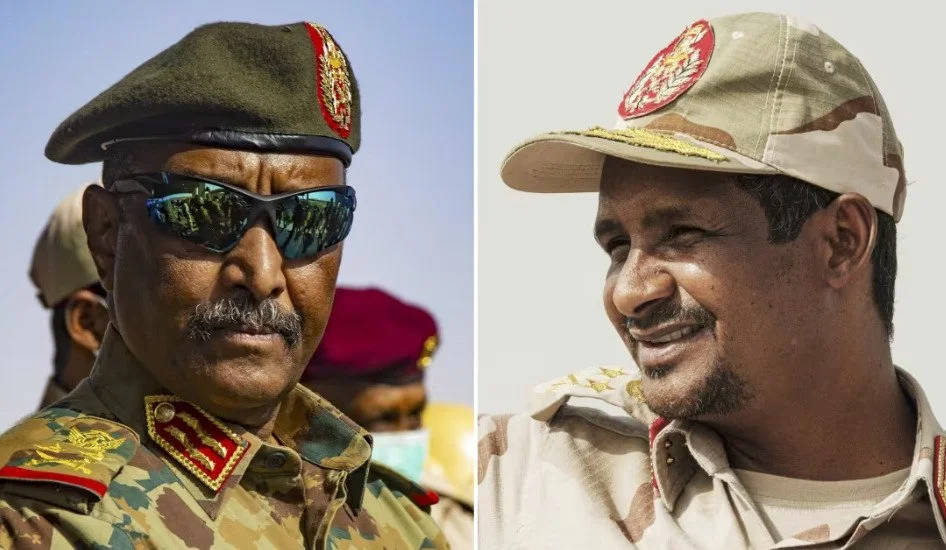
Pictured: Abdel Fattah Burhan (left) and Mohammed Hamdan Dagalo (right).
Courtesy of NBC News.
Burhan and Hemedti emerged as the leading military figures following mass protests against the former head of state, Omar al-Bashir, who was overthrown in 2019 by a military coup after a 30-year reign. These protests were fueled by economic collapse and deepened frustrations with authoritarian rule.
However, citizens continued to protest for civilian democratic rule, resulting in the establishment of a joint military-civilian government, the Transitional Sovereignty Council. This council was dissolved after a coup in October 2021, with Burhan seizing control as the new de facto head of state and Hemedti as his second-in-command.
Civilian protests continued to rage against the military government, and internal strife between Burhan and Hemedti would further fragment the nation. In 2022, a plan to establish a civilian-led transitional government by April 2023 was proposed in response to significant pressure from the United States, the United Arab Emirates (UAE), the United Kingdom (UK), and Saudi Arabia.
However, as a key condition, Hemedti’s RSF would be absorbed into the SAF under Burhan's leadership. Hemedti disagreed, arguing that the term would limit his authority; as a result, war broke out between the SAF and the RSF.
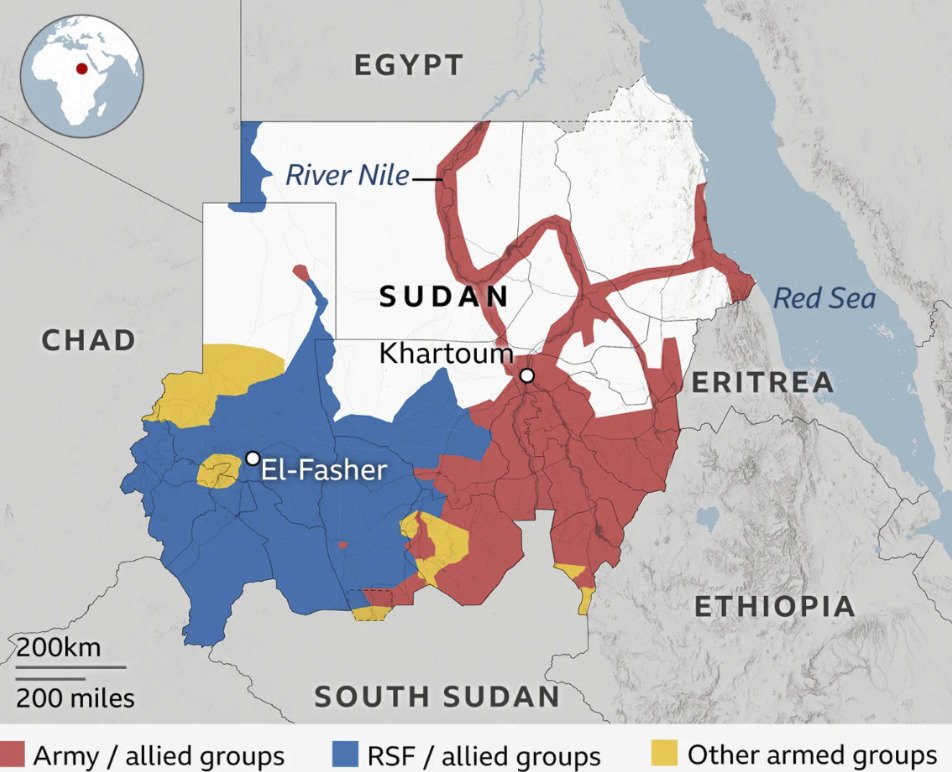
Map of RSF and SAF-controlled areas as of October 28th, 2025.
Courtesy of BBC News.
Fighting first broke out in the capital, Khartoum, in the east, with the RSF controlling a large portion of the city. However, currently, nearly all of eastern Sudan is under the SAF’s control after the initial contest in 2023. Now in Darfur, after an 18-month starvation siege, the last city formerly controlled by the SAF in the west, Al-Fashir, has been overtaken by RSF forces since October 26th.
Although official numbers aren’t precise, according to the UK Chair of the International Development Committee, at least 60,000 civilians have been murdered in Al-Fashir by RSF forces. Unspeakable war crimes such as the rape, torture, and violence against civilians have defined the RSF’s brutal campaign in Al-Fashir, drawing international condemnation and prompting investigation by UN agencies, the ICC, and global humanitarian aid groups.
As one example of the many atrocities committed by the RSF, on October 26th, the World Health Organization reported a massacre at Al-Fashir's Saudi Maternity Center, where RSF fighters shot and killed over 460 patients, visitors, and health workers.
UN Rights Chief Volker Turk commented that “the cruelty of the situation is compounded by continued arbitrary RSF restrictions on bringing food and essential supplies into the city and credible reports of civilians tortured and killed by RSF fighters for doing so.” The remaining 260,000 civilians are trapped in Al-Fashir—unable to stay or leave.
Those who attempt to flee risk dangerous journeys to nearby camps for displaced people, as the RSF has almost surrounded the city with a 42-mile-long berm around the perimeter, killing anyone who leaves. Those who had escaped reported “staggering levels of malnutrition” in the city.
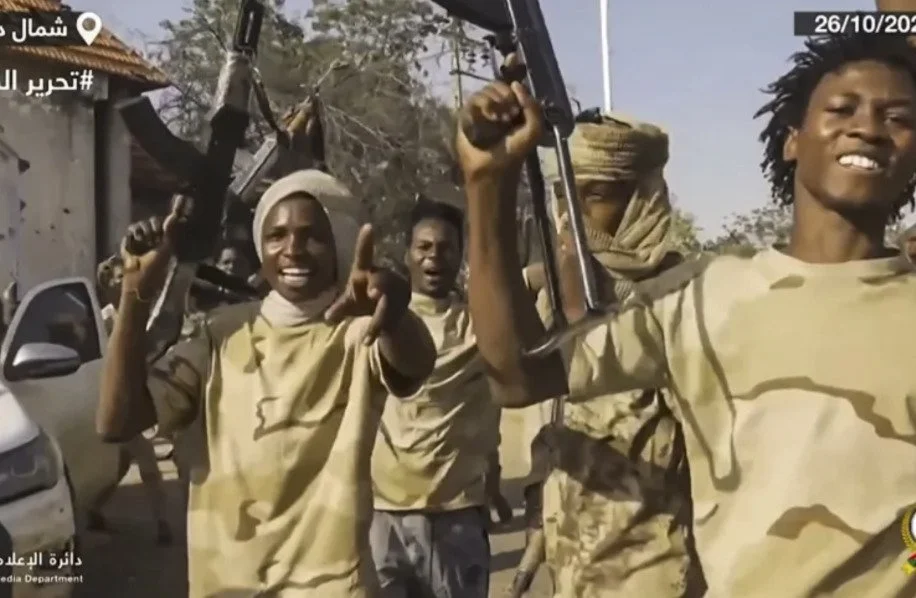
RSF fighters celebrating after taking control of Al-Fashir.
Courtesy of Al Jazeera.
Besides the RSF’s primary goal to drive out the SAF and gain control over the city and its abundant agricultural, oil, and gold resources, there are underlying historical factors that may help explain the causes of the atrocities in Al-Fashir. Most significantly, the RSF’s tactics in Al-Fashir appear to be primarily shaped by its roots in the Janjaweed militias, a paramilitary group established in the early 2000s under Bashir. But why were the Janjaweed militias formed?
Bashir was born in an Arab tribe, and during his reign, he was accused of favoring members of Arab communities in the northeast as he gave them top positions in the government and army, implemented Sharia law nationally, and allied with Islamist leaders.
These actions greatly angered the non-Arab populations in western Sudan. These groups are often identified as “African,” although the term oversimplifies the region's complex ethnic identities. This issue is shaped in part by British colonial policies dating back to the Anglo-Egyptian Condominium (1899-1956).
As a result, non-Arab militant groups arose out of the Darfur region to rebel against Bashir’s Arab-dominated government. Bashir then funded Arab militias in Darfur, known as the Janjaweed, to combat these rebel groups. As Peter Shulman, an Upper School history teacher and instructor for the Modern Middle East course, said, “This is more of a classic ethnic war.”
However, the ethnic conflict between non-Arab and Arab populations is, in fact, tied closely to economic factors. Shulman explains that “part of it [Darfur conflict] gets into these sedentary people who practice agriculture and people who are herders. That’s kind of a classic conflict going back.”
Because most Arabs in Darfur were nomadic herders while the majority of the non-Arabs were settled farmers, Bashir was accused of exploiting these divisions since disputes over land and water resources have long fueled hostilities between the two groups.
Like the RSF, the Janjaweed militias were ruthless in their methods, “massacring large numbers of people (300,000)… committing human rights abuses, using rape and starvation as weapons of war, and famine as a strategy,” said Shulman. Because the RSF is a direct evolution of the Janjaweed militias—almost identical but better organized and armed—the Al-Fashir massacre reflects largely the same ethnic and economic motivations as its predecessor.
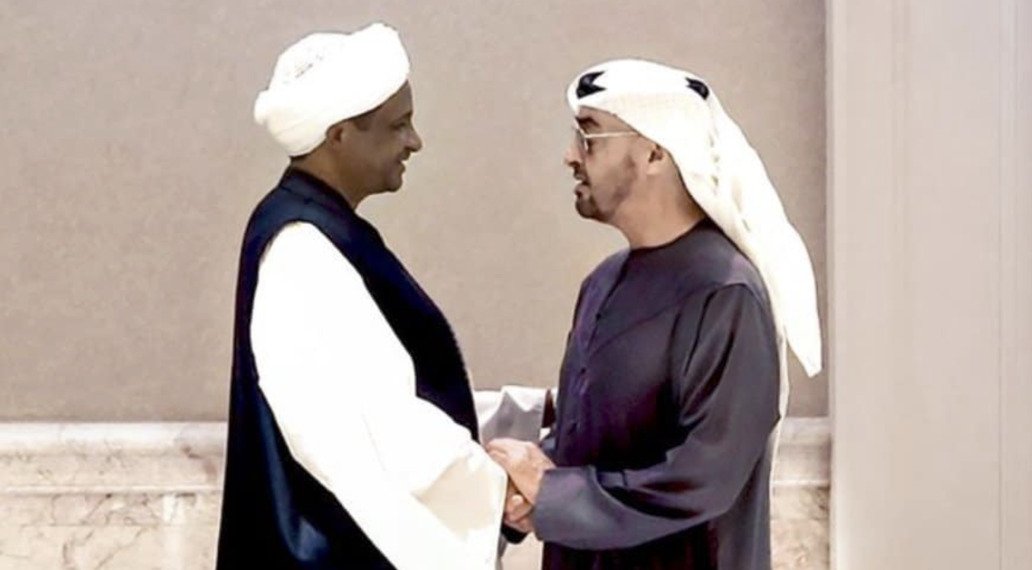
Hemedti (left) meeting with Mohamed bin Zayed (right) in March 2023.
Courtesy of Sudan Tribune.
However, when asked regarding the difference between the operations of the RSF and Janjaweed militias, Shulman said, “I think what we didn’t see nearly as much before is there’s a good bit more outside players that are really juicing the whole thing.” One of the central outside players is the UAE, which has been accused of supplying weapons to the RSF, a claim that the UAE denies.
Some speculate that the UAE seeks control over Sudan’s gold resources, agriculture, and ports, but, according to The Economist, their involvement is likely driven by anti-Islamist ideology.
Muhammed Bin Zayed, the president of the UAE, is openly opposed to political Islam and has historically cracked down on political Islamist groups such as the Muslim Brotherhood. Since Islamist officers wield power within the SAF, this could be a compelling reason why the UAE supports the RSF, given their status as the paramilitary force going against the SAF.
This pattern is not new: in the past, the UAE has backed secular and authoritarian leaders across the Middle East, including in Egypt, Libya, and Yemen. As Shulman observes, “The UAE is just flexing diplomatically, militarily, and economically. They're powerful; they have the ability to project their power beyond their own borders, and they seem to have become much more ambitious in influencing the world.”
The genocide in Al-Fashir is likely to continue if foreign countries keep fueling the conflict by providing weapons and financial support. At the same time, however, Sudan risks dividing itself again—with the SAF governing the east and the RSF the west—echoing the tumultuous secession of South Sudan in 2011 after the Second Sudanese Civil War.
Indeed, many questions arise when discussing the potential outcomes of the Third Sudanese Civil War; still, one pressing question overshadows all others: Will there be any people left in Darfur to govern?