
Tasting more faculty family recipes
By Luna Flores ‘26 and Krish Caulfield ‘26
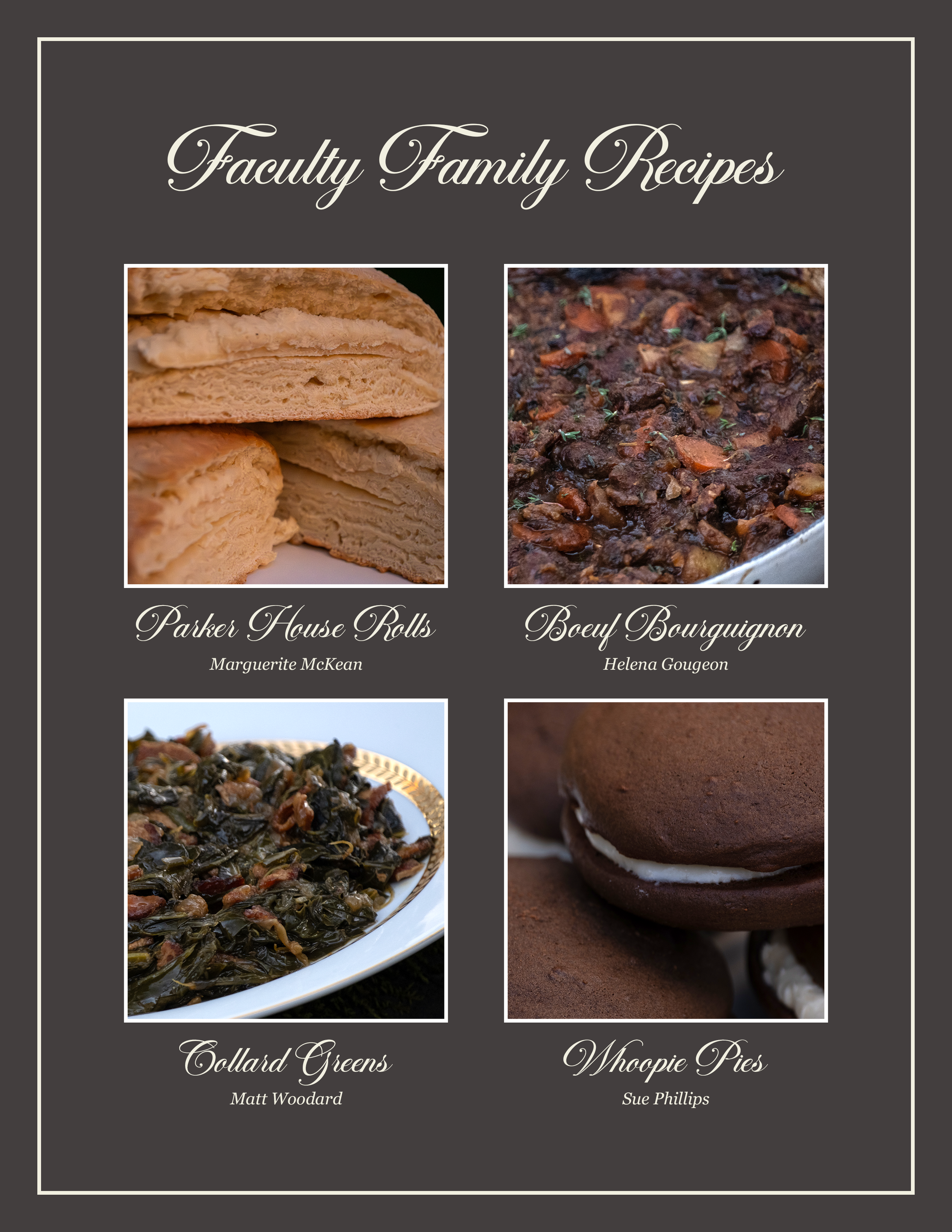
Graphic by Krish Caulfield ‘26.
Step into the teacher’s lounge during lunch, and it might just resemble an unassuming restaurant replete with tupperwares full of memories, tradition, and love. Take a seat and listen, in between bites, to the stories behind the culinary craft that made each forkful.
Today’s service will be a four-course meal of faculty family recipes, each dish arriving with the story of the hands that brought it here, and those that will pass it on. This article, therefore, offers insight into the dearest edible gifts that Catlin Gabel School (CGS) teachers cherish, and how to make them.
Our story is a continuation of an article first conceived last year by CatlinSpeak writers Elise Kim ‘25 and Chip Downes-Le Guin ‘25.
“Guernsey-Style Parker House Rolls” from Marguerite McKean
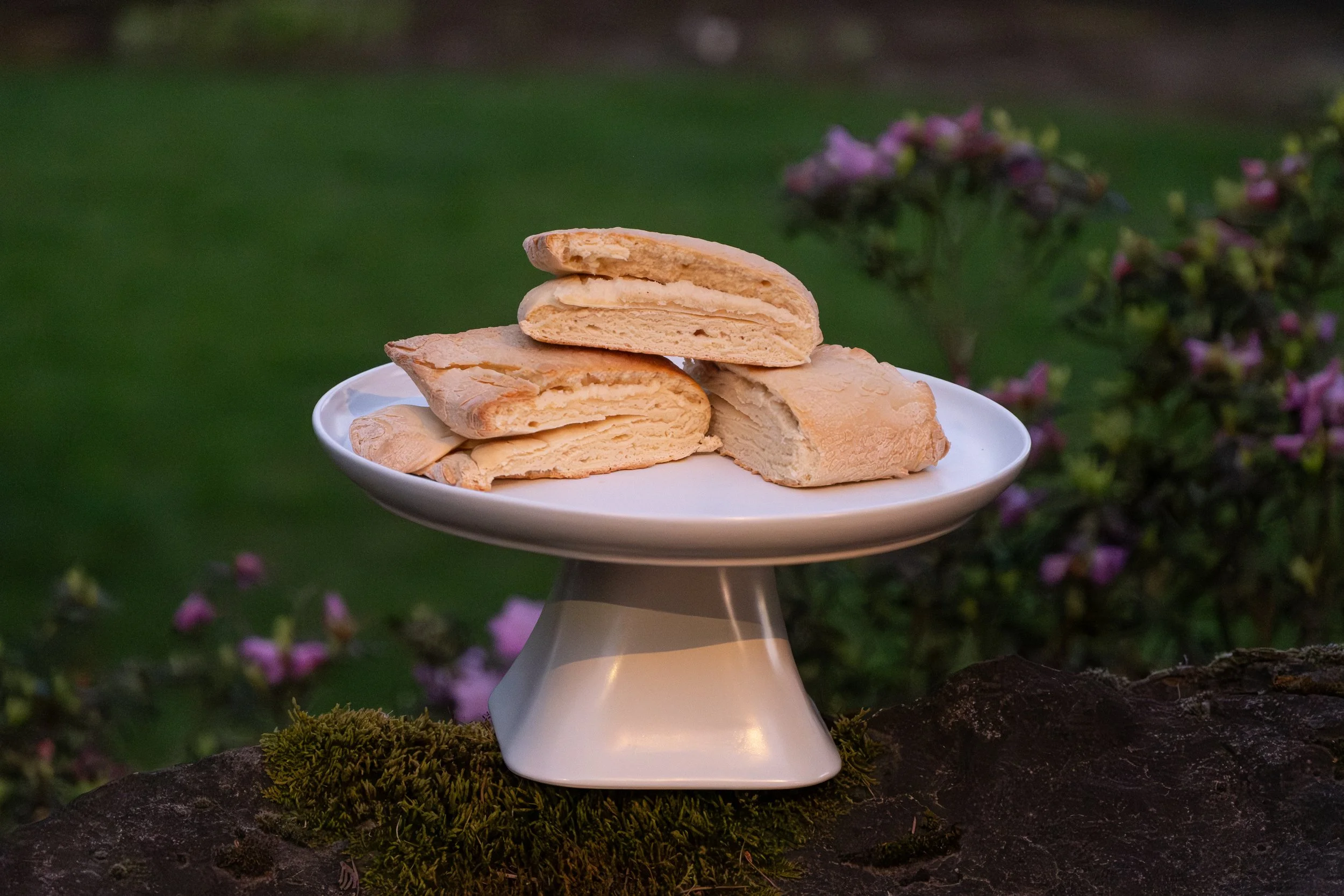
Our rendition of “Guernsey-Style Parker House Rolls.” Photo by Krish Caulfield ‘26.
To get started, your first course and appetizer are Parker House rolls, a Midwestern take on the everyday dinner roll. Beginning in the mid forties and fifties, McKean's great-grandmother, Marion Conway, could regularly be found in the kitchen, as McKean put it, “elbows deep in flour,” making these yeasty rolls.
McKean recalled that the Parker House rolls were first baked by Conway, who “was an incredible baker and came up in the Depression era.”
McKean reflected on Conway’s past experiences, as “she worked in the shipyards, and she was also an educator for a really long time, but baking was the thing that she identified the most with.” McKean added, thinking back to the Parker House rolls and other goods she had seen sprawled out on the counters, that Conway’s work in the kitchen was proof of the true passion she held for her craft.
Since then, at most family gatherings, the heavenly scent of Parker House rolls wafts out of McKean family households. McKean smiled as she explained, “Somebody has always taken up the mantle [on the rolls], whether that's one of my aunts or one of my cousins.”
McKean particularly loves these Parker House rolls for a few reasons. One, they’re always present at large gatherings; McKean explained, “We would gather at every holiday, the whole family together,” and the rolls would be a centerpiece. And second, the signature fold in the roll is a favorite for McKean, who credits the combination of adding yeast and folding the flattened dough over to result in a soft, pillowy roll top that’s uncovered by flapping up the fold.
The signature fold in the roll, McKean said, is a “time and place kind of thing.” It carries the imprint of her family’s “Midwestern mountain” cooking, shaped across a geography that stretches from South Dakota to Guernsey, Wyoming, where Conway herself lived. And it’s in that special Parker House roll fold — more than in the “Kiss The Baker” hand towels or other on-the-nose decorations — that McKean has felt Conway’s love most clearly.
Now, McKean says, the Parker House rolls won’t be leaving her family anytime soon, as “the generations have continued to move this recipe through.”
So, consider attempting these rolls with a special Midwest flair, an homage to the generations of women in McKean’s kitchen.
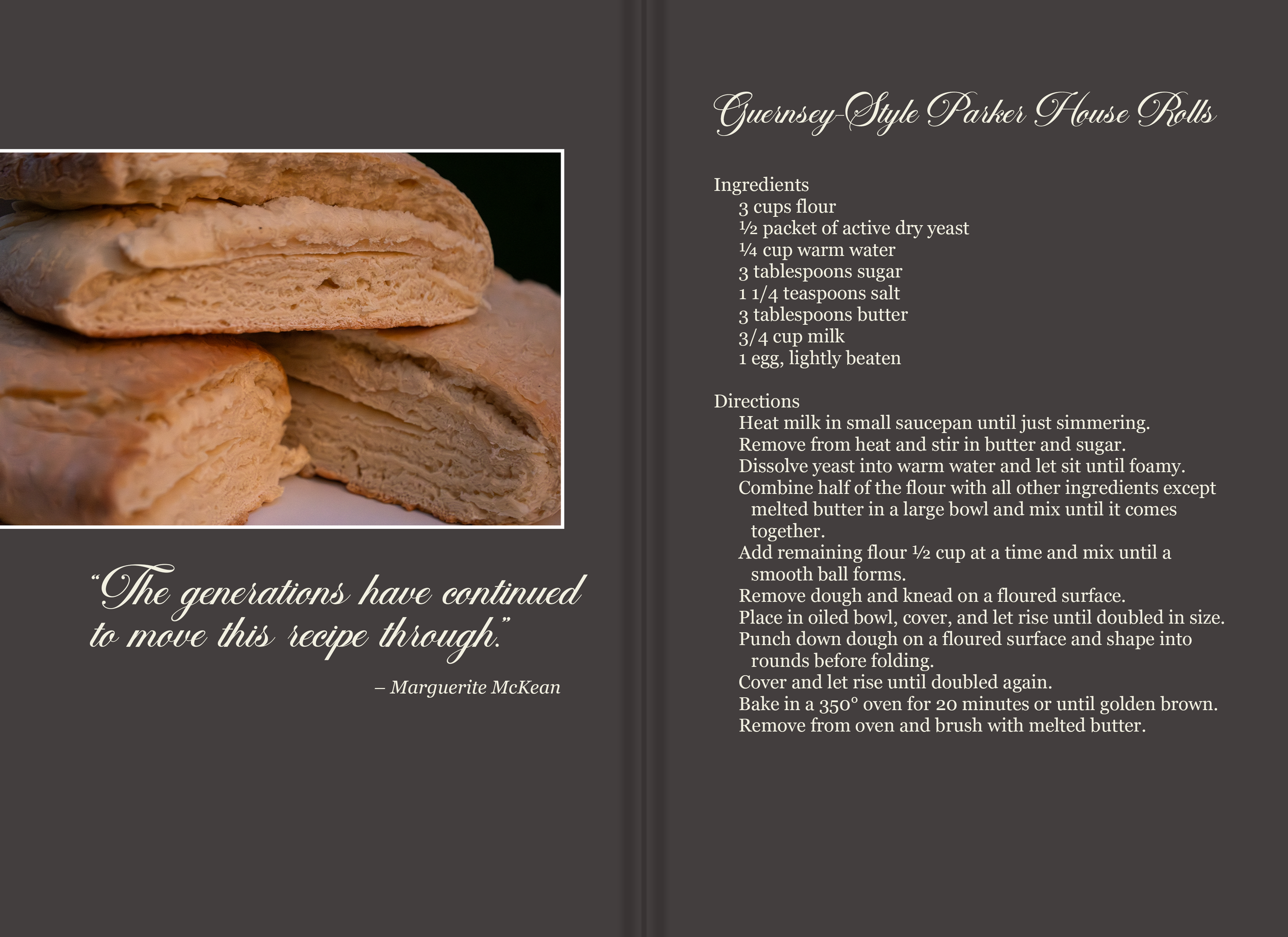
Recipe for “Guernsey-Style Parker House Rolls.” Graphic by Krish Caulfield ‘26.
“Monique’s Boeuf Bourguignon” from Helena Gougeon
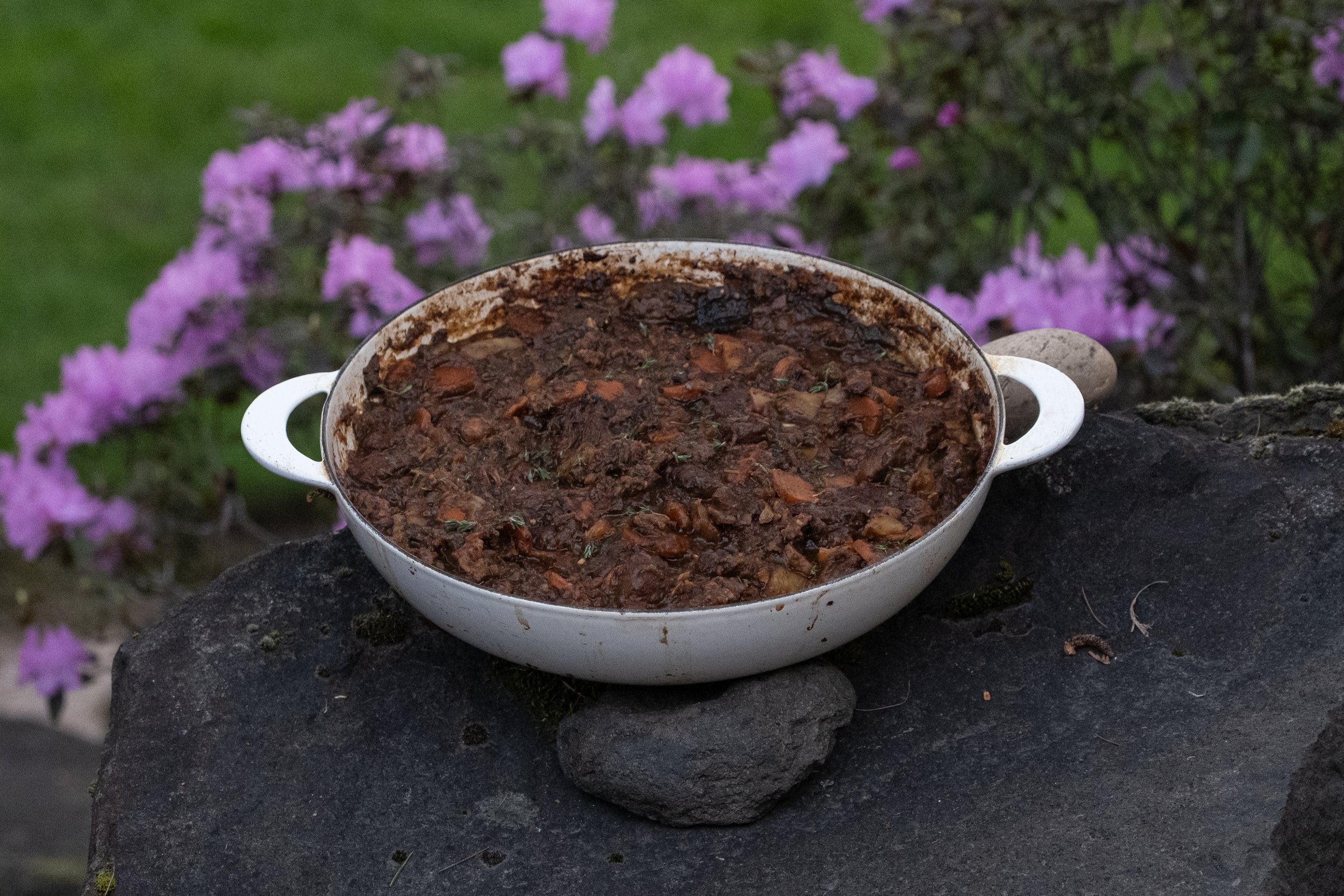
Our rendition of “Monique’s Boeuf Bourguignon.” Photo by Krish Caulfield ‘26.
For your second course and entrée, this dish—boeuf bourguignon, a beefy stew that is as French as it sounds—was adapted nearly three decades ago from a French cookbook titled LaRousse de la Cuisine: 1500 Recette by Upper School Social Studies teacher Helena Gougeon’s mother, Monique Gougeon.
Monique is from Normandy, though the elevated dish traces its roots back to the Bourgogne region of France, a place rich with red-wine cooking that requires plenty of time. As Monique grew up, she became more familiar with the postwar realities of France, in which such indulgence and the time to afford it, synonymous with Bourgogne, were not always possible.
In fact, Monique didn’t begin making boeuf bourguignon in France at all. She only began making the dish, alongside her other signature dish, crepes, after moving to the United States in 1997.
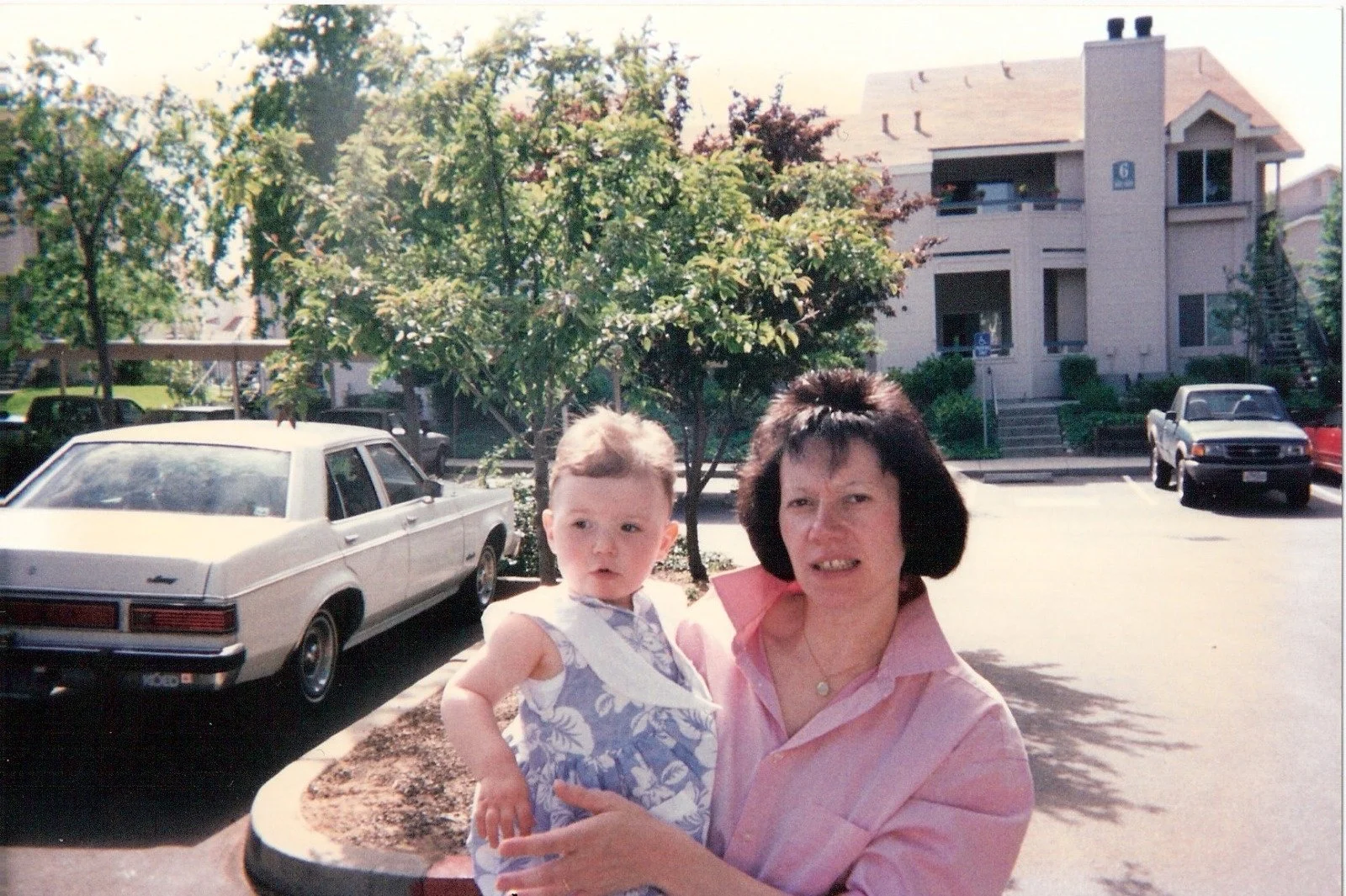
A young Helena (left) with her mother, Monique (right). Courtesy of Helena Gougeon.
Monique explained that back home in France, making either of these dishes “was annoying,” but added, with an audible grin, that in America, making them puts her “on the top.” She elaborated that in America, potlucks are commonplace and that “when you bring your food from your country, people love it.”
Boeuf bourguignon is perfect for those potlucks because “it’s a complete dish,” composed of beef as a protein, plenty of assorted vegetables, and a delicious wine-based sauce.
Though the dish might have been incentivized as a perfect potluck piece, neither Helena nor her mother particularly associates it with a specific holiday. Instead, Helena explained that she mostly ties it to colder weather and elaborated that “what I like about it is the fact that it's not a holiday dish: we make something, and we can come around the table and eat it, and it doesn't have to be for a special occasion. It’s just about being together.”
On top of bringing everyone together, Monique added that boeuf bourguignon is simply delicious food. “People love it. Love the taste, love the texture, love everything,” she said.
Monique’s dish’s widely adored flavor profile is achieved primarily through two specific culinary edits to the cookbook's initial recipe: lots of thyme and cheap wine.
First, in each of her boeuf bourguignons, Monique uses a generous amount of fresh thyme: the key, however, is to grind the aromatic into a powder to neutralize its seedy texture when in its leafy form. The power of the thyme within the dish has a quality not even Monique could pinpoint; rather, she simply endearingly insisted — “I’m telling, I’m telling you,” she repeated — upon its inclusion in any rendition.
What Monique could pinpoint was the positive relationship between the thyme and the next crucial component: the wine, which is none other than Trader Joe’s “Two-Buck Chuck” Charles Schwab Cabernet Sauvignon. She asserts that “you don’t need something expensive” because using authentic wine from the Bourgogne region would be too costly, and the spices used can sufficiently adjust the taste of the “Two-Buck Chuck”-based sauce, eliminating any need to splurge.
Amid the staple carrots, onions, and mushrooms, Monique’s dish features a special addition — potatoes — which make for a heartier, more filling version of boeuf bourguignon with a thicker, almost silky texture from the starch.
If adding the potatoes, however, it’s crucial to ensure they don’t end up homogenized completely into the sauce and other vegetables. “What can easily happen if you overcook it is that it just becomes like a stew, and everything looks the same. It's still good. It still tastes good, but it's not as aesthetically pleasing,” Helena said.
Helena is still perfecting the recipe. She has taken it on as a personal challenge because she explained, “I want to know how to make it so that I can make it whenever.” Monique added to Helena later in the joint interview, “I can show you [Helena] the recipe, you can take all the ingredients, and do the same thing, but you won’t have the same taste that I do.”
Why is this? Well, as Monique put it, “you follow your heart when you do a recipe.” You taste it, see it, and decide for yourself where you want to take it — you make it what you need it to be.
Monique sure has done that with her boeuf bourguignon, and Helena will make it her own someday soon.
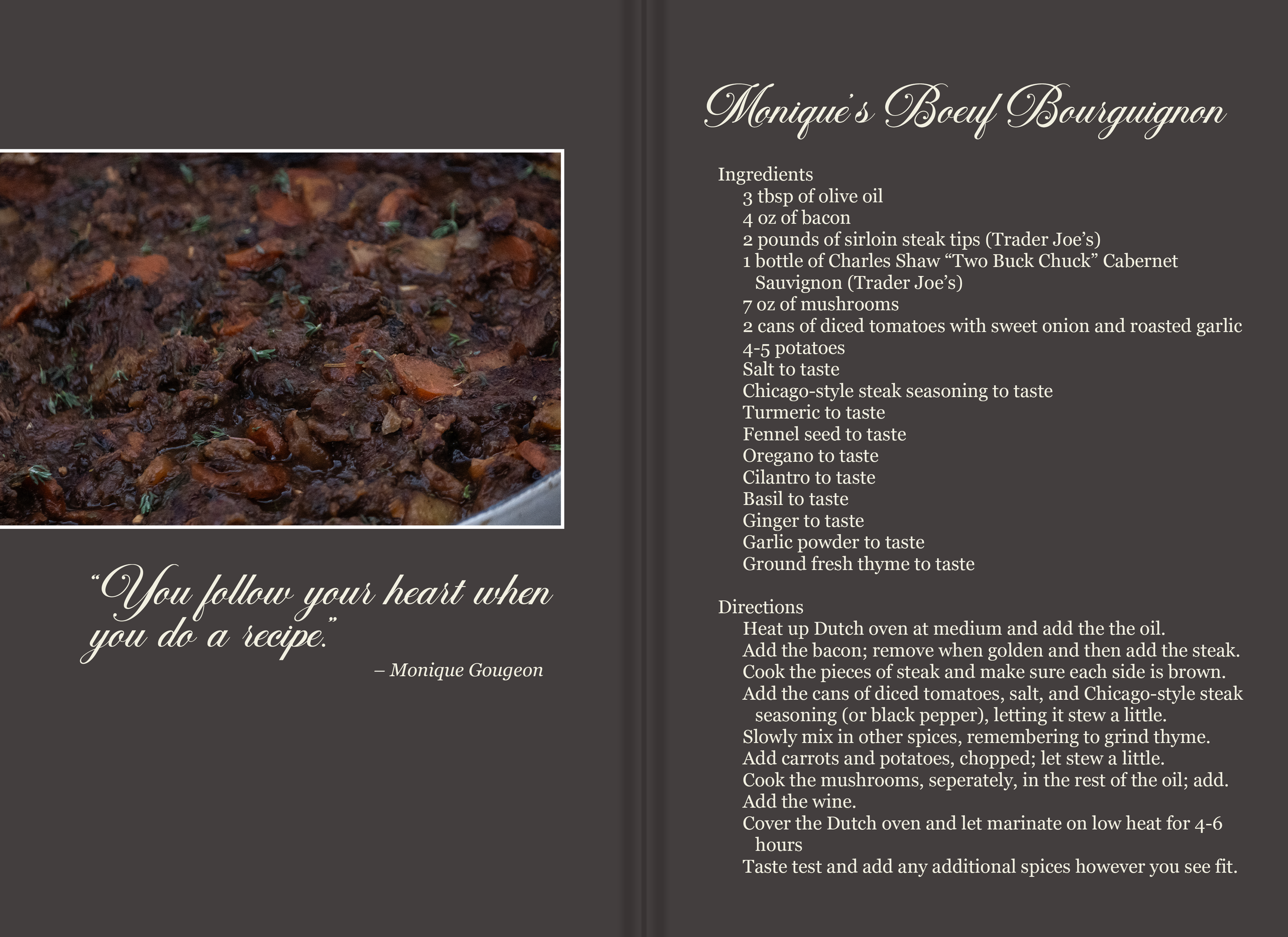
Recipe for “Monique’s Boeuf Bourguignon.” Graphic by Krish Caulfield ‘26.
“Granny’s Collard Greens” from Matt Woodard
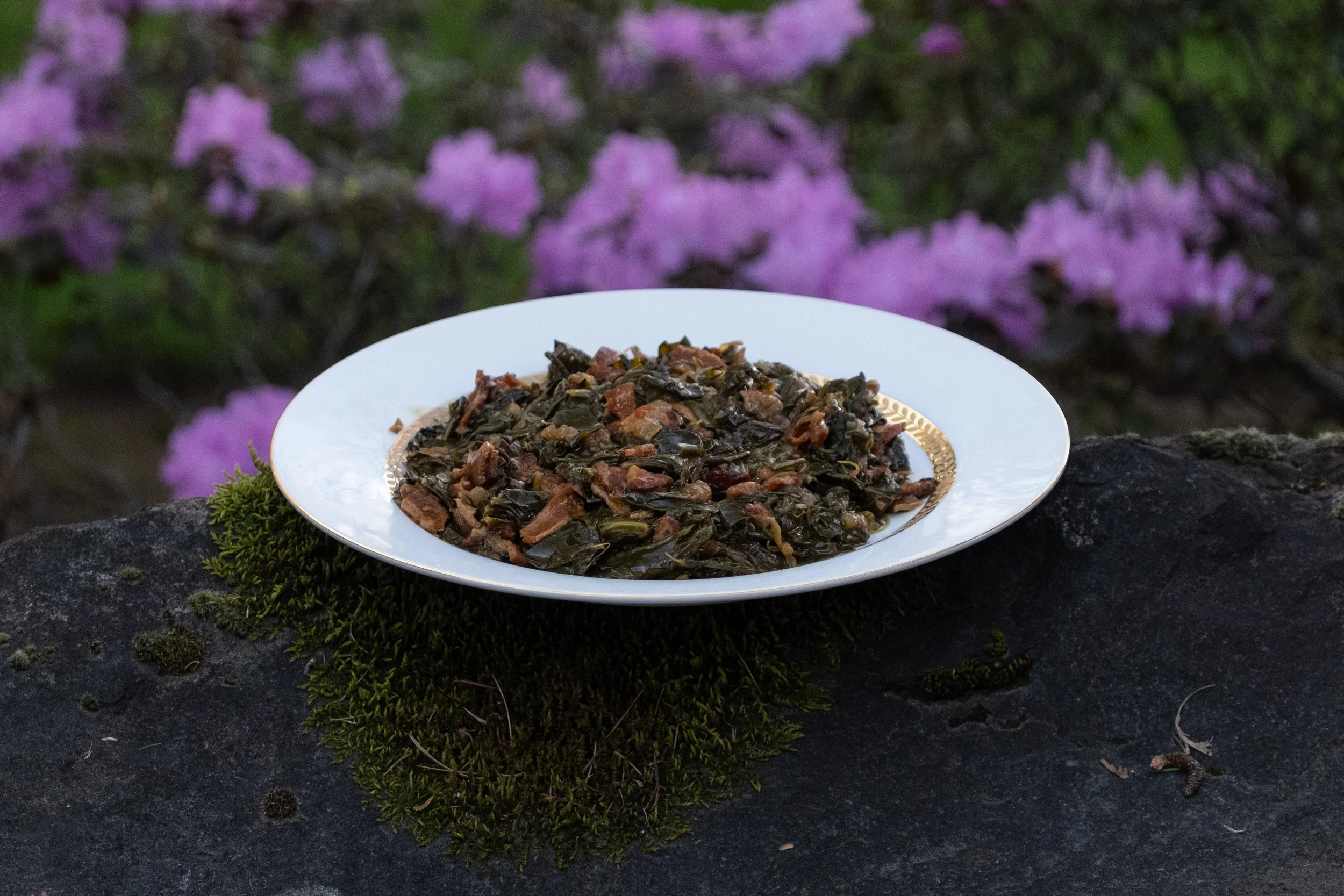
Our rendition of “Granny’s Collard Greens.” Photo by Krish Caulfield ‘26.
To pair with your second course, try the reimagined southern family classic collard greens from Upper School digital arts teacher Matt Woodard. Woodard’s recipe is adapted from his paternal grandmother — whom he calls Granny — and was likely passed down from her parents.
This side of Woodard’s family descended from enslaved people, for whom collard greens became a crucial “traditional ingredient.” As he explained, “[collard greens] were easily available in the South, where a lot of black folks lived, and it was also one of the few things that enslaved people were allowed to grow and use as an ingredient in their food.” He continued that collard greens, as a crop, are very efficient to cultivate and persistent, requiring minimal water and often growing despite sandy conditions.
Regarding this use of collard greens as a leafy base for the dish enjoyed today, Woodard said, “Black folks are really good about taking things that nobody wants and turning them into a delicacy.” Well, these collard greens certainly are a delicacy.
Bringing the dish to life is a long, love-filled process, entailing cleaning and tearing the greens, preparing the protein, and reducing and simmering the greens in the pot liquor.
Woodard sources his collard greens from New Seasons as they come particularly clean. He explained, however, that most greens come relatively dirty because of the sandy conditions they’re grown in, and as a result, they must be soaked and hand-scrubbed — over the course of typically two washes — with a mixture of salt water and vinegar. Woodard explained that you have to “actually scrub them with your fingertips,” but that the enjoyment of that work is “part of the love that goes into the dish.”
The greens are then torn, by hand, into bite-sized pieces. They are hand-torn, because there’s folklore that “the more you touch the food, the more love you put into it, the better it tastes,” Woodard said, “your ancestry works its way into the food."
Paired with the greens is a protein, which is traditionally a ham hock — a smoked ham leg — though Woodard frequently opts for bacon, while his grandmother’s recipe actually called for beef, as she ate kosher after being a part of the Nation of Islam. Bacon often lends a nice “silky texture” to the greens, while the ham hock renders a less greasy, nutrient-dense pot liquor. This pot liquor can be used as the base for soup, often made the next day, and as Woodard explained, has been “preached as a cure-all in the Black community.”
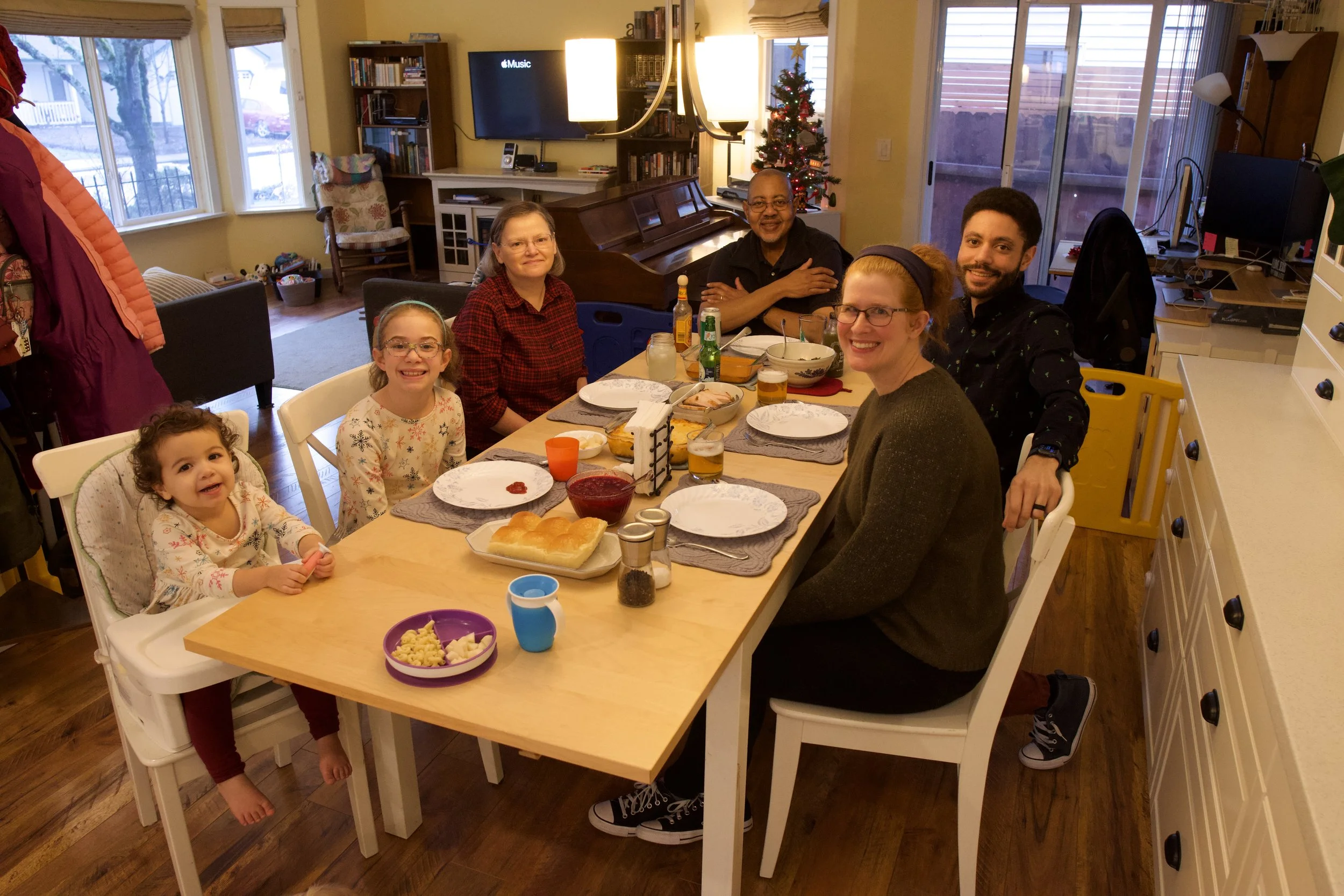
Matt Woodard (back right) with his family during a dinner featuring his Granny’s Collard Greens recipe. Courtesy of Matt Woodard.
Woodard explained that he is constantly experimenting and making his Granny’s recipe his own, working with less precise measurements and eyeballing through pinches or handfuls. However, he also clarified, “I have done my best to take my recipe and distill it to something that I can hand to my kids,” enabling them to replicate something with the same essence as his recipe.
He hopes that his kids will continue adapting his Granny’s collard greens because “maybe they don't like it as spicy, maybe they like it with a little more salt, a little more sugar, a little more kick.” He hopes that just as he did, they will “make it their own.”
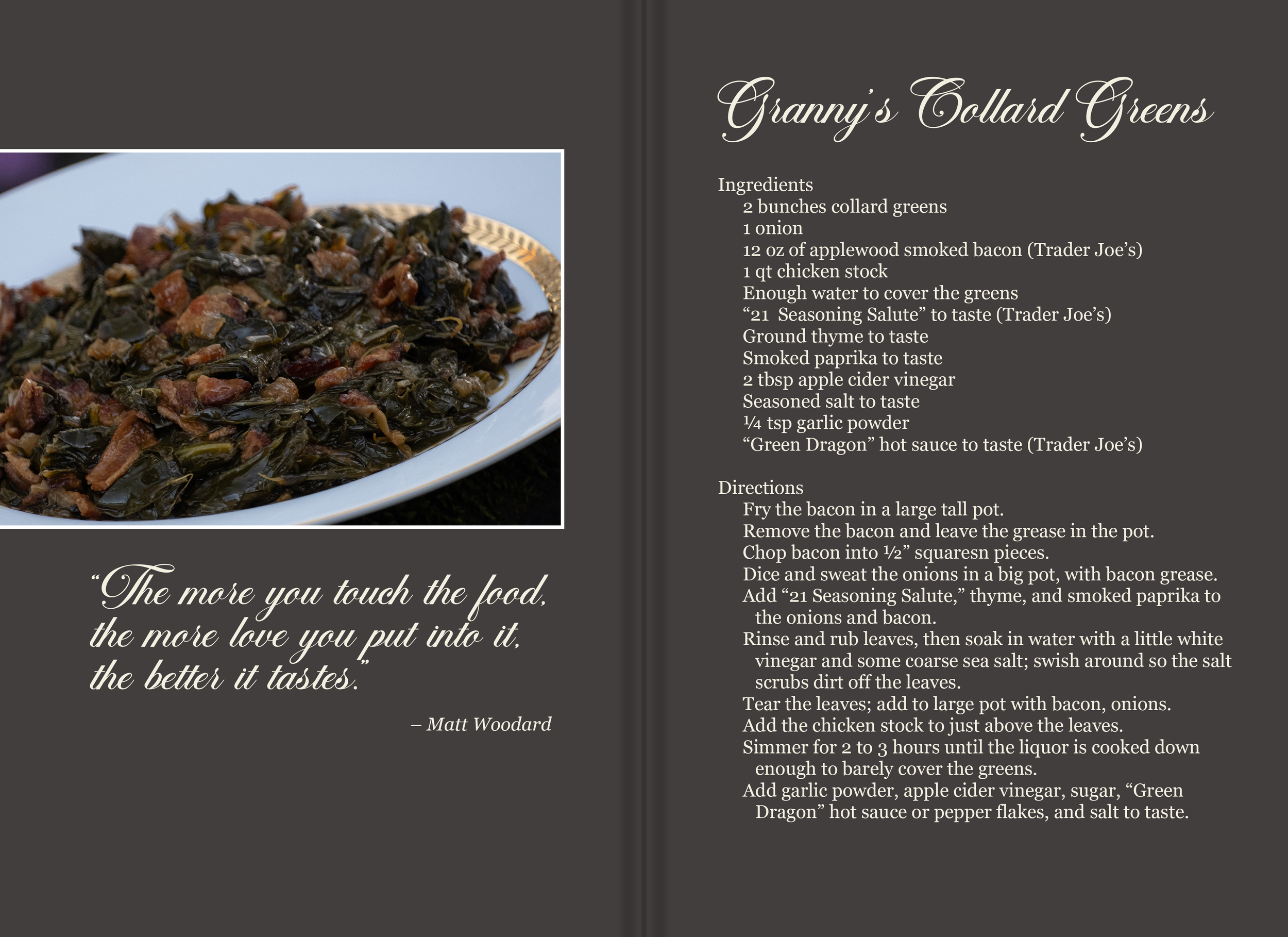
Recipe for “Granny’s Collard Greens.” Graphic by Krish Caulfield ‘26.
“The Lake Webb House Bakery’s Chocolate Whoopie Pies” from Sue Phillips
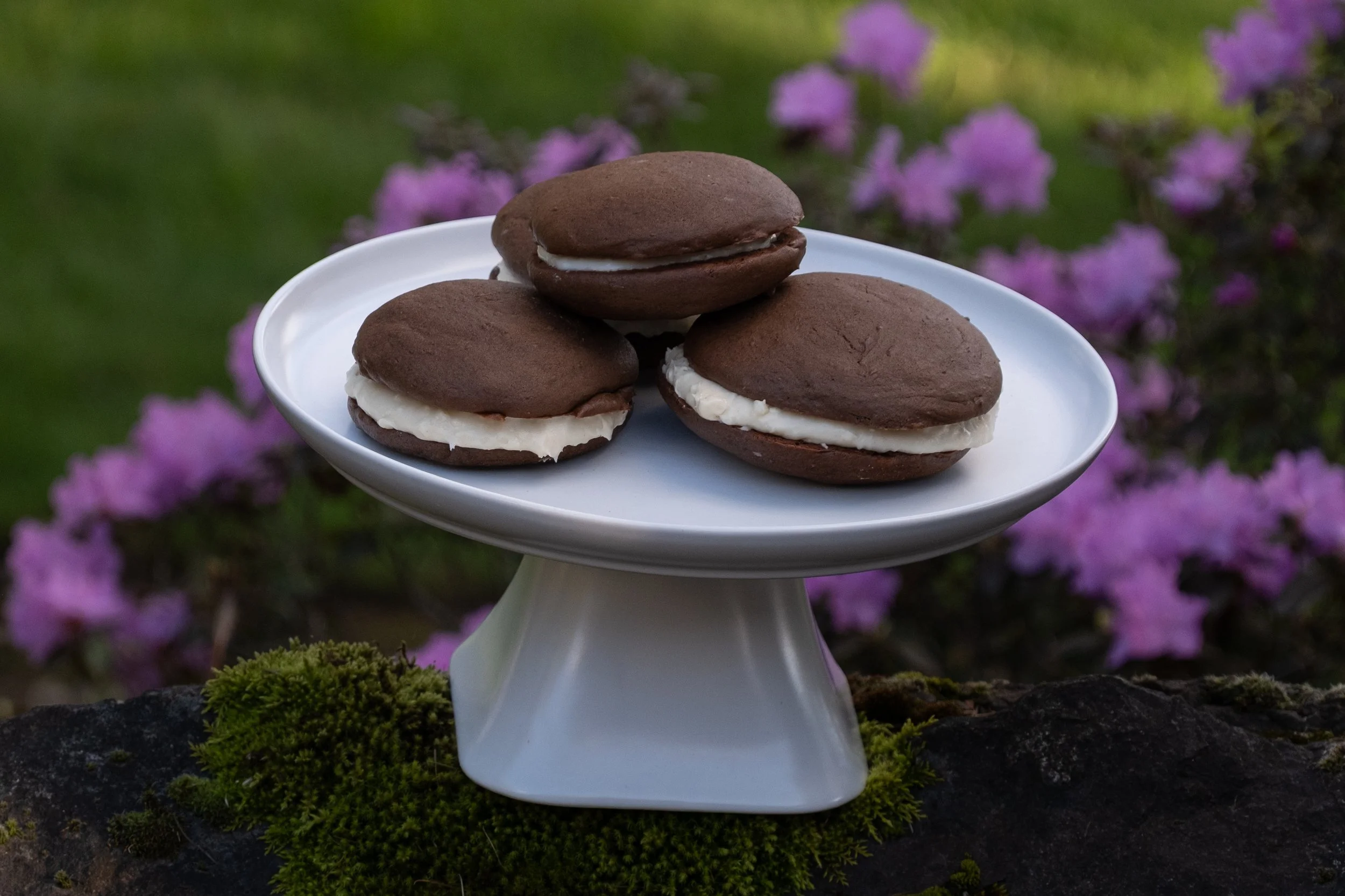
Our rendition of “The Lake Webb House Bakery’s Chocolate Whoopie Pies.” Photo by Krish Caulfield ‘26.
To end this journey through history, CGS departments, and delicious food, you have your final course and dessert: Upper School librarian Sue Phillips’s Maine whoopie pies.
Phillips's journey to acquire this whoopie pie recipe began at a tiny bed-and-breakfast (B&B), her partner Amy's family-run establishment. Located in rural northern Maine, Phillips described how the B&B was a “big, handsome old white farmhouse” with a tiny bakery just to the side.
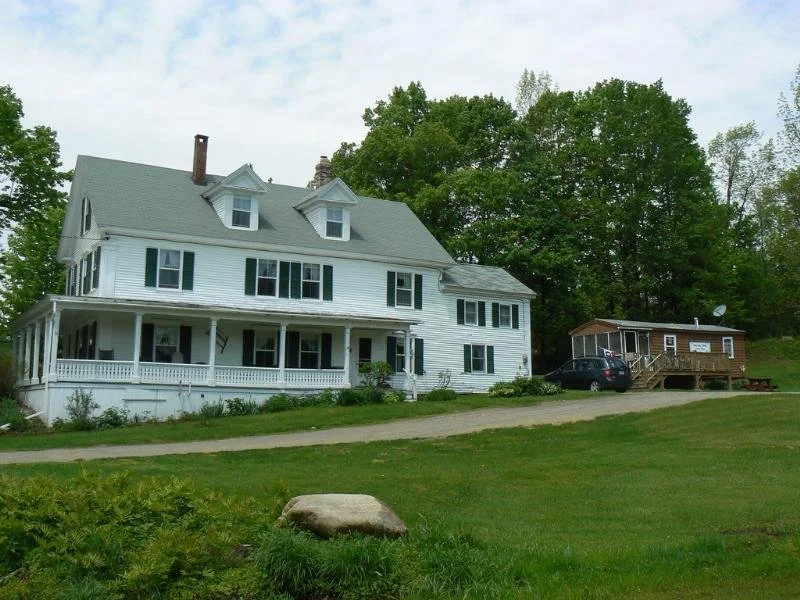
The Lake Webb House Bed-and-Breakfast (left) alongside the Bakery (right). Courtesy of InnShopper.
Though small, the bakery was a popular spot for visitors and locals alike, and Phillips’s yearly trips to the B&B with her partner were something she highly anticipated. Phillips and her partner would often eagerly tie on aprons and get to work in the bakery. “I got to practice making whoopie pies, and watching the people who came to the bakeries to enjoy them,” she shared.
That enjoyment had a legacy, as even after her mother-in-law’s retirement from their family establishments, Phillips recalled that the whoopie pies stayed with customers. “There are still people who come to visit her,” Phillips said, “and tell her about the memories of stopping by the bakery.”
The ambiance of the bakery was unmatched. Phillips described the smell of the whoopie pies — one she can distinctly recount to this day — as it was “just so fresh and gorgeous coming from the oven. It was just a tactile, sensory experience.”
The recipe itself is simple enough, made up of basic ingredients anyone might use for chocolate cookies, yet it blurs the lines between cookie, cake, and pie.
Phillips explained the importance of the shell of the whoopie pie — the cakey part — maintaining a spongy, yielding crumb. She also emphasized the value of a “thick and fluffy” filling, a far cry from the oily creams she’s often encountered at bakeries that opt for “fake” or less whole ingredients. She added that a good bakery’s pies will have a buttery vanilla flavor throughout and a filling that’s creamy and “sticks to your ribs.”
There are plenty of whoopie pie flavors out there that could stick to your ribs — red velvet, peanut butter, etc. — but the chocolate and pumpkin flavors are favorites of Phillips, who now makes the recipe with a few adaptations, detailing that “this really stands up to being gluten and dairy free for your readers, who may want that.”
All these flavors carry Phillips back to the B&B bakery where she first learned the recipes. She shared an anecdote from those days, when, amidst the hum of the mixer and perhaps the whistle of a Maine breeze, she got distracted by puppies that came into the shop, and left the mixer full of dry flour, leading it to overflow all over the kitchen.
It was moments like these that have stuck with Phillips. “It was silly. It's just a bucolic, rural Maine life that was fun to watch,” she reminisced.
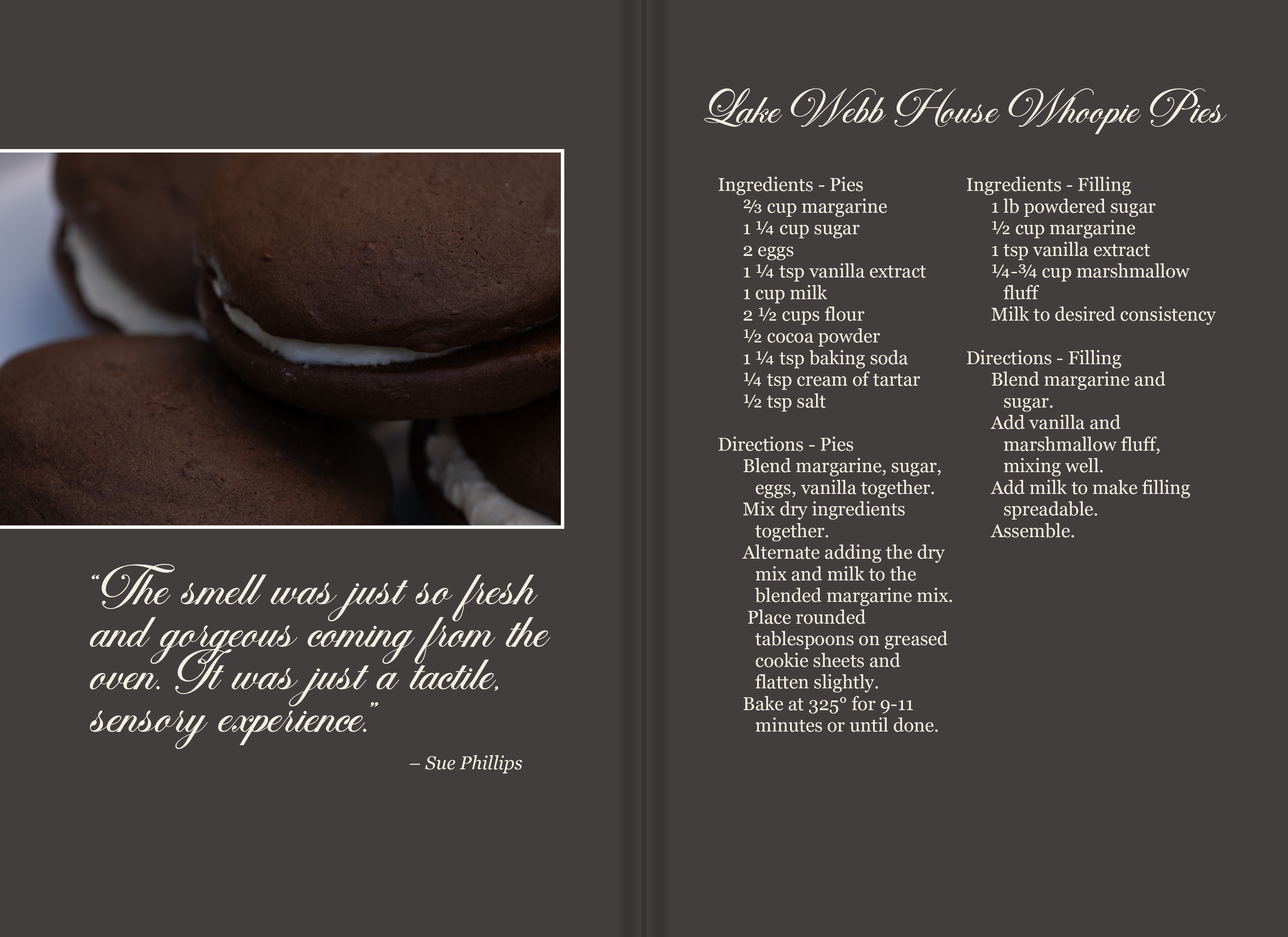

Recipe for “The Lake Webb House Bakery’s Chocolate Whoopie Pies.” Graphic by Krish Caulfield ‘26.
More Than Just Recipes
From Woodard’s take on his Granny’s collard greens to Helena’s future rendition of her mother’s boeuf bourguignon, these recipes present a clear opportunity to inherit a family culinary crest and adapt it to the next generation. They offer a jumping-off point to ask questions, learn about ancestors, and gather to form connections. In the space between what was written on the recipe card and what is done in the kitchen, the dish becomes your own.
Monique said it best. As you take on a recipe, “you follow your heart.” So, get your “elbows deep in flour” like McKean’s great-grandmother once did, pass an hour tearing greens like Woodard’s Granny, or fill your home with the sweet, rich scent of whoopie pies, and use these recipes as an opportunity to try something new while making it your own.
If you do, at some point, the recipes will go from being something you follow to something that follows you.